Custom iron doors combine fortress-level security with stunning curb appeal. Learn why NJ homeowners are choosing iron over wood and fiberglass for lasting protection and value.
Share:
Summary:
The difference comes down to physics. Wood doors typically weigh around 50 pounds. A determined intruder with a decent kick can splinter the frame or crack the door itself. Fiberglass holds up better, but it still flexes under extreme force and can crack at stress points.
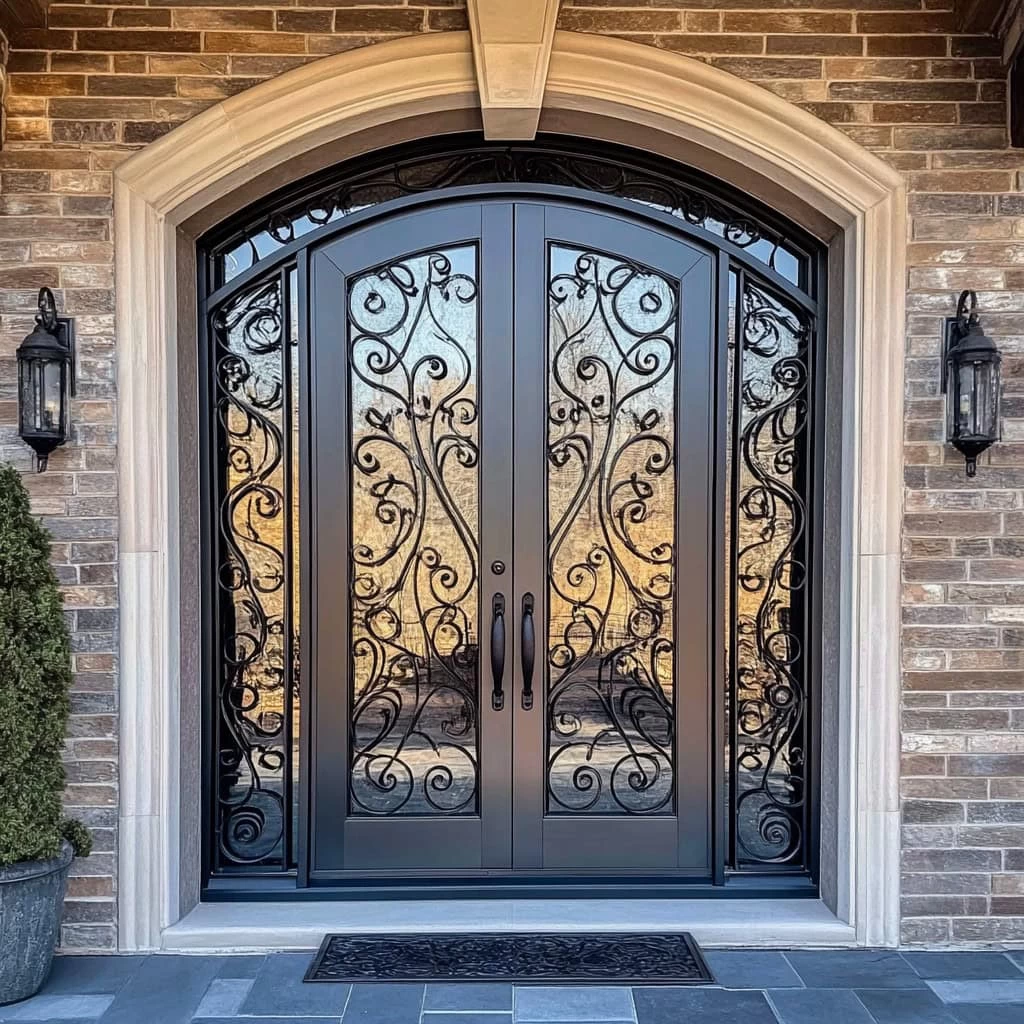
Iron doors weigh 250 to 400+ pounds for a single door. They’re built from 12-14 gauge steel that doesn’t bend, doesn’t crack, and doesn’t give burglars anything to work with. When someone tries to force an iron door, they’re not fighting wood grain or polymer—they’re fighting solid metal construction that simply won’t move.
That weight isn’t just for show. It’s a visual deterrent that sends a clear message before anyone even thinks about testing your entry. And when 34% of break-ins happen through front doors, that message matters.
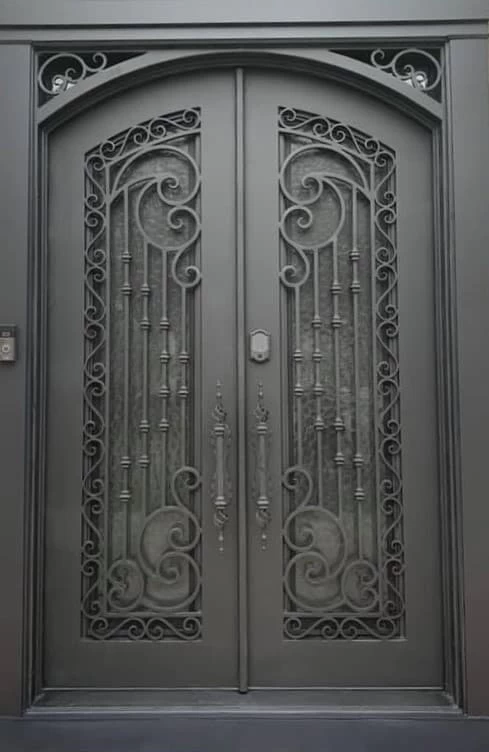
Burglars don’t carry sophisticated tools. They rely on speed and weak points. The most common tactics are kicking the door, prying at the frame with a crowbar, or attacking the lock area with basic tools. Each method works great on standard doors. None of them work on properly installed iron doors.
Kicks and shoulder slams fail immediately. The steel construction and reinforced frame absorb impact that would shatter wood or crack fiberglass. There’s no flex, no give, no weak point to exploit.
Crowbars and prying tools can’t find purchase. Steel frames and welded lock-guards eliminate the gaps that burglars target on wood doors. Even if someone manages to wedge a tool into place, they’re working against metal that won’t splinter or separate.
Lock attacks take too long. Iron doors accommodate advanced locking systems with reinforced strike plates and extended lockblocks. Drilling or picking these systems requires time and noise—two things burglars avoid. Most will move on within 60 seconds if they can’t gain easy entry.
The reality is simple. Burglars want easy targets. They’re looking for homes they can enter in under a minute and exit in under ten. Iron doors eliminate that possibility. When someone scopes your property and sees an iron door, they’re already thinking about the house next door with the aging wood entry. That’s not paranoia. That’s how professionals who study burglary patterns describe the decision-making process.
Your door is the first line of defense. Wood and fiberglass are asking nicely. Iron doors are drawing a line.
Burglars don’t carry sophisticated tools. They rely on speed and weak points. The most common tactics are kicking the door, prying at the frame with a crowbar, or attacking the lock area with basic tools. Each method works great on standard doors. None of them work on properly installed iron doors.
Kicks and shoulder slams fail immediately. The steel construction and reinforced frame absorb impact that would shatter wood or crack fiberglass. There’s no flex, no give, no weak point to exploit.
Crowbars and prying tools can’t find purchase. Steel frames and welded lock-guards eliminate the gaps that burglars target on wood doors. Even if someone manages to wedge a tool into place, they’re working against metal that won’t splinter or separate.
Lock attacks take too long. Iron doors accommodate advanced locking systems with reinforced strike plates and extended lockblocks. Drilling or picking these systems requires time and noise—two things burglars avoid. Most will move on within 60 seconds if they can’t gain easy entry.
The reality is simple. Burglars want easy targets. They’re looking for homes they can enter in under a minute and exit in under ten. Iron doors eliminate that possibility. When someone scopes your property and sees an iron door, they’re already thinking about the house next door with the aging wood entry. That’s not paranoia. That’s how professionals who study burglary patterns describe the decision-making process.
Your door is the first line of defense. Wood and fiberglass are asking nicely. Iron doors are drawing a line.
Want live answers?
Connect with a Iron Door Kings expert for fast, friendly support.
Let’s talk numbers without the sales pitch. Iron doors cost more upfront—typically $2,000 to $7,000 for the complete project including professional installation. Wood doors run $800 to $3,000. Fiberglass falls somewhere in between at $1,000 to $4,000. On paper, wood looks cheaper.
But that’s not how the math actually works. Wood doors last 10 to 15 years before they need replacement. In New Jersey’s climate, you’re looking at the lower end of that range. Factor in refinishing every 1-2 years at $300-$500 per treatment, and the costs add up fast. Over 30 years, you’re replacing that wood door at least twice and refinishing it 15-20 times.
Iron doors last 30+ years with minimal maintenance. Occasional cleaning and touch-ups cost you maybe $100 every few years. No replacements. No refinishing. No surprise repairs when the door warps or the finish fails. The total cost over three decades is actually lower than wood—and you get superior security the entire time.
The sticker price on an iron door tells part of the story. The total project cost depends on several factors that impact both the door itself and the installation process.
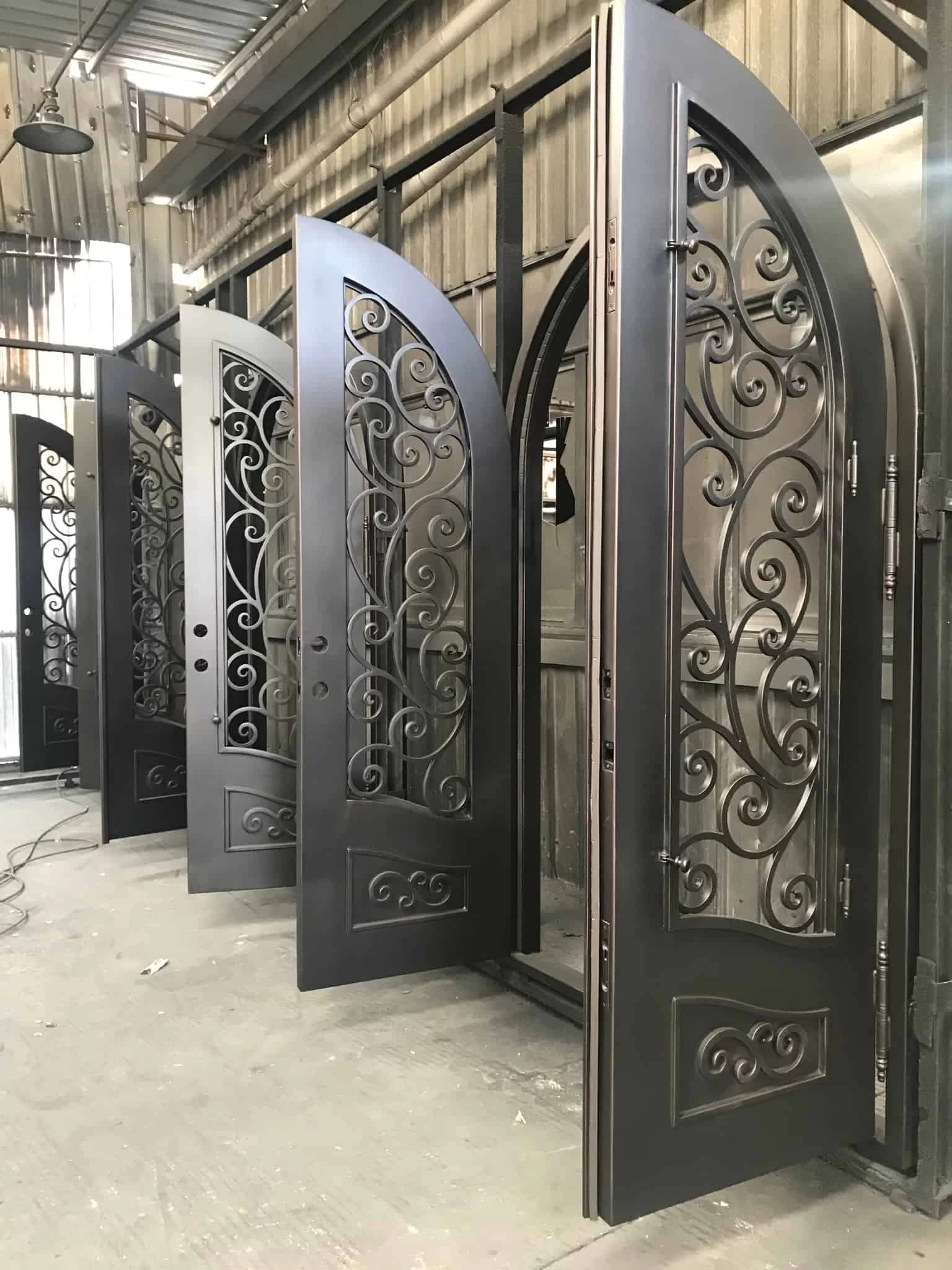
Door size and configuration drive base costs. A standard single iron door (42″ x 84″) costs less than double doors (72″ x 96″). Add sidelights or transoms, and you’re increasing the square footage of iron and glass. Each additional element adds material costs and fabrication complexity. But larger configurations also create more dramatic entries that significantly boost curb appeal and property value.
Design complexity affects fabrication time. Simple, clean-lined modern iron doors with minimal ornamentation cost less to produce than elaborate designs with intricate scrollwork and custom patterns. Both provide the same security. The difference is aesthetic preference and the artisan time required to create detailed metalwork. If you’re working with a specific architectural style that demands ornate details, the extra cost delivers the authentic look your home deserves.
Finish options range from standard to premium. Basic powder coating in common colors (black, bronze, oil-rubbed bronze) costs less than custom color matching or specialty finishes. Rust-resistant coatings and multi-layer protection systems add to material costs but dramatically extend the door’s lifespan in harsh climates. For New Jersey homes facing humidity, road salt, and temperature extremes, premium coatings aren’t optional—they’re essential.
Glass selection impacts both cost and security. Clear tempered glass costs less than decorative or textured options. Privacy glass, beveled glass, and custom patterns increase pricing. Smart homeowners balance natural light preferences with security needs and budget. Smaller glass sections with more ironwork provide maximum security. Larger glass panels create brighter entries but require higher-quality tempered glass to maintain security standards.
Installation complexity varies by project type. New construction installations are straightforward—the door fits into a prepared opening with proper framing already in place. Door replacement projects require removing the old door, potentially repairing or reframing the opening, and ensuring the new iron door fits precisely. Structural issues, non-standard openings, or needed repairs add $300-$1,000 to installation costs. We identify these issues during initial consultations, so you’re not surprised by hidden costs later.
Professional entry door installation runs $400-$700 for single doors and $700-$1,000 for double doors. This covers proper mounting, alignment, hardware installation, and weatherproofing. Given that iron doors weigh 250-400+ pounds, professional installation isn’t optional—it’s essential for safety and performance. Improperly installed iron doors don’t operate smoothly, create security gaps, and void warranties.
Shipping costs depend on distance and door weight. Iron doors ship on freight carriers due to their weight. Expect $200-$500 for shipping within the region. Some companies charge more for distant locations or multiple doors. Clarify shipping costs upfront to avoid surprises. As a local manufacturer and installer, we often provide better shipping rates due to our proximity to Middlesex County, NJ, Bergen County, NJ, Monmouth County, NJ, and Essex County, NJ.
The total investment breaks down like this: door itself ($1,500-$5,000), installation ($400-$1,000), shipping ($200-$500), and any needed structural work ($0-$1,000). Most complete projects fall in the $2,500-$6,000 range for quality iron doors professionally installed.
Return on investment isn’t just about resale value—though iron doors excel there too. It’s about the total cost of ownership, energy savings, security benefits, and property value increases over the door’s lifetime.
Resale value impact is measurable. Industry data shows steel door replacements deliver 98-188% ROI according to Cost vs. Value reports. Front doors are one of the few home improvements that consistently return more value than they cost. Iron front doors create immediate curb appeal that buyers notice during showings. They signal quality, security, and attention to detail—factors that influence purchase decisions and justify higher asking prices.
Energy efficiency reduces monthly costs. Properly insulated iron doors with weather seals reduce heating and cooling expenses. The difference might seem small—$10-$30 per month—but over 30 years, that’s $3,600-$10,800 in savings. Combined with the lack of replacement costs, the door essentially pays for itself while providing superior security.
Security value is harder to quantify but impossible to ignore. What’s the cost of a break-in? The average loss is $2,661 in stolen property. Add the emotional impact, time dealing with police and insurance, and potential damage to your home. Iron doors dramatically reduce break-in likelihood. If your door prevents even one burglary over its lifetime, it’s paid for itself in ways that matter more than money.
Maintenance savings compound over time. Wood doors require $300-$500 in refinishing every 1-2 years. Over 30 years, that’s $4,500-$7,500 in maintenance you’ll never spend on an iron door. Factor in the cost of replacing wood doors twice during that period, and the savings exceed the initial price difference between materials.
Insurance considerations vary by provider, but some insurers offer discounts for homes with enhanced security features including iron entry doors. Check with your insurance company about potential premium reductions. Even a 5% discount on a $1,500 annual premium saves $75 per year—$2,250 over 30 years.
The math is straightforward. Custom doors made from iron cost more initially but deliver lower total ownership costs, better security, increased property value, and energy savings that wood and fiberglass can’t match. You’re not spending more. You’re investing smarter.
Your front door works every day for decades. It faces New Jersey’s humid summers, freezing winters, and everything in between. It’s the first thing guests see and the barrier between your family and everyone else. That’s too important to compromise on.
Wood doors look great until they don’t. Fiberglass doors promise durability until they crack. Iron doors deliver security and beauty that lasts. The investment makes sense when you factor in longevity, maintenance savings, and the peace of mind that comes with real protection.
If you’re ready to upgrade your home’s security and curb appeal with custom iron doors designed for your specific needs, we bring superior craftsmanship and professional door installation NJ homeowners trust throughout Middlesex County, NJ, Bergen County, NJ, Monmouth County, NJ, and Essex County, NJ. From initial design consultation through final installation, you’ll work with experienced professionals who understand both the security requirements and aesthetic possibilities that make iron doors the smart choice for modern homes.
Article details:
Share:
Continue learning: