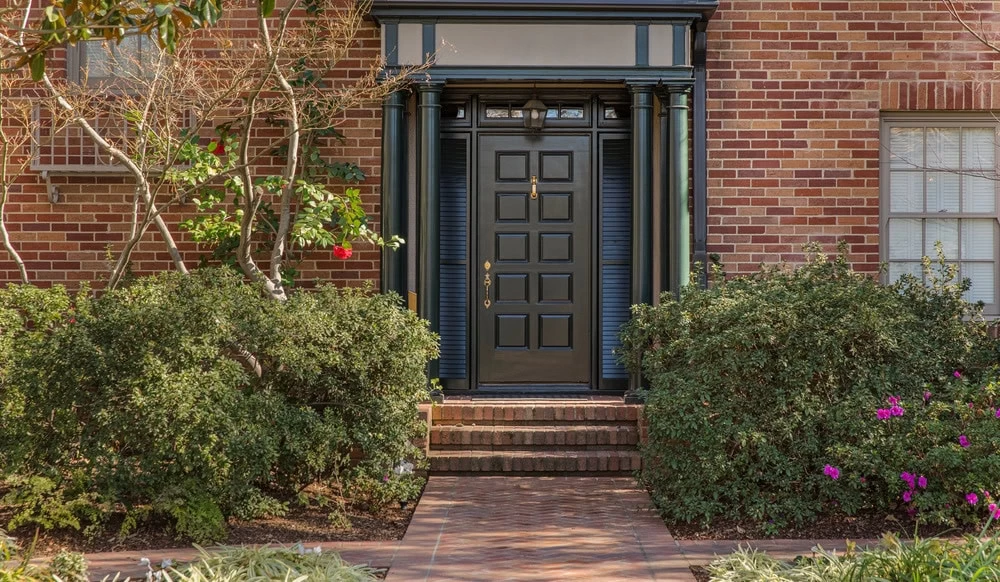
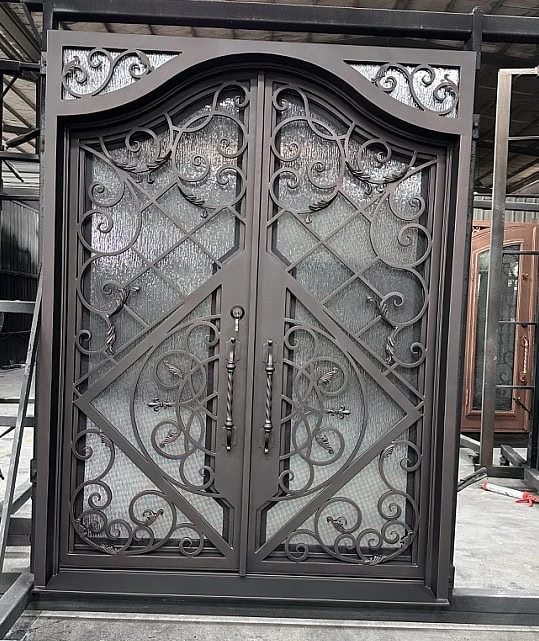
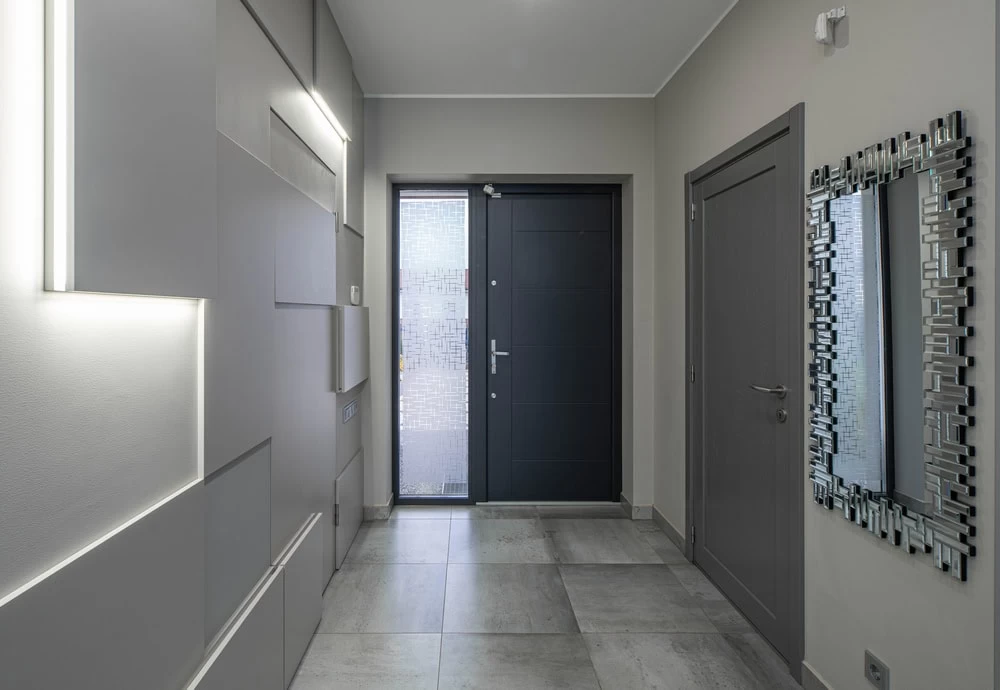
Iron screen doors deliver the security your Essex County home needs without sacrificing airflow or style. Learn how custom designs protect your family while enhancing your property's curb appeal.
Share:
Summary:
You want to open your windows and let the breeze through without worrying about who might be watching. You want your front door to make a statement, not just fill a hole in the wall. And you definitely don’t want to choose between fresh air and feeling safe in your own home.
That’s where iron screen doors change the equation. They’re built differently than the flimsy screens you grew up with or the basic security bars that make your house look like a fortress. The right iron screen door gives you ventilation when you want it, security when you need it, and a design that actually fits your home’s style.
Let’s talk about what makes these doors work for Essex County homes and how to choose one that solves your specific problems.
Standard screen doors do one thing: they keep bugs out. That’s about where their usefulness ends. The mesh tears if your dog gets excited. The frame bends if someone leans on it. And security? Forget it.
Iron screen doors are built with a completely different purpose. The frame is constructed from heavy-gauge steel or wrought iron, not aluminum that bends under pressure. The screening material is reinforced metal mesh, not fabric that rips. And the locking mechanisms are the same grade you’d find on a security door, because that’s essentially what you’re getting.
The difference shows up in how the door performs. You can leave your main door open on a spring evening and actually feel secure doing it. You get airflow without creating an easy entry point. And if someone does try to force their way in, they’re going to have a much harder time than they would with a standard screen.
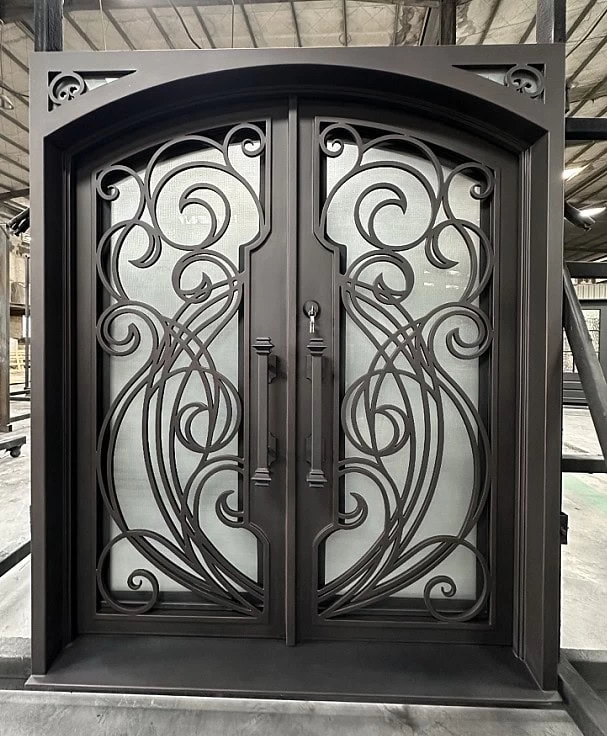
Here’s the problem most homeowners face: traditional security doors are solid, which means you lose natural light and airflow. Standard screens give you ventilation but zero protection. Iron screen doors solve both issues by combining a reinforced metal frame with secure mesh screening.
The construction matters more than you might think. Quality iron screen doors use welded frames, not screwed-together pieces that can be pried apart. The mesh is woven from high-tensile steel that resists cutting and tearing. And the mounting system anchors the entire door to your frame with tamper-proof hardware.
This setup lets you open your main door during the day to let air circulate while the iron screen door stays locked. You can see who’s at your door without opening it. You can talk to delivery drivers or neighbors without feeling vulnerable. And when New Jersey’s summer humidity hits, you can create cross-ventilation throughout your house without compromising security.
The mesh design also matters for visibility. From inside your home, you can see out clearly. From the street, the mesh creates enough visual barrier that people can’t easily see what’s inside. It’s not one-way glass, but it does give you more privacy than a clear storm door while still allowing natural light to enter your home.
Installation plays a huge role in how well this works. A poorly installed iron screen door will have gaps that let insects in and reduce security. Professional installation ensures the door sits flush in the frame, the weatherstripping creates a proper seal, and the locking mechanism aligns correctly. For heavy iron doors, this isn’t a DIY project unless you have specific experience with metalwork and door hanging.
New Jersey doesn’t go easy on exterior doors. Your iron screen door faces humid 90-degree summers, below-freezing winters, coastal moisture if you’re near the shore, and everything in between. A door that works great in Arizona might fail completely here.
Weather resistance starts with the material and finish. Quality iron screen doors use steel that’s been treated to resist corrosion, then coated with multiple layers of protection. The best finish is powder coating, which is baked onto the metal in a controlled environment. This creates a harder, more durable surface than paint applied on-site.
The coating does more than prevent rust. It resists fading from UV exposure, which matters when your door faces south and gets direct sunlight for hours every day. It handles temperature swings without cracking or peeling. And it creates a barrier against road salt and de-icing chemicals that get tracked onto your porch during winter.
But the frame is only part of the equation. The mesh screening needs to handle weather too. Stainless steel mesh resists corrosion better than standard steel, especially in coastal areas where salt air accelerates rust. Some manufacturers use marine-grade stainless steel for properties within a few miles of the ocean.
Weatherstripping and seals matter just as much as the door itself. Compression weatherstripping made from EPDM rubber maintains its sealing force for years, even when temperatures drop below freezing. Bottom sweeps and adjustable thresholds create a seal at the door’s base, which is where most air leakage occurs.
Here’s what happens when you skip weather-resistant features: the door starts showing rust spots within a year or two, the finish fades and looks worn, the mesh develops corrosion that weakens its strength, and the weatherstripping fails, letting drafts and insects through. You end up replacing a door that should have lasted decades.
For Essex County homes, this isn’t optional. The climate demands doors built specifically for these conditions. That means asking about coating types, mesh materials, and weatherstripping quality before you buy. The upfront cost difference between basic and weather-resistant options is minimal compared to replacing a failed door.
Want live answers?
Connect with a Iron Door Kings expert for fast, friendly support.
Walk into any big-box store and you’ll find screen doors in standard sizes. They’re cheap, they’re available today, and they’ll probably fit your opening if you’re lucky. They’re also generic, limited in design options, and built to a price point rather than a quality standard.
Custom iron screen doors work differently. The door is built to your exact measurements, designed to match your home’s style, and constructed with materials you choose. You’re not adapting your home to fit a standard door. The door is adapted to fit your home.
This matters more for iron screen doors than it does for basic screens. Iron doors are heavy, and proper fit is critical for smooth operation and long-term performance. A door that’s even slightly off in its measurements will bind, wear unevenly, and create gaps that compromise both security and weatherproofing.
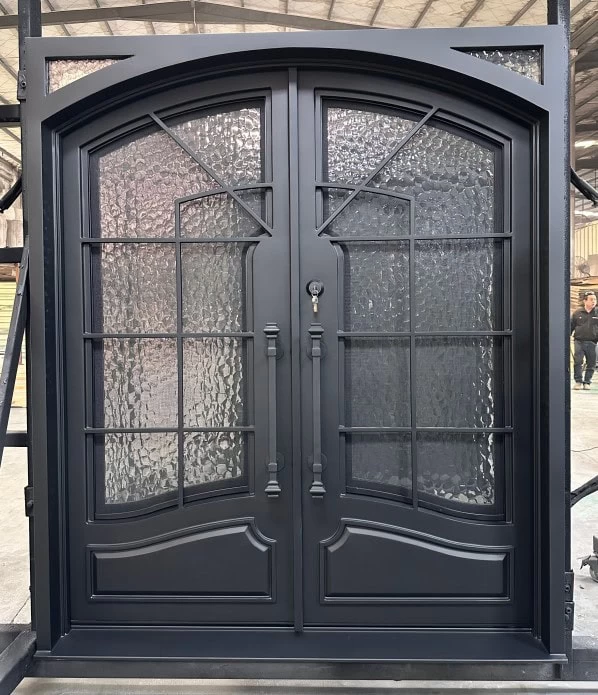
Your home has a specific architectural character. Maybe it’s a Colonial with traditional proportions and classic details. Maybe it’s a contemporary design with clean lines and minimal ornamentation. Or maybe it’s somewhere in between, with elements from different styles that create a unique look.
A pre-designed iron screen door comes in whatever styles the manufacturer decided to produce. You pick the one that’s closest to what you want and hope it works. Custom wrought iron doors flip that equation. You start with your home’s style and design the door to match.
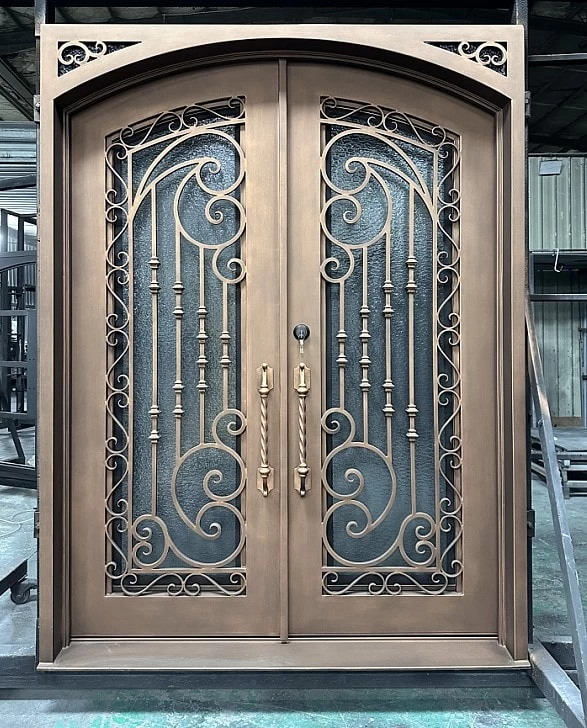
This shows up in the details. Traditional homes might feature scrollwork, decorative flourishes, and ornate patterns that echo historical ironwork. Contemporary homes work better with geometric patterns, straight lines, and minimal decoration. Transitional styles can incorporate elements from both approaches to create something that feels current but not trendy.
The glass or mesh panels can be configured to match your home’s window patterns. If you have a transom window above your door, the iron screen door can include a matching transom section. If your home features sidelights, the screen door design can coordinate with those elements to create visual continuity.
Color and finish options matter just as much as the ironwork pattern. Matte black works for modern homes and creates strong contrast against light-colored siding. Bronze or copper finishes add warmth and pair well with brick or stone. Oil-rubbed bronze offers a more traditional look that complements Colonial and Victorian architecture.
Our in-house design process makes this customization practical rather than complicated. You work with designers who understand both ironwork and residential architecture. We can show you how different patterns will look on your specific door opening, suggest modifications to standard designs, or create something completely unique if that’s what your home needs.
This level of customization does add to the timeline and cost compared to buying a pre-made door. But it’s the difference between a door that fits your home and a door that transforms your entrance into something that looks intentionally designed rather than just filled in.
Iron screen doors aren’t just for exterior entries. They work exceptionally well for interior applications where you need security, visibility, and climate control all at once. Wine cellars are the perfect example.
A proper wine cellar needs consistent temperature and humidity. Standard doors let too much air exchange happen, which disrupts the climate control system and makes it work harder. Solid doors solve that problem but eliminate visibility. You can’t see your collection without opening the door, which defeats the purpose of climate control.
Wine cellar wrought iron doors solve this by combining insulated construction with decorative ironwork and glass panels. The door creates a seal that maintains temperature and humidity while letting you showcase your collection. The glass can be double-paned and tempered for insulation. The iron frame adds structural support and creates a visual statement that elevates the space.
Design options for wine cellar doors range from traditional grapevine motifs to contemporary geometric patterns. The ironwork can incorporate your initials, family crest, or custom designs that reflect your personal style. And because these doors are interior applications, you have more flexibility with finishes and materials than you would with exterior doors exposed to weather.
The same concept works for other specialty spaces. Home offices benefit from iron doors that provide security for equipment and documents while maintaining visibility and airflow. Library or study doors can incorporate custom ironwork that reflects the room’s character. Even pantries or storage areas can use iron screen doors to create separation without making the space feel closed off.
Installation for interior iron doors follows different requirements than exterior applications. The door doesn’t need weatherstripping or the same level of weather resistance, but it does need proper hanging and alignment to operate smoothly. The weight of iron doors means the frame needs adequate support, which might require reinforcement depending on your home’s construction.
Thermal break technology matters for wine cellar applications specifically. This creates an insulated barrier within the door frame that prevents heat transfer. Without it, the metal frame acts as a thermal bridge that allows temperature exchange between the wine cellar and the rest of your home. Quality wine cellar doors include this feature as standard, not an upgrade.
The combination of function and aesthetics makes interior iron doors a practical investment for luxury homes. They solve real problems while adding architectural interest to spaces that might otherwise use standard doors. And because they’re interior applications, they last even longer than exterior doors since they’re not exposed to weather.
The right iron screen door does more than fill an opening. It solves specific problems: security without sacrificing airflow, weather resistance that handles New Jersey’s climate extremes, and design that actually fits your home’s style rather than fighting against it.
Quality matters more than price when you’re choosing a door that needs to perform for decades. Weather-resistant coatings, professional installation, and custom design aren’t luxuries. They’re what separate doors that last from doors that fail within a few years.
If you’re ready to explore how custom iron screen doors can work for your specific home and needs, we bring the expertise and craftsmanship to make it happen right the first time.
Article details:
Share:
Continue learning: