Not all patio door materials handle New Jersey winters the same way. The right combination of glass, frame, and installation can cut your energy bills significantly.
Share:
Summary:
Your patio door isn’t just glass in a frame. It’s a barrier between your comfortable home and Essex County’s temperature extremes—winter mornings below 20°F, summer afternoons pushing past 90°F, and everything in between.
When that door isn’t built right for this climate, you feel it. Cold drafts near the patio in January. Rooms that never quite cool down in August. Energy bills that keep climbing no matter how much you adjust the thermostat.
The material choices you make determine whether your patio door saves energy or wastes it. Let’s talk about what actually works in Northern New Jersey, starting with the technologies that make the biggest difference.
The frame material you choose affects how much heat moves through your patio door. Some materials conduct temperature directly from outside to inside. Others create barriers that keep your conditioned air where it belongs.
Fiberglass ranks as the top performer for energy efficiency. It resists temperature changes better than other options and doesn’t expand or contract much when the weather shifts. That stability means your door maintains a tight seal year after year, even through New Jersey’s 100+ freeze-thaw cycles.
Vinyl offers solid insulation at a lower price point. The multi-chambered construction traps air inside the frame, slowing heat transfer. High-quality vinyl handles Essex County’s humidity without warping, though extreme temperature swings can sometimes cause issues with lower-grade products.
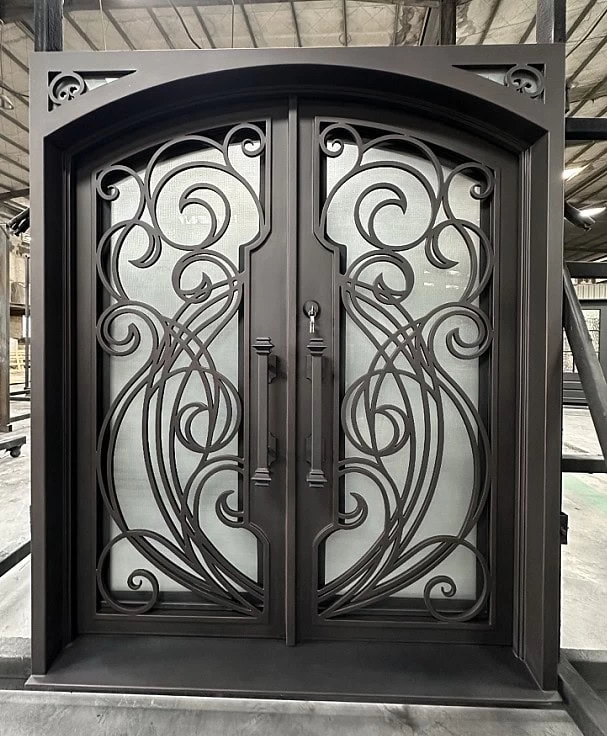
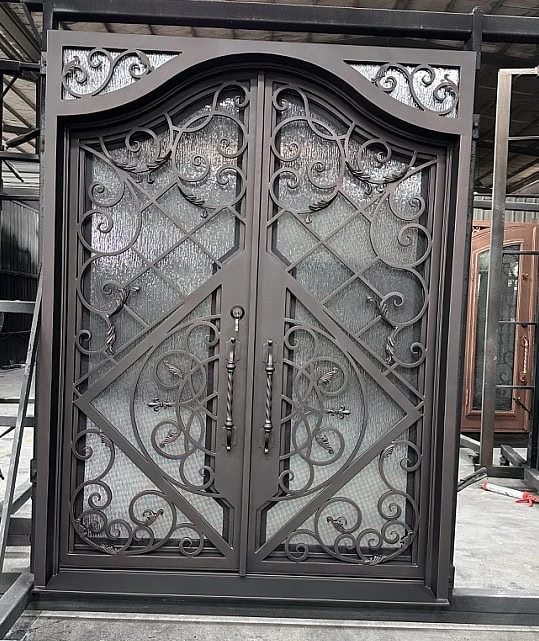
Steel and iron doors need thermal break technology to perform well. Without it, metal conducts heat straight through the frame. But when properly engineered with insulating barriers between interior and exterior surfaces, steel doors can match or exceed other materials while adding security and durability that matters in this climate.
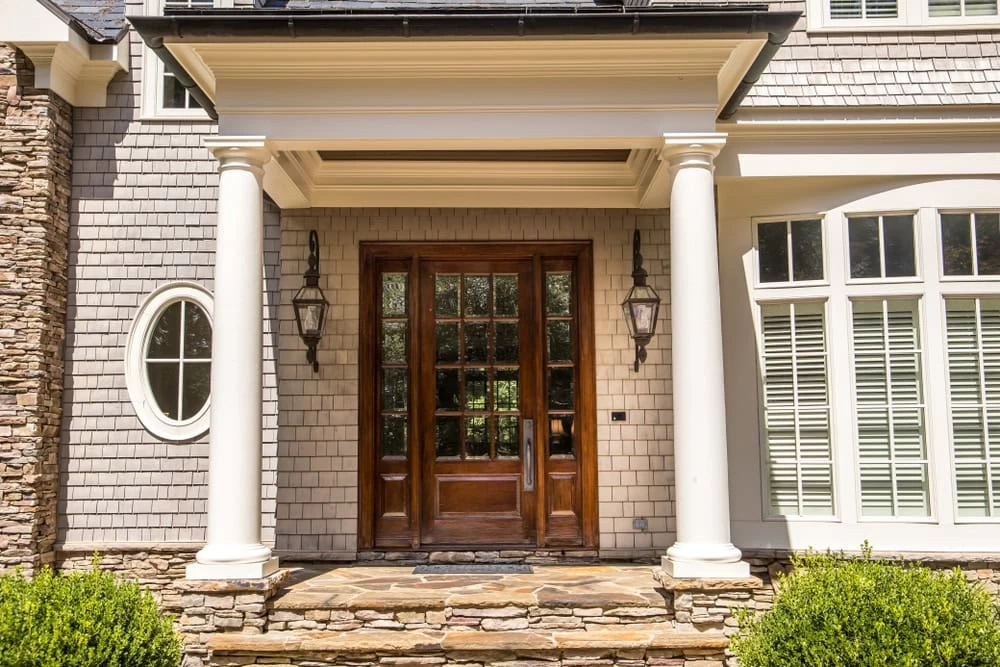
Sliding glass doors put a lot of surface area in contact with outdoor temperatures. The frame material becomes even more critical because you’re dealing with larger panels and more potential for air leakage around the track system.
Fiberglass sliding doors expand and contract at nearly the same rate as the glass itself. That thermal stability prevents gaps from opening up between the frame and glass as temperatures change. You’re not fighting against the material—it’s working with the door’s design to maintain that seal.
The frame needs to do more than just hold the glass. It has to resist the moisture that builds up during humid New Jersey summers. It has to stay dimensionally stable when winter cold makes everything contract. And it needs to maintain smooth operation on the track system without binding or creating gaps.
Vinyl sliding doors achieve this through their chambered design. Air trapped in those chambers acts as insulation, reducing heat transfer through the frame. The material doesn’t rot or corrode, so you’re not dealing with deterioration that compromises the seal over time.
Steel sliding doors require thermal breaks—insulating materials placed between the interior and exterior metal surfaces. Without these breaks, the steel conducts heat so efficiently that condensation forms on the interior surface during winter. Ice can actually build up on the frame. Thermal breaks stop that heat transfer, keeping interior surfaces warmer and preventing moisture problems.
The track system matters as much as the frame material. Even the best frame fails if air leaks around the bottom track or if weatherstripping doesn’t make consistent contact. Look for continuous weatherstripping that compresses when the door closes, multi-point locking systems that pull the door tight against the frame, and track designs that shed water away from the interior.
Frame depth affects insulation capacity too. Deeper frames accommodate thicker glass packages with better insulating properties. They also provide more space for weatherstripping and create longer paths for air trying to leak through the assembly. A 4-inch frame depth gives you more options than a 2-inch depth when you’re trying to meet Northern climate zone performance requirements.
Color selection influences performance in ways most people don’t consider. Dark exterior colors absorb more solar heat, which can be beneficial in winter but problematic in summer. Light colors reflect heat, staying cooler to the touch. If your patio door faces south and gets full sun exposure, that color choice affects how much heat the frame absorbs and transfers into your home.
The style of patio door you choose affects energy performance in ways that go beyond aesthetics. Sliding doors and French doors seal differently, operate differently, and create different opportunities for air leakage.
Sliding patio doors typically achieve better energy efficiency because they use single large glass panels with fewer seams. The door slides along a track and compresses against weatherstripping when closed. There’s only one main seal point to maintain—the perimeter where the moving panel meets the frame. When that seal is properly designed and the door is correctly installed, you get consistent performance.
French doors swing open from the center, which means you have a seam where the two door panels meet in the middle. That center seam creates an additional opportunity for air leakage if the doors don’t align perfectly. The hinged operation also means each door needs weatherstripping around its entire perimeter, and both doors need to close flush against each other and the frame.
That doesn’t mean French doors can’t be energy efficient. Modern French patio doors use compression seals that squeeze tight when the door latches. Multi-point locking systems pull the door firmly against the weatherstripping at multiple locations, not just at the handle. When properly manufactured and installed, French doors can achieve excellent thermal performance.
The advantage of French doors is the wider opening. Both panels can swing open, giving you full access to the doorway. That matters if you’re moving furniture between inside and outside spaces or if you want maximum ventilation. Sliding doors only open halfway—one panel slides over the other, so you’re always working with half the opening width.
For Essex County’s climate, either style works if you focus on the right specifications. Look for doors that meet ENERGY STAR requirements for Northern climate zones. That means U-factors of 0.26 or lower for patio doors. The U-factor measures how much heat passes through the entire door assembly—lower numbers mean better insulation.
Solar heat gain coefficient matters too, especially if your patio door faces south. SHGC measures how much solar heat comes through the glass. In Northern climates, you might actually want some solar heat gain in winter to help warm your home naturally. But too much SHGC means excessive heat gain in summer. The right balance depends on your door’s orientation and how much sun exposure it gets.
Installation quality determines whether your door performs as designed. Even doors with excellent specifications fail if they’re not installed level and square in the opening. Gaps around the frame let air leak through, bypassing all the insulation built into the door itself. The frame needs to be properly shimmed, sealed with low-expansion foam, and flashed to prevent water intrusion. That’s not a DIY project—professional installation ensures the door performs the way the manufacturer intended.
Want live answers?
Connect with a Iron Door Kings expert for fast, friendly support.
Glass makes up most of your patio door’s surface area. The technology built into that glass determines how much heat moves through it. Single-pane glass is essentially a thermal hole in your wall—heat flows through it easily in both directions.
Modern energy efficient glass doors use multiple panes with space between them. That space gets filled with argon or krypton gas, which insulates better than regular air. Low-E coatings on the glass reflect heat back toward its source—keeping warmth inside during winter and blocking solar heat in summer.
The combination of these technologies makes a dramatic difference. Where single-pane glass might have a U-factor around 1.0, a double-pane unit with Low-E coating and argon fill can achieve U-factors below 0.30. That’s three times better insulation performance from what looks like the same glass door.
Essex County sits in ENERGY STAR’s Northern climate zone. The requirements here are stricter than in warmer parts of the country because the temperature difference between inside and outside is so much greater. Your patio door needs to handle those 50 to 70 degree temperature swings without turning into an energy drain.
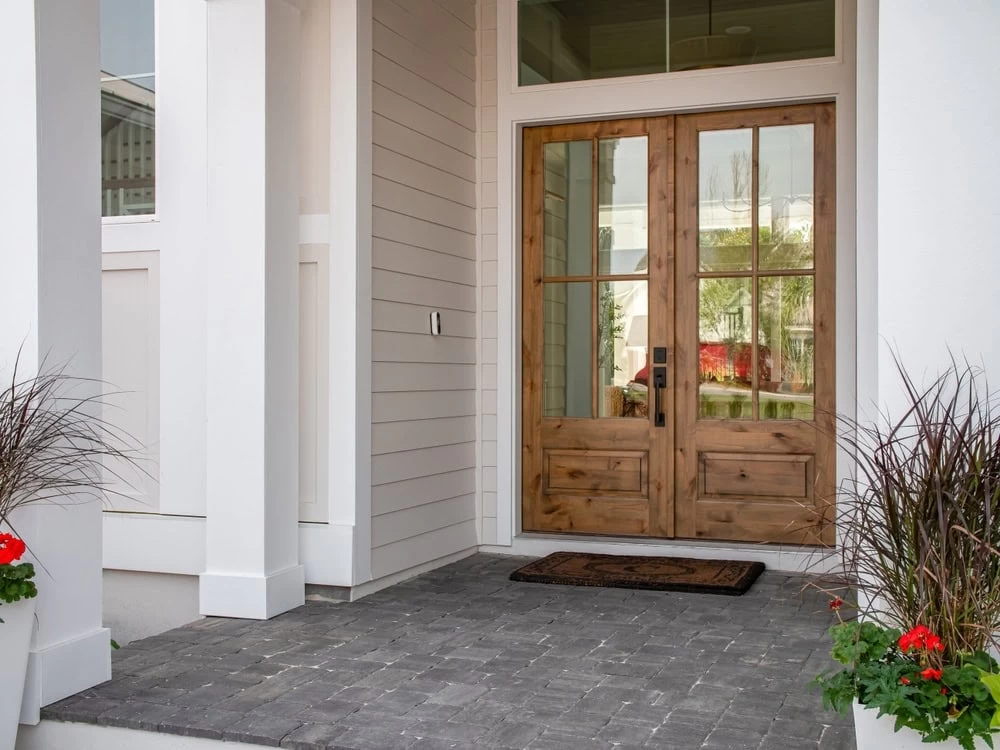
The number of glass panes directly affects insulation performance. Each additional pane creates another barrier to heat transfer, with insulating gas fills in the spaces between panes.
Double-pane glass consists of two panes with a sealed space between them. That space gets filled with argon gas during manufacturing. Argon has lower thermal conductivity than air—about two-thirds as much—so it slows heat transfer through the glass unit. The Low-E coating on one or both glass surfaces reflects infrared heat, adding another layer of thermal control.
This combination delivers solid performance for most New Jersey applications. Double-pane units with Low-E coatings and argon fills typically achieve U-factors between 0.25 and 0.30, which meets ENERGY STAR requirements for Northern climate zones. The glass stays warmer on the interior surface during winter, reducing condensation and improving comfort near the door.
Triple-pane glass adds a third pane and a second insulating space. You get two chambers filled with argon or krypton gas instead of one. The additional pane and gas space can push U-factors down to 0.15 or 0.20—significantly better insulation than double-pane units.
That extra performance comes with tradeoffs. Triple-pane units are heavier, which affects door operation and hardware requirements. They’re more expensive to manufacture. And they reduce visible light transmission slightly because you’re looking through three panes instead of two.
For Essex County’s climate, double-pane glass with quality Low-E coatings and argon fills handles most situations well. Triple-pane makes sense if your patio door faces north and gets no solar heat gain, if you have an especially exposed location with high wind, or if you’re pursuing maximum energy efficiency regardless of cost.
The glass package needs to match your specific situation. South-facing doors might benefit from Low-E coatings that allow some solar heat gain in winter while blocking it in summer. North-facing doors need maximum insulation with less concern about solar control. Your door manufacturer or installer should be specifying the right glass package based on your door’s orientation and exposure.
Warm-edge spacers make a difference too. These are the materials that separate the glass panes around the perimeter of the insulated glass unit. Traditional aluminum spacers conduct heat, creating a cold edge around the glass where condensation forms. Warm-edge spacers use materials with lower thermal conductivity—foam, silicone, or stainless steel with thermal breaks. They reduce heat transfer at the glass edge, keeping that area warmer and reducing condensation issues.
The seal around the insulated glass unit determines how long the door performs as designed. If that seal fails, moisture gets between the panes and the argon gas leaks out. You’re left with foggy glass and reduced insulation performance. Quality manufacturing and proper installation protect that seal, but it’s worth understanding that the glass package is a sealed unit that needs to maintain its integrity over decades.
Low-E coatings are microscopically thin metallic layers applied to glass surfaces. They’re engineered to reflect infrared heat while allowing visible light to pass through. That selective reflection is what makes them effective for energy control.
The coating can go on different glass surfaces depending on what you’re trying to achieve. In a double-pane unit, you have four potential surfaces—the outside of the outer pane, the inside of the outer pane, the outside of the inner pane, and the inside of the inner pane. Where the coating goes determines whether it’s optimized for blocking solar heat gain or retaining interior heat.
For Northern climate zones like Essex County, you typically want coatings that allow some solar heat gain in winter while still providing good insulation. That means the coating goes on the inner pane facing the air space, reflecting interior heat back into your home during heating season. The coating still blocks some solar heat in summer, but it’s balanced to provide year-round benefit.
Different Low-E coatings offer different performance characteristics. Some maximize insulation at the expense of solar heat gain. Others prioritize solar control, blocking more heat from the sun but providing less insulation against conducted heat. The right coating depends on your door’s orientation, your home’s heating and cooling loads, and your priorities between winter heat retention and summer heat rejection.
Argon gas fills work in combination with Low-E coatings to reduce heat transfer. Argon is denser than air and has lower thermal conductivity. When sealed between glass panes, it slows the movement of heat through the space. The gas doesn’t do anything visible—you can’t see it or tell it’s there—but it makes a measurable difference in thermal performance.
Krypton gas offers even better insulation than argon. It’s denser and has lower thermal conductivity. The downside is cost—krypton is more expensive to produce and use. It’s typically reserved for premium doors or for thinner glass spaces where argon doesn’t have enough room to perform effectively. For most Essex County applications, argon provides excellent performance at reasonable cost.
The gas fill only works if the seal holds. That’s why quality manufacturing matters. The insulated glass unit needs to be properly sealed around its perimeter to keep the argon in and moisture out. If the seal fails, you lose the gas fill and you get condensation between the panes. That’s a manufacturing defect that should be covered under warranty, but it’s also why you want to work with reputable manufacturers who stand behind their products.
These technologies work together as a system. The Low-E coating reflects heat. The gas fill slows conducted heat transfer. The multiple panes create barriers to heat movement. And the warm-edge spacers reduce heat loss at the glass perimeter. When all these elements are properly specified and manufactured, you get glass that looks clear and transparent but performs dramatically better than single-pane glass from older doors.
The performance difference shows up in your utility bills and in comfort near the door. With quality energy efficient glass, you don’t get the cold draft feeling when you stand next to the patio door in winter. The interior glass surface stays warmer, so there’s less radiant heat loss from your body. And your heating system doesn’t have to work as hard to maintain temperature in rooms with patio doors.
The right patio door for your Essex County home combines frame materials that resist New Jersey’s climate extremes with glass technology that prevents heat transfer. Fiberglass or vinyl frames provide excellent insulation. Steel frames need thermal breaks to perform well. And the glass package needs Low-E coatings with argon fills to meet Northern climate zone requirements.
Installation quality determines whether these materials perform as designed. Even the best door fails if it’s not properly sealed in the opening. Professional installation ensures your door achieves its rated performance and protects your investment.
When you’re ready to explore energy efficient patio doors that actually work in Essex County’s climate, we bring the material expertise and installation precision that makes the difference between a door that performs and one that disappoints.
Article details:
Share:
Continue learning: