Energy efficient sliding glass doors with integrated blinds eliminate condensation issues in New Jersey's extreme climate while providing privacy control and measurable energy savings.
Share:
Summary:
You’ve probably noticed it. Condensation dripping down your sliding glass door on a humid July morning. Or frost forming on the inside of the frame during a January cold snap. Maybe you’ve felt the draft when you walk past, or watched your heating and cooling costs creep up year after year.
New Jersey’s climate doesn’t go easy on doors. The combination of humid summers and sub-freezing winters creates real problems for standard sliding glass systems. Energy efficient sliding glass doors with blinds offer a solution that addresses both the thermal performance issues and the privacy concerns most homeowners face. They’re designed specifically for climates like ours, where temperature swings and moisture are constant challenges.
Here’s what you need to know about how they work and whether they make sense for your home.
The concept is straightforward, but the engineering behind it matters. Energy efficient sliding glass doors with blinds feature a sealed blind system positioned between two or more panes of glass. This eliminates the need for external window treatments while creating an additional barrier against heat transfer.
The blinds themselves sit in a protected space where they never collect dust, never get damaged by kids or pets, and never need cleaning. You control them with a simple mechanism, usually a slider or magnetic control, that lets you adjust light and privacy without ever touching the blinds themselves.
But the real value isn’t just convenience. It’s what happens when you combine that integrated blind system with proper thermal engineering. The multi-pane glass configuration, Low-E coatings, and gas fills work together to create a thermal barrier that standard single-pane doors simply can’t match.
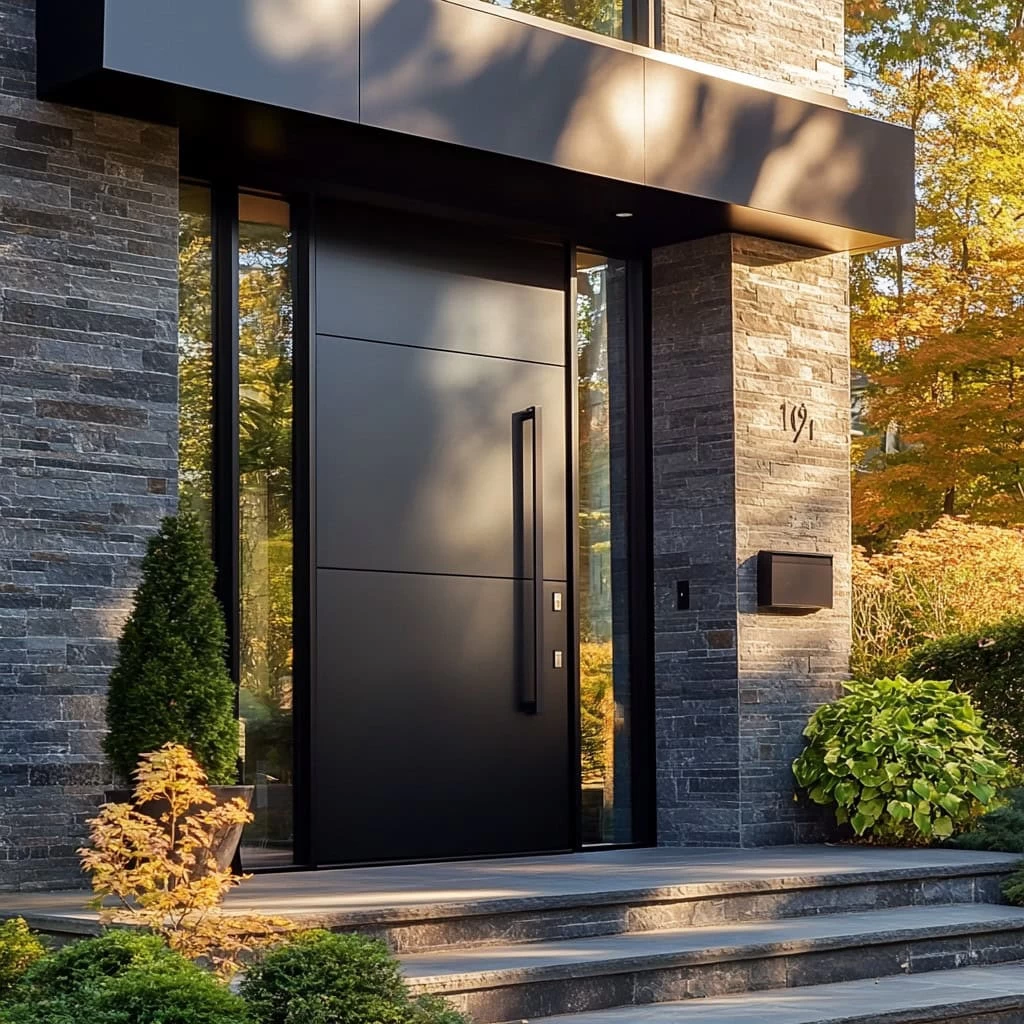
Not all energy efficient patio doors perform the same way in New Jersey’s climate. The best energy efficient patio doors for our region need to handle both extreme cold and extreme humidity, often within the same week.
Essex County sees 40 to 60 freeze-thaw cycles annually. That’s significantly more than coastal areas experience. Every time the temperature crosses the freezing point, moisture expands and contracts. Standard doors without proper thermal breaks develop condensation, which leads to frost, which leads to water damage when it melts. Over time, this cycle destroys weatherstripping, warps frames, and voids warranties.
The most energy efficient doors combine several key features. First, they use thermally broken frames. This means a low-conductivity material separates the interior and exterior portions of the frame, preventing heat from conducting straight through the metal or composite material. Second, they incorporate multiple panes of glass with Low-E coatings and inert gas fills like argon or krypton between the panes. Third, they include proper weatherstripping and compression seals that maintain their integrity through temperature swings.
Fiberglass-framed doors with double or triple-pane Low-E coated glass represent the current standard for maximum efficiency. Fiberglass expands and contracts at nearly the same rate as glass, which means the seals stay tight even when temperatures fluctuate dramatically. Vinyl frames offer good insulation at a lower price point, though they’re more prone to expansion in extreme heat. Aluminum frames need thermal breaks to perform well, but when properly engineered, they provide excellent durability and a sleek modern appearance.
When you’re evaluating options, look for NFRC (National Fenestration Rating Council) labels. These show U-Factor and Solar Heat Gain Coefficient (SHGC) ratings. Lower U-Factor numbers mean better insulation. In New Jersey’s northern climate zone, you want a U-Factor of 0.30 or lower for optimal performance. SHGC measures how much solar heat passes through the glass. A lower number keeps your home cooler in summer, which matters during those humid July and August stretches when indoor moisture becomes a real problem.
Condensation happens when warm, moisture-laden air contacts a cold surface. The air can’t hold as much water vapor when it cools, so the excess condenses into liquid water. In New Jersey, this happens constantly during summer and winter, just in different ways.
Summer condensation occurs when hot, humid outdoor air infiltrates your home and contacts the cold surface of an air-conditioned interior door frame. Winter condensation happens when warm indoor air hits the cold interior surface of a poorly insulated door. Both scenarios create the same problem: water pooling on surfaces where it doesn’t belong.
The most energy efficient doors prevent condensation by eliminating cold spots. Thermal break technology is critical here. When a door frame has no thermal break, the exterior cold (or heat) conducts directly through the frame material to the interior surface. Even if you have double-pane glass, that cold frame creates a condensation point. Thermal breaks interrupt this heat transfer by inserting a low-conductivity material between the interior and exterior frame sections. This keeps the interior frame surface closer to room temperature, which prevents condensation from forming.
Multi-pane glass configurations with Low-E coatings provide additional protection. The Low-E coating reflects infrared light, which reduces heat transfer through the glass itself. When you combine Low-E glass with argon or krypton gas fills between the panes, you create an insulating barrier that keeps the interior glass surface warm enough to prevent condensation under normal conditions.
Integrated blinds add another layer of thermal protection, though it’s important to understand the trade-offs. Traditional blinds-between-glass systems seal the blinds in the airspace between two panes. This means you can’t fill that space with insulating gas, which reduces the door’s overall thermal performance. Some manufacturers address this with triple-pane configurations, where the blinds sit between two panes and a third pane creates a separate gas-filled chamber. This maintains energy efficiency while providing the convenience of integrated blinds.
Proper installation matters as much as door design. Air leaks around the frame create cold spots where condensation forms. Professional installation ensures weatherstripping is properly compressed, frames are level and plumb, and all gaps are sealed. In New Jersey’s climate, where humidity and temperature swings are constants, installation quality often determines whether a door performs as designed or becomes a moisture problem.
Want live answers?
Connect with a Iron Door Kings expert for fast, friendly support.
Aluminum conducts heat extremely well, which makes it terrible for energy efficiency unless it’s properly engineered. Thermally broken aluminum doors solve this problem by inserting a polyamide or polyurethane barrier between the interior and exterior aluminum sections. This barrier has low thermal conductivity, which means heat can’t easily pass through it.
The result is a door frame where the exterior can be freezing cold or blazing hot without affecting the interior temperature. This prevents the condensation issues that plague non-thermally broken systems and dramatically improves energy efficiency. Thermal breaks can reduce heat loss by up to 50% compared to standard aluminum frames.
For homeowners who want the sleek, modern look of aluminum with the energy performance of fiberglass or vinyl, thermally broken aluminum represents the best of both worlds. The frames are strong, durable, and require minimal maintenance while delivering thermal performance that meets or exceeds ENERGY STAR requirements.
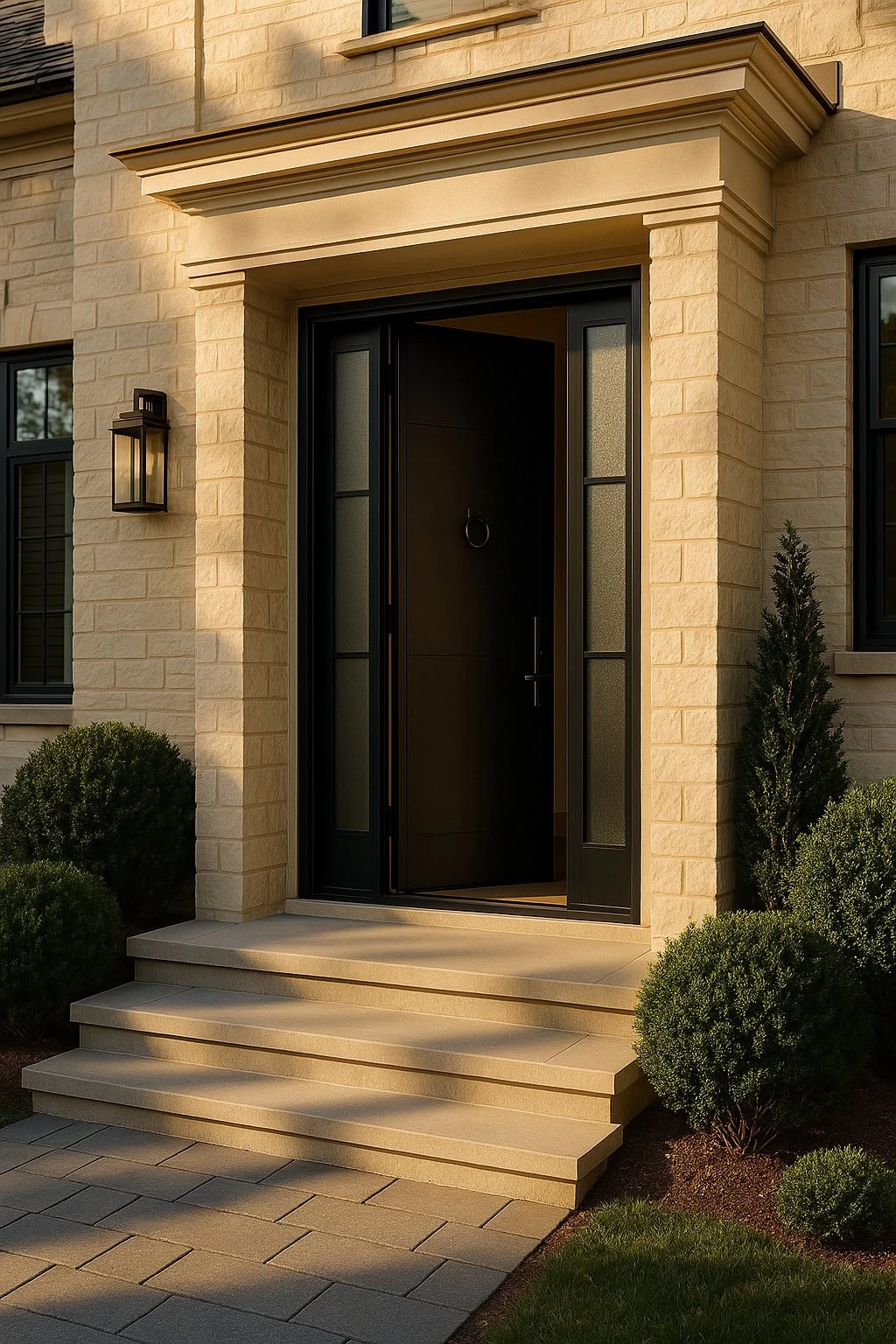
Thermal break technology isn’t new, but understanding how it works helps you evaluate whether a door will actually perform in New Jersey’s climate. The principle is simple: interrupt the path that heat takes through a conductive material.
In a thermally broken frame, manufacturers extrude two separate aluminum profiles, one for the interior and one for the exterior. They then connect these profiles with a reinforced polyamide strip. Polyamide is a type of plastic, often reinforced with glass fibers, that has extremely low thermal conductivity. It’s strong enough to maintain structural integrity while being poor enough at conducting heat to create an effective thermal barrier.
The width of the thermal break matters. Wider breaks provide better insulation, though they also add cost and weight to the door. Most residential applications use thermal breaks between 14mm and 34mm wide. For New Jersey’s climate, a minimum 20mm thermal break provides adequate performance for most installations.
When you combine thermal breaks with other energy-efficient features, the performance compounds. Low-E coatings on the glass reduce radiant heat transfer. Argon gas fills between panes reduce convective heat transfer. Thermal breaks reduce conductive heat transfer through the frame. Together, these features create a door system that maintains stable interior temperatures regardless of outdoor conditions.
This stability matters beyond just comfort. When your doors maintain consistent interior surface temperatures, you prevent condensation. When you prevent condensation, you avoid mold growth, wood rot, and the warranty voids that come with moisture damage. In a climate where humidity regularly exceeds 70% during summer months, this protection isn’t optional. It’s essential.
The engineering also affects how long your door lasts. Thermal breaks reduce the stress that temperature cycling places on seals and weatherstripping. When frames expand and contract less, seals maintain their compression and continue performing year after year. This is why properly engineered thermally broken doors often outlast standard doors by a decade or more, even in challenging climates.
ENERGY STAR certification means a door has been independently tested and verified to meet strict energy efficiency guidelines set by the EPA. For entry doors and patio doors, this certification requires meeting specific U-Factor and, where applicable, SHGC requirements based on your climate zone.
Essex County falls in the Northern climate zone, which has the strictest requirements. ENERGY STAR certified doors for this zone must demonstrate superior insulating properties that keep heat inside during winter and minimize unwanted heat gain during summer.
The financial case for ENERGY STAR entry doors comes down to three factors: energy savings, available rebates, and long-term durability. Energy savings vary based on your existing doors and your home’s overall efficiency, but most homeowners see measurable reductions in heating and cooling costs. The Department of Energy estimates that energy-efficient doors can reduce energy bills by 12% annually compared to standard doors.
Federal tax credits sweeten the deal. ENERGY STAR certified exterior doors qualify for tax credits up to $500 total for door installations. This isn’t a deduction; it’s a direct credit against your tax liability. Combined with any state or utility rebates available in New Jersey, the upfront cost difference between standard and ENERGY STAR certified doors often disappears within the first few years.
Durability matters more than many homeowners realize. ENERGY STAR doors typically use better materials, better seals, and better construction methods than budget alternatives. They’re engineered to maintain their performance over decades, not just years. In New Jersey’s climate, where doors face constant thermal stress and moisture challenges, this durability translates to fewer repairs, less maintenance, and longer intervals before replacement becomes necessary.
When you’re evaluating whether ENERGY STAR certification is worth it, consider the total cost of ownership, not just the purchase price. A door that costs 20% more but lasts 50% longer and saves 12% annually on energy costs pays for itself several times over its lifespan. Add in the improved comfort, the elimination of condensation problems, and the peace of mind that comes with knowing your doors are properly protecting your home, and the value becomes clear.
At Iron Door Kings, we create custom energy-efficient door solutions that incorporate advanced glazing, weather sealing, and thermal break features specifically engineered for New Jersey’s demanding climate. Our in-house design team works with you to create doors that meet ENERGY STAR requirements while matching your aesthetic preferences and your home’s architectural style.
Energy efficient sliding glass doors with blinds solve real problems for New Jersey homeowners. They eliminate condensation issues, reduce energy costs, provide convenient privacy control, and require virtually no maintenance compared to traditional window treatments.
The key is choosing doors engineered for our climate. That means thermally broken frames, multi-pane Low-E glass, proper gas fills, and professional installation that ensures every seal performs as designed. It means working with a company that understands the specific challenges Essex County homes face and knows how to address them.
Whether you need sliding glass doors, entry doors, or custom iron door solutions, we combine superior craftsmanship with personalized service to create doors that perform for decades. Our dedicated project managers and professional installation team ensure your investment delivers the energy efficiency, durability, and beauty you expect from a premium door system.
Article details:
Share:
Continue learning: