Thermal break thresholds create barriers in metal door systems that stop heat transfer and prevent condensation—critical technology for New Jersey's extreme temperature swings and moisture challenges.
Share:

Summary:
Your door threshold probably isn’t something you think about. Most people don’t—until they notice condensation forming on their beautiful new iron door every winter morning. Or until their heating bill jumps because cold air is bleeding through gaps in the metal frame.
Metal conducts temperature extremely well. That makes it strong and durable, but terrible for insulation. Without the right technology built into your door system, you’ve essentially installed a direct pathway for heat to escape.
Thermal break threshold technology interrupts that pathway by creating a barrier that stops heat transfer through metal components. For Essex County homeowners facing 20-degree January nights and 90-degree August afternoons, this isn’t optional. It’s how you protect your investment and avoid condensation damage. Here’s how it actually works.
A thermal break threshold places a physical barrier between the interior and exterior metal sections of your door threshold—that bottom piece where the door meets your floor. This barrier uses materials with low thermal conductivity, meaning they resist transferring heat.
Metal acts like a highway for temperature. Heat races through it from your warm house straight to the cold outside air in winter. In summer, the process reverses. A thermal break threshold acts like a roadblock on that highway, forcing the temperature transfer to slow dramatically or stop entirely.
Your threshold is one piece of a complete system. Quality iron door installations include thermal breaks throughout the entire assembly—the frame, the door panel, and the threshold. Each component works together to create a comprehensive barrier against both heat loss and the condensation problems that plague non-thermally-broken metal doors in New Jersey.
The science is straightforward: different materials conduct heat at different rates. Metal has high thermal conductivity. Touch a steel door frame in January and your hand tells you immediately—it’s freezing. The thermal break material, typically polyurethane or polyamide, has extremely low thermal conductivity.
When you place this low-conductivity material between the inner and outer sections of your door frame, you’re physically separating the two metal halves. The outside metal can drop to whatever temperature the Essex County winter throws at it. The inside metal stays closer to your room temperature. The thermal break material between them prevents the cold from conducting through.
This separation happens throughout the threshold assembly but makes a massive difference in real-world performance. Without a thermal break, the metal forms what engineers call a “thermal bridge”—an uninterrupted path for heat to escape your home. With a thermal break in place, that bridge is broken. Heat transfer can drop by 50% or more compared to non-thermally-broken systems.
Material choice affects performance. Polyurethane offers superior insulation with lower thermal conductivity ratings than polyamide. But polyamide provides excellent structural integrity and has a thermal expansion coefficient nearly identical to aluminum and steel. That means it expands and contracts at the same rate as your door frame.
Why does matching expansion rates matter? Because New Jersey’s climate swings from 25-degree January mornings to 85-degree July afternoons. That’s a 60-degree temperature range. Materials expand when heated and contract when cooled. If your thermal break material expands at a different rate than the metal frame, gaps form over time as temperatures cycle. Those gaps destroy the thermal barrier and let heat transfer resume.
Polyamide avoids this by expanding and contracting in sync with the metal. The thermal break maintains its integrity through years of temperature cycling. No gaps. No shrinkage. The barrier stays continuous and effective.
Both materials work when properly installed. Polyurethane delivers slightly better thermal performance. Polyamide offers superior long-term stability. Your choice depends on your specific door design, exposure to temperature extremes, and what your installer has experience with.
What matters most is having the thermal break at all. An iron door with polyamide thermal breaks vastly outperforms one with no thermal breaks, even if polyurethane might edge ahead on paper. The technology itself is what transforms how your door handles New Jersey’s climate challenges.
Walk up to a non-thermally-broken metal door on a cold morning and you’ll likely see moisture beading on the interior surface. That’s condensation, and it’s not just annoying—it’s actively destroying your door.
Here’s the mechanism: warm, humid indoor air contacts the cold metal surface of your door frame. When air cools down, it loses its ability to hold moisture. That moisture has to go somewhere, so it condenses into water droplets on the coldest surface available—your door.
Without a thermal break, the interior metal surface stays nearly as cold as the outdoor temperature. Your 68-degree indoor air hits that 25-degree metal, and physics takes over. Water forms. Over time, that water promotes rust, damages finishes, and creates conditions for mold growth. You might not see it immediately, but the damage is happening.
Thermal breaks solve this by keeping the interior metal surface warmer. Instead of your inside door frame matching the outside temperature, it stays much closer to room temperature. Warm indoor air doesn’t experience that dramatic temperature drop when it contacts the metal. No temperature drop means no condensation.
This matters more in some climates than others. Essex County sits in Climate Zone 5. You’re dealing with real temperature extremes here. Winter nights drop below 20 degrees. Summer afternoons push past 90. That’s a 70-degree-plus temperature range throughout the year.
Every time outdoor temperature differs significantly from indoor temperature, you risk condensation on non-thermally-broken metal. In New Jersey, that’s most of the year. Spring mornings when it’s 40 outside and 68 inside. Fall evenings. Winter days. Summer nights when you’re running AC. There’s almost always enough temperature differential to cause problems on metal surfaces without thermal breaks.
The damage compounds. A little moisture today becomes rust spots tomorrow. Rust weakens metal and compromises structural integrity. Finishes deteriorate faster. Weatherstripping breaks down when constantly exposed to moisture. What started as a few water droplets turns into a warranty claim or premature door replacement within a few years.
Homeowners in Newark, Montclair, and Bloomfield see this pattern repeatedly with non-thermally-broken iron doors. The door looks beautiful at installation. By the second winter, condensation appears. By the third or fourth year, rust spots develop. By year five or six, the finish is compromised and the door needs refinishing or replacement.
Thermal break thresholds prevent this entire chain of problems by addressing the root cause: cold interior metal surfaces. Keep that surface warm relative to your indoor air temperature, and condensation never gets a chance to form.
Want live answers?
Connect with a Iron Door Kings expert for fast, friendly support.
Installing a thermal break threshold isn’t something you can approximate or figure out as you go. The technology only delivers its promised performance if every component is installed with precision.
Your threshold must be perfectly level with the ground. Even slight variations create gaps where air leaks through, undermining the entire thermal barrier. Professional installers use wood shims to adjust and level the threshold during installation, ensuring it sits flush and even across the entire doorway width.
The door jamb goes in before the door itself. This sequence matters because the jamb supports the thermal break system throughout the frame. Install components out of order, and you risk compromising the thermal barrier’s integrity before the door even operates.
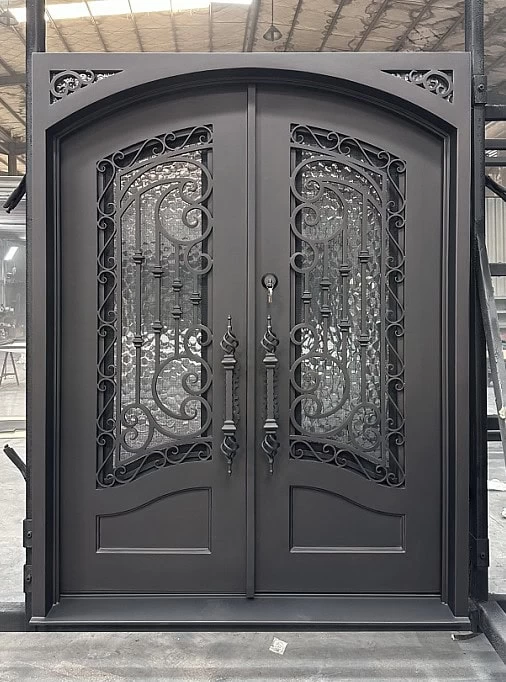
Your thermal break threshold is only as effective as its installation. The technology is engineered to perform flawlessly—but only when installed correctly.
Here’s what goes wrong with inexperienced installations: gaps. Thermal breaks work by creating a continuous barrier between interior and exterior metal. Any gap in that barrier becomes a thermal bridge where heat escapes freely. DIY installers or contractors without iron door experience might get the door hung and think the job is done, not realizing they’ve left gaps that destroy thermal performance.
Weatherstripping must create an airtight seal around the entire door system. This isn’t just about keeping out drafts—it’s about maintaining the thermal barrier’s effectiveness. Air leaks allow warm, moist indoor air to contact cold metal surfaces, creating condensation even when thermal breaks are present in the frame.
Threshold level affects everything downstream. If it’s not perfectly level, the door won’t close properly. Improper closure creates gaps. Gaps allow air infiltration. Air infiltration causes condensation and energy loss despite the thermal break technology. One installation mistake cascades into multiple performance problems.
Professional installers understand these relationships. They know that installing a thermally broken iron door means paying attention to details that might seem minor but actually determine whether your door performs as engineered or fails within a few years.
Our installation process includes checking threshold level multiple times during installation. We verify weatherstripping creates proper contact all the way around the door frame. We ensure the thermal break runs continuously through every component without interruption. We test the door’s operation to confirm it closes completely and seals properly against the weatherstripping.
This level of care isn’t about perfectionism—it’s about physics. Thermal break technology works based on precise engineering. Install it precisely, and it performs exactly as designed. Cut corners, and you’ve invested in an expensive door that doesn’t solve the condensation and energy loss problems it was built to address.
Proper installation isn’t complicated—it just requires knowledge and attention to detail. Your installer should understand how thermal breaks function, why continuous barriers matter, and what installation mistakes compromise performance. If they can’t explain these things clearly, they probably shouldn’t be installing your thermally broken iron door.
You’re making a significant investment in a custom iron door. The installation quality determines whether that investment pays off with decades of trouble-free performance or turns into an ongoing source of problems and regret.
Not all thermal break materials deliver identical performance. Understanding the differences helps you make informed decisions about your door system.
Polyurethane thermal breaks offer the lowest thermal conductivity among common materials. Lower thermal conductivity means better insulation performance. In practical terms, polyurethane stops heat transfer more effectively than alternatives. This translates directly to better energy efficiency and fewer condensation problems.
The material starts as a liquid that’s poured into a cavity in the door frame, then cures to a solid. This “pour and debridge” method allows the polyurethane to fill complex shapes and create a complete thermal barrier without gaps. Once cured, the metal bridge connecting the interior and exterior frame sections is removed, leaving only the non-conductive polyurethane joining the two halves.
Polyamide thermal breaks use pre-formed strips mechanically inserted between metal frame sections. The strips are reinforced with glass fibers, making them extremely stable and durable. Polyamide’s thermal expansion coefficient closely matches aluminum and steel, meaning it expands and contracts at nearly the same rate as your door frame.
This matching expansion rate matters in New Jersey. When temperatures swing from 25 degrees in winter to 85 degrees in summer—a 60-degree range—materials expand and contract significantly. If the thermal break material expands at a different rate than the metal frame, gaps can form over time. Those gaps compromise the thermal barrier and allow heat transfer to resume.
Polyamide avoids this problem by expanding and contracting in sync with the metal. The result is a thermal break that maintains its integrity through years of temperature cycling. No gaps form. No shrinkage occurs. The barrier remains continuous and effective season after season.
Both materials work well when properly installed. Polyurethane offers slightly better thermal performance on paper. Polyamide offers superior structural stability and longevity in real-world conditions. The choice often depends on your specific door design, your home’s exposure to temperature extremes, and your installer’s expertise with each system.
What matters most is that the thermal break exists throughout your door system. A door with polyamide thermal breaks vastly outperforms a door with no thermal breaks, even if polyurethane might offer marginally better insulation values. Don’t get so focused on comparing materials that you miss the bigger point: thermal break technology fundamentally transforms how your iron door handles New Jersey’s climate.
For Essex County installations, we recommend thermal break systems engineered to handle the full temperature range you’ll experience. Your door needs to perform in February cold snaps and August heat waves. The thermal break material should handle both extremes without degrading, shrinking, or forming gaps that compromise performance.
Climate Zone 5 presents specific challenges. You’re not in a mild climate where temperature variations are gentle. You’re in an environment where your door might experience a 50-degree temperature swing within 24 hours during spring or fall. Your thermal break system needs to handle that without failing.
Thermal break thresholds aren’t optional technology for iron doors in New Jersey’s climate—they’re essential. The science is straightforward: create a barrier between interior and exterior metal to stop heat transfer and prevent condensation. The execution requires precision installation and quality materials.
When you’re investing in a custom iron door, verify that thermal breaks are included throughout the entire system—frame, threshold, and door panel. Make sure your installer understands how the technology works and why proper installation determines performance. Ask about the thermal break material being used and whether it’s appropriate for Essex County’s temperature extremes.
The difference between a thermally broken door and a standard metal door is the difference between comfortable, energy-efficient performance and ongoing condensation problems. One prevents issues before they start. The other sets you up for moisture damage, rust, and higher energy bills from the moment it’s installed.
We build thermal break technology into custom iron doors designed specifically for New Jersey’s challenging climate conditions. Our installation team ensures every component is properly leveled, sealed, and integrated to maintain the thermal barrier’s effectiveness from installation day through decades of use.
Article details:
Share:
Continue learning: