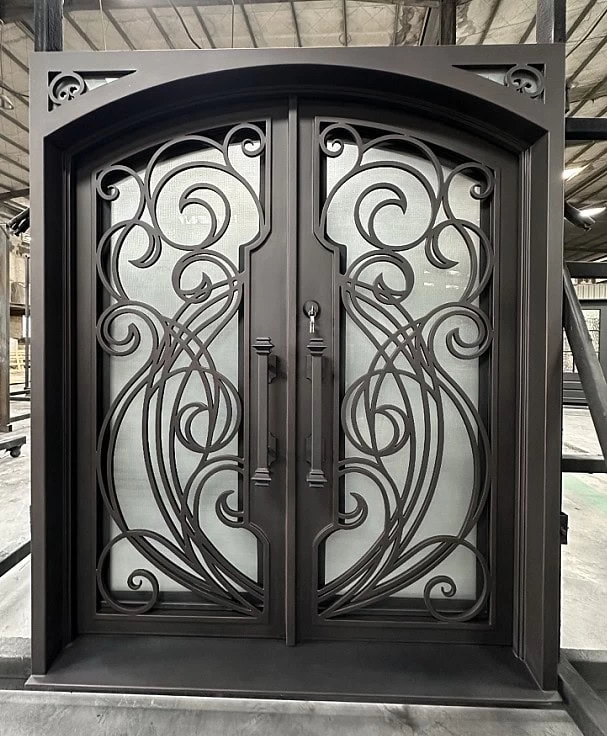
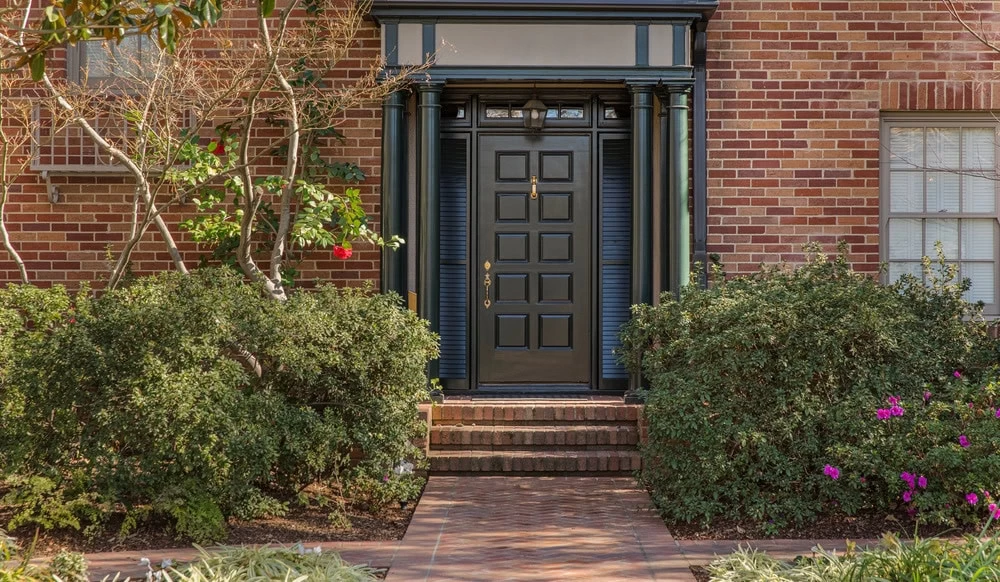
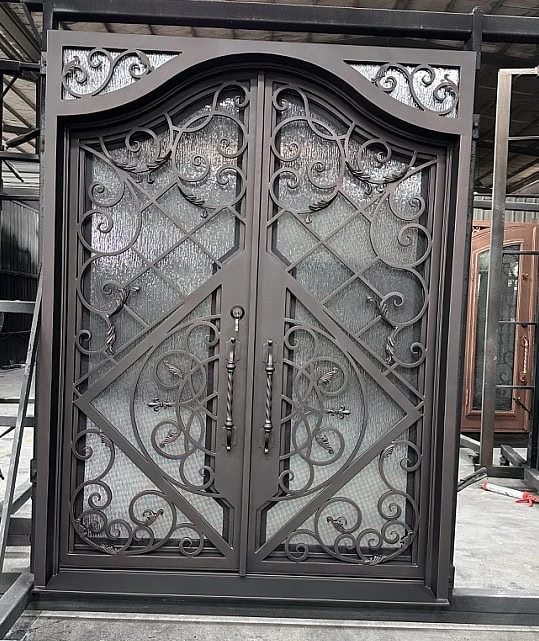
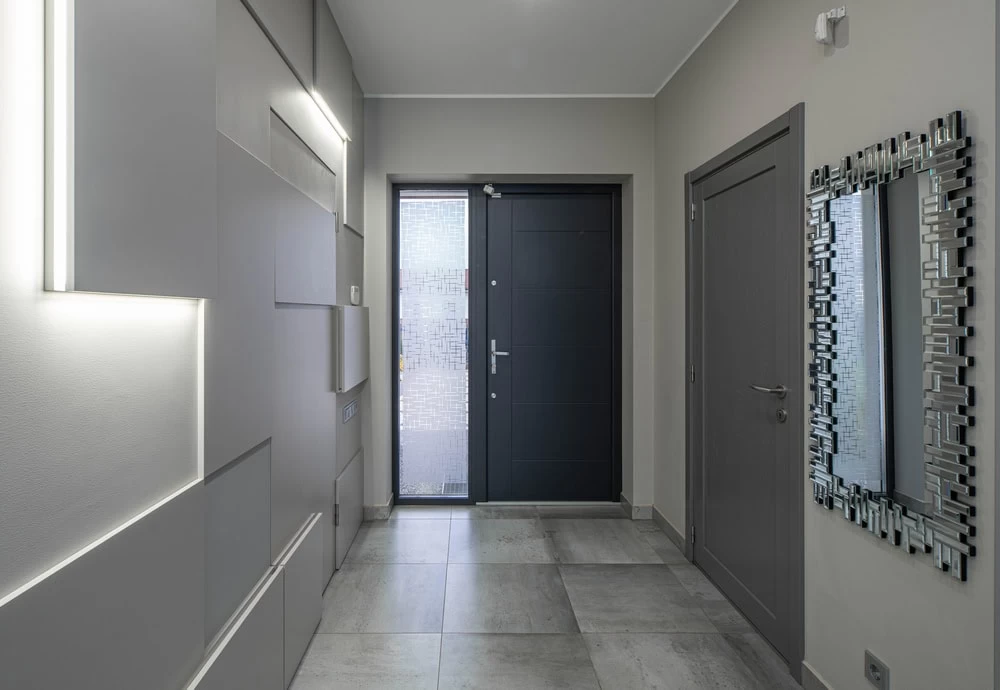
Iron storm doors combine weather protection with security and style. Learn how thermal break technology prevents condensation while defending your Essex County home against New Jersey's extreme climate.
Share:
Summary:
Your front entry takes a beating in Essex County. Freezing January mornings. Humid July afternoons. Rain that seems to find every gap. And somewhere between all that, you’re dealing with condensation on your door, drafts you can feel from across the room, or ice buildup that makes opening the thing a workout.
Iron storm doors solve these problems, but only when they’re built right. You need thermal break technology to stop condensation. You need proper installation to handle the weight. And you need a door that actually fits New Jersey’s climate instead of just looking good in a catalog. Here’s what actually matters when you’re protecting your home’s main entry.
Most storm doors you see at big box stores are aluminum frames with interchangeable glass and screen panels. Light, affordable, basic weather protection. They work fine if you live somewhere mild.
Essex County isn’t mild. You need something that handles temperature swings from below freezing to summer heat without warping, condensing, or failing. That’s where iron storm doors separate themselves from standard options—they’re built with the structural integrity to withstand real weather while maintaining proper sealing and operation.
Here’s the condensation problem nobody warns you about until it’s already happening. Metal conducts temperature. When it’s 20 degrees outside and 68 inside, a standard iron door becomes a cold surface inside your home. Warm indoor air hits that cold metal, and you get moisture. Sometimes beads of water. Sometimes frost. Always a problem.
Thermal break technology fixes this by literally breaking the connection between the outside and inside of your door frame. A low-conductivity material sits between the exterior and interior portions of the frame, stopping cold from transferring through. The inside of your door stays closer to room temperature instead of matching whatever’s happening outside.
This matters more in New Jersey than almost anywhere else. You’ve got humidity in summer and bitter cold in winter—exactly the conditions that create condensation issues. Without a thermal break, you’re dealing with moisture on your door, potential rust issues, and water damage to your flooring or threshold. With it, your door performs like it should regardless of the temperature difference between inside and out.
The technology isn’t just insulation stuffed somewhere. It’s engineered material placed precisely where heat transfer happens, extending through the entire door system including the frame, jamb, and even around glass panels. When done correctly, you won’t see frost forming on the inside of your door during cold snaps, and you won’t get that wet, cold feeling when you touch the frame.
Weight matters when you’re talking about storm doors. A standard aluminum storm door weighs maybe 30-40 pounds. An iron storm door can easily hit 150-200 pounds depending on size and design. That weight isn’t a problem—it’s an advantage when you’re trying to create a tight seal against weather.
The mass of iron means the door stays put when wind hits it. It doesn’t rattle. It doesn’t flex. When it closes, it seats firmly against weatherstripping instead of bouncing or settling unevenly. But that same weight means installation has to be done right, with proper anchoring and reinforced framing to support the load over years of use.
Weather sealing on iron storm doors works differently than lighter options. You’re not relying on compression alone to keep water and air out. The door’s weight helps maintain consistent pressure against seals, but the real protection comes from how the system is designed. Quality iron storm doors use multiple sealing points—weatherstripping around the entire perimeter, a threshold seal at the bottom, and often a drip cap at the top to direct water away from the opening.
Glass panels in iron storm doors are typically tempered safety glass, sometimes with low-E coatings for additional insulation. Unlike cheaper storm doors where glass sits in a simple frame, iron storm doors often integrate glass into the door’s structure with proper sealing and support. This prevents the rattling you get with loose glass panels and creates a more effective barrier against temperature transfer.
The finish matters as much as the structure. Iron exposed to New Jersey weather needs protection against rust and corrosion. Powder coating provides a durable finish that resists chipping and weathering better than paint. Applied correctly, it seals the metal and gives you a surface that holds up to humidity, road salt, and temperature extremes without constant maintenance.
Want live answers?
Connect with a Iron Door Kings expert for fast, friendly support.
You can’t install a 150-pound iron storm door the same way you’d hang a lightweight aluminum one. The process requires different equipment, different techniques, and an understanding of how to properly support and align something this substantial.
First, the existing opening needs evaluation. Is the framing sound? Are there signs of rot or water damage that need addressing before a new door goes in? Any structural issues get fixed now, not after the door’s installed and problems start showing up. The opening also needs to be properly sealed against moisture intrusion, because the last thing you want is water getting behind your new door system and causing damage you can’t see.
Standard door frames aren’t built to support the weight and stress of iron storm doors. The hinge side takes the most load—every time the door opens and closes, that weight pulls on the mounting points. Over time, inadequate reinforcement leads to sagging, misalignment, and operational problems.
Professional installation addresses this by reinforcing the frame where needed. Sometimes that means adding blocking behind the existing trim. Sometimes it requires upgrading the hinge mounting points with heavier hardware or additional support. The goal is distributing the door’s weight properly so it operates smoothly now and ten years from now.
Alignment is critical with heavy doors. Even a small amount of misalignment creates problems. If the door doesn’t hang level, it won’t close properly. If it’s not plumb, weatherstripping won’t seal evenly. If the reveals aren’t consistent, the whole installation looks wrong and probably isn’t performing correctly.
Getting alignment right requires precision measurement and adjustment during installation. The door gets positioned, checked, shimmed if needed, and secured only when everything is exactly where it should be. This takes more time than slapping up a basic storm door, but it’s the difference between a door that works perfectly and one that’s a constant source of frustration.
Hardware installation on iron storm doors also differs from lighter options. The closer needs to be rated for the door’s weight and properly adjusted so the door closes smoothly without slamming. Hinges need to be heavy-duty and mounted into solid framing, not just surface-mounted into trim. Locks and latches need to align precisely with strike plates, with no forcing or binding when you operate them.
The best iron storm door in the world doesn’t protect your home if it’s not sealed correctly during installation. Water finds gaps. Air finds leaks. And in New Jersey’s climate, those gaps and leaks turn into real problems fast.
Proper weatherproofing starts before the door goes in. The rough opening gets sealed against moisture with appropriate flashing and weatherproof barriers. This creates a continuous weather barrier from your home’s exterior sheathing to the new door system, with no gaps where water can penetrate.
Once the door is positioned and secured, weatherstripping gets installed or adjusted to create consistent contact all around the door. This isn’t just sticking some foam strips in place. Quality weatherstripping for iron storm doors is designed to compress under the door’s weight and maintain a seal through temperature changes and repeated use.
The threshold requires special attention. This is where water accumulation is most likely, and where you need the best seal to prevent drafts. A proper threshold installation includes setting it in sealant, ensuring it slopes slightly outward for drainage, and making sure the door’s bottom seal makes consistent contact when closed.
Around the perimeter, any gaps between the door frame and the rough opening get filled with appropriate sealant or backer rod and caulk. This isn’t just for appearance—it’s preventing air infiltration and water intrusion that can cause damage over time. The sealant needs to be compatible with the materials it’s touching and flexible enough to handle expansion and contraction with temperature changes.
Final weatherproofing includes checking for any potential water entry points and addressing them before the installation is complete. This might mean adding drip cap flashing above the door, sealing around mounting hardware, or ensuring that any decorative elements don’t create places where water can collect or penetrate.
Your home’s entry needs protection that actually works in New Jersey’s climate. That means thermal break technology to prevent condensation. It means proper construction to handle weather extremes. And it means professional installation that accounts for the weight and precision requirements of iron storm doors.
The right door system protects your primary entry from weather damage, reduces energy loss, and gives you the security and appearance you’re looking for. When it’s done correctly, you’re not dealing with frost on your door in January or moisture problems in July. You’re just using your door the way it should work.
If you’re ready to protect your Essex County home with an iron storm door system that’s engineered for New Jersey’s climate, we handle everything from design selection through professional installation.
Article details:
Share:
Continue learning: