Not all house security doors deliver real protection. Learn the 7 features that actually stop intruders and how to choose doors built for New Jersey's climate and security challenges.
Share:
Summary:
Your front door takes more abuse than any other part of your home. It faces everything from organized burglars to New Jersey’s weather extremes, and if it’s not built right, both will find a way through. House security doors aren’t about adding a layer of metal and hoping for the best—they’re about specific features that actually stop forced entry, seal against the elements, and last decades without constant maintenance. You’re about to learn the seven features that separate doors that work from doors that fail, and why getting this right matters more in Essex County than you might think.
Standard entry doors are designed to open, close, and look decent. Security doors are engineered to resist force, seal tight, and protect your family when someone’s trying to get in. The difference isn’t cosmetic.
A regular residential door uses a single-point lock—just the deadbolt and handle. That’s one point of failure. One spot where a crowbar gets leverage, and suddenly your “secure” entrance is compromised in seconds. Security doors use multi-point locking systems that engage at three, four, or even five locations along the frame simultaneously, distributing force and making it exponentially harder to pry open.
Material thickness matters more than most people realize. Standard doors often use hollow cores or thin steel that dents under pressure. House security doors use 12 to 14-gauge steel or reinforced iron construction that won’t buckle when hit. The frame gets reinforced too, because even the strongest door is useless if it’s mounted to a weak frame that splits on impact.
Wood looks classic, but it splits. Fiberglass is lightweight, but it cracks under sustained force. Aluminum dents easily and doesn’t provide the structural resistance you need when someone’s determined to get inside. Steel and iron are different.
Steel doors resist breaking, shrinking, cracking, and warping. Combined with high-quality locks, they create a barrier that’s nearly impossible to breach without power tools and time—two things burglars don’t have. The material doesn’t just stop physical attacks either. It handles New Jersey’s weather without the constant maintenance headaches of wood.
Iron doors take it further with 12 to 14-gauge construction that’s thicker and stronger than standard steel. They’re built with reinforced frames and advanced locking systems that work together as a complete security system, not just a door with a decent lock. The graphite content in iron naturally lubricates contact points, reducing friction and eliminating the grinding and sticking problems that plague steel doors after years of use.
Temperature swings don’t faze these materials. They don’t absorb moisture, so there’s no rot or swelling. They don’t expand and contract like wood, so they stay tight in their frames year after year. Properly coated steel and iron resist rust even in coastal and high-humidity areas. You’re not refinishing or repainting every couple of years—you’re installing once and forgetting about it.
The weight alone acts as a deterrent. A solid steel or iron door feels substantial when you close it, and that weight translates to impact resistance that lighter materials simply can’t match. When someone tries to kick it in, the door doesn’t give. The frame doesn’t shift. The whole system holds.
Single-point locks secure your door at one location—usually where the deadbolt meets the strike plate. That’s the spot burglars target because it’s the weakest link. Multi-point locking systems change the equation entirely by engaging multiple bolts at different heights along the door’s edge.
When you lock a multi-point system, bolts shoot into the frame at the top, middle, and bottom of the door simultaneously. Some systems add even more points. This distributes force across the entire door instead of concentrating it at one vulnerable spot, making it exponentially harder to pry open even with a crowbar.
The security benefit is obvious, but there’s more. Multi-point locks create a tighter seal around the entire perimeter of the door, improving insulation against weather, noise, and drafts. In New Jersey’s climate, that translates to lower energy bills and better comfort inside your home. The even pressure prevents warping over time, especially critical for taller doors where a single lock point can’t maintain alignment.
Installation quality matters here. The frame needs to be reinforced to handle the additional stress points, and the lock mechanism must be precisely aligned. When done right, you get a door that locks with one motion but secures at multiple points—simple for you, impossible for intruders.
These systems work especially well on 8-foot tall doors and in areas with extreme wind pressure where a single lock point might separate from the weatherstrip. For Essex County homes dealing with both security concerns and weather challenges, multi-point locking isn’t optional—it’s essential.
Want live answers?
Connect with a Iron Door Kings expert for fast, friendly support.
The door itself is only part of the equation. The features that support it—the frame, hinges, glass, and hardware—determine whether your security holds up under real pressure or fails when you need it most.
Reinforced frames are non-negotiable. A steel door mounted to a standard wood frame is a waste of money. The frame needs steel reinforcement or heavy-gauge construction that won’t split when someone tries to pry the door from the jamb. The strike plate should be secured with 3-inch screws that penetrate into the wall studs, not just the trim.
Tamper-resistant hinges keep the door attached even if someone removes the hinge pins. Standard hinges are a security vulnerability—pop the pins, and the door lifts right off. Security hinges use set screws or hidden pins that can’t be accessed from outside, and some designs include studs that interlock when the door closes, preventing removal even with the pins out.
Glass panels let light in and improve your home’s appearance, but they’re also potential weak points if not properly specified. Standard glass shatters easily, giving intruders quick access. Impact-resistant glass changes that.
Tempered glass is the minimum standard for security doors. It’s manufactured to be more durable than regular glass and resists breakage from impacts. When it does break, it crumbles into small pieces instead of dangerous shards. For higher security applications, laminated glass adds a polymer interlayer between two sheets of glass—when struck, the glass may crack but stays together in the frame, preventing entry.
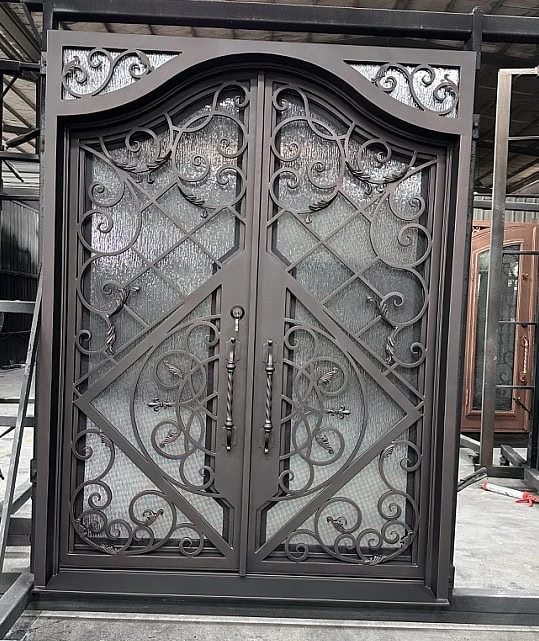
The size and placement of glass panels matter too. Large glass sections look modern but create larger vulnerable areas. Smaller panels with decorative ironwork provide visibility while maintaining security. Some homeowners choose frosted or textured glass for privacy without sacrificing natural light.
Frame the glass properly within the door structure. The surrounding steel or iron should be thick enough that cutting through it takes more time and effort than a burglar wants to invest. Weatherstripping around glass inserts blocks drafts and moisture while maintaining the seal.
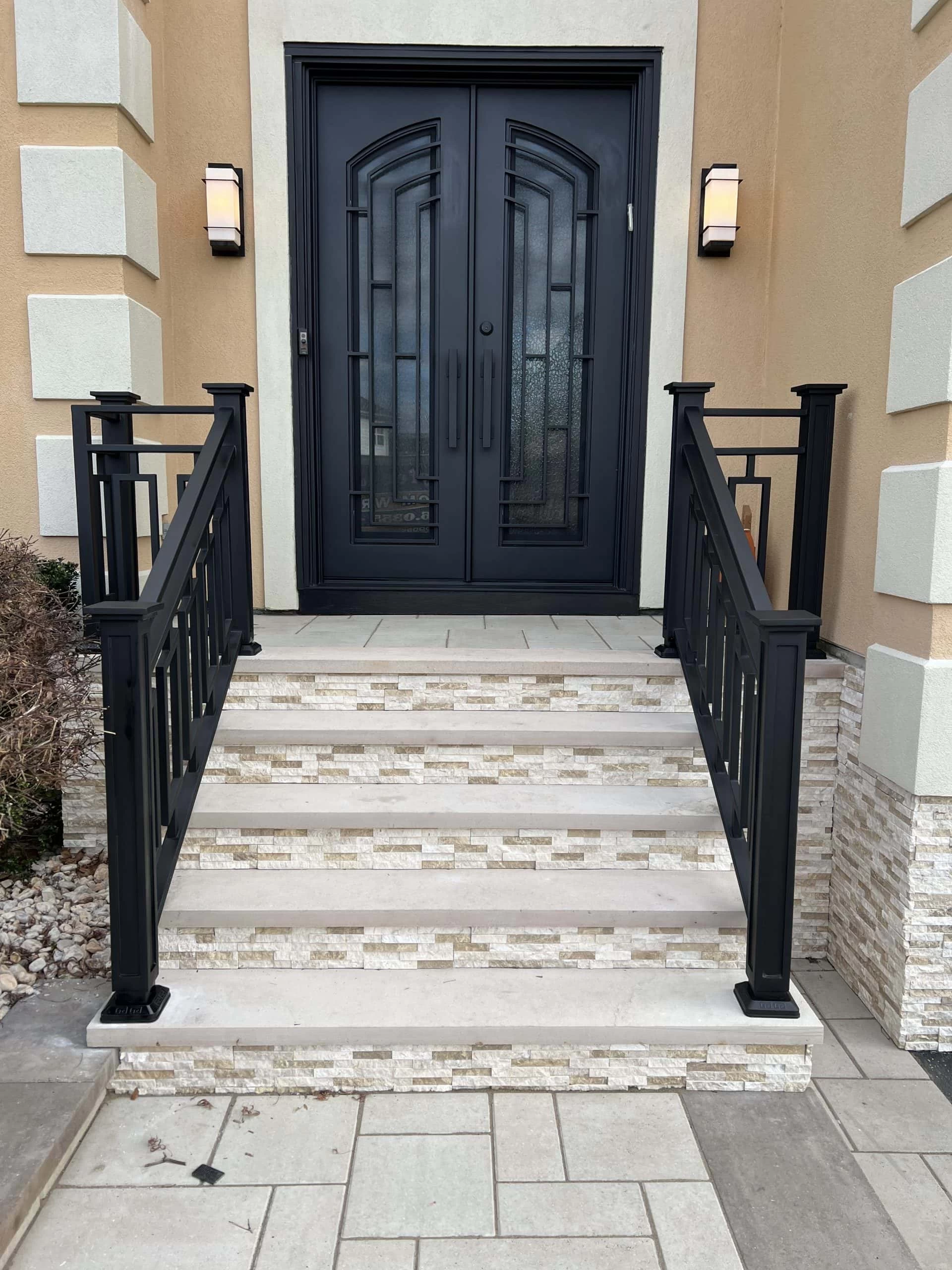
Don’t overlook the decorative aspect. Security doesn’t mean industrial-looking doors. Iron scrollwork, geometric patterns, and custom designs can incorporate glass in ways that enhance both security and curb appeal. You’re not choosing between safety and style—you’re getting both when the door is designed right.
New Jersey doesn’t give your front door a break. Brutal winters with snow and ice. Humid summers that warp wood and promote rust. Temperature swings that expand and contract materials. Rain that finds every gap in the seal. Your house security doors need to handle all of it without breaking down.
Protective coatings are your first line of defense against the elements. Powder-coated finishes offer exceptional resistance to rust, fading, and chipping compared to standard paint. The polyester powder coat bonds to the metal at a molecular level during the baking process, creating a barrier that holds up year after year. Look for finishes specifically tested for coastal and variable climates.
Thermal breaks prevent heat transfer through the door, which matters for both comfort and condensation. Without thermal breaks, metal doors conduct heat and cold directly from outside to inside, creating temperature differentials that lead to condensation, ice buildup, and energy loss. Quality security doors use insulated cores and thermal break technology to interrupt this transfer.
Weatherstripping needs to be heavy-duty and properly installed. Compression-style seals that tighten as wind pressure increases work better than brush seals that lift away. The bottom sweep should create a complete seal without dragging or making the door hard to operate. All these seals need to remain flexible in freezing temperatures—cheap weatherstripping becomes brittle and cracks.
Water management is critical. The door and frame should be designed to shed water away from the threshold and prevent pooling. Weep holes allow any moisture that does penetrate to drain out instead of sitting inside the frame where it causes corrosion. Proper installation includes flashing and sealant that keeps water from penetrating behind the frame.
Steel and iron doors handle temperature fluctuations better than wood because they don’t absorb moisture and don’t expand and contract significantly. They maintain their fit in the frame through all four seasons. Properly coated, they resist rust even in high-humidity conditions. The result is a door that looks the same in year five as it does on installation day, without the maintenance headaches.
House security doors are an investment in protection that pays dividends every single day. The seven features we’ve covered—material selection, multi-point locking, reinforced frames, tamper-resistant hinges, impact-resistant glass, weather resistance, and proper installation—work together as a complete security system. Skip any of them, and you’re compromising the whole setup.
For Essex County homeowners dealing with both security concerns and New Jersey’s demanding climate, steel and iron doors with these features aren’t optional upgrades. They’re the baseline for real protection. The right door stops break-ins, seals against weather, requires minimal maintenance, and enhances your home’s value and appearance.
When you’re ready to upgrade from standard entry doors to real security, we combine superior craftsmanship with both pre-designed and custom options. Every installation we complete includes professional-grade materials, expert fitting, and the features that actually matter—not just what looks good in a catalog.
Article details:
Share:
Continue learning: