Most front doors fail when tested. Discover the engineering, materials, and locking systems that separate real burglar proof doors from standard entries.
Share:
Summary:
Your front door is either your first line of defense or your biggest vulnerability. Right now, over 80% of burglars who target homes gain access through the front door, and a third of all forced entries happen right there at your main entrance. If you’re relying on a standard hollow core or aging wood door, you’re giving intruders exactly what they’re looking for: easy access with minimal resistance.
Real burglar proof doors don’t just lock better. They’re engineered differently, built with materials that resist impact, and installed in ways that eliminate weak points. Let’s look at what separates actual security from expensive decoration.
The term “burglar proof” gets thrown around freely, but most doors marketed this way fail under real pressure. True burglar proof doors resist forced entry through three core elements: material strength, frame reinforcement, and locking mechanisms that engage at multiple points.
Steel construction matters more than most people realize. Doors with layers of steel sandwiched between other materials create a barrier that resists kicking, prying, and impact tools. Hollow doors or lightweight wood options might look secure, but they’re exactly what burglars target because they know these materials give way quickly.
The difference shows up in resistance class ratings, which test how long a door can withstand attack from various tools. Higher ratings mean the door has been tested against crowbars, sledgehammers, drills, and other common break-in tools, proving it can buy you critical time or stop the attempt entirely.
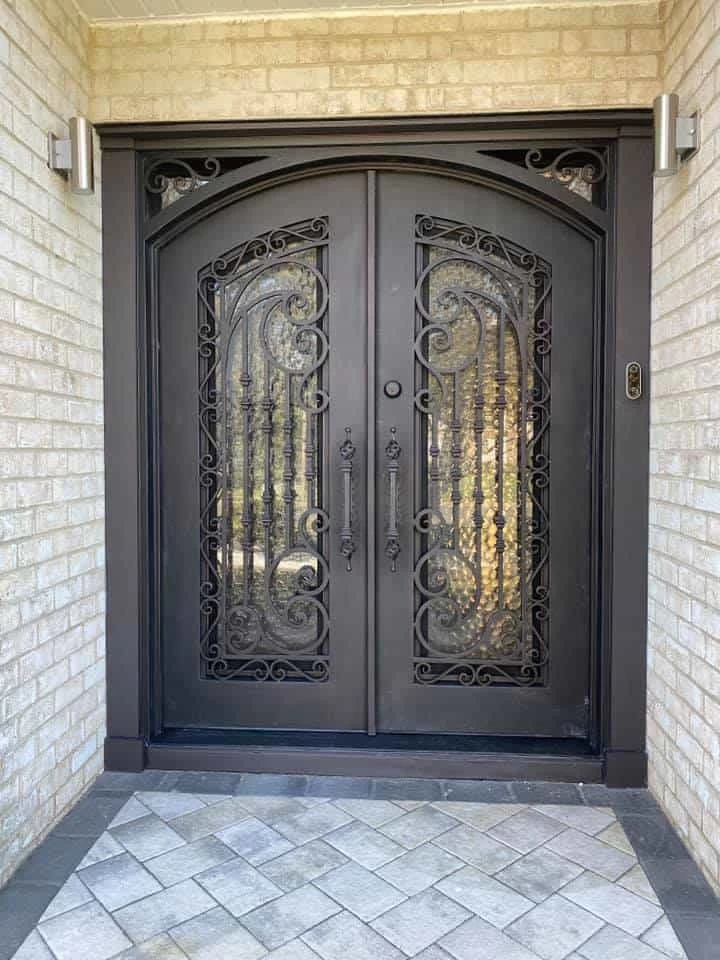
High security doors for homes start with the right materials. Steel remains the most effective choice for forced entry resistance, particularly when it’s 11-gauge or thicker and precision-bent or welded to a reinforced frame. This isn’t about making doors heavier for the sake of weight. It’s about creating a structure that distributes impact force across the entire frame rather than concentrating stress at weak points.
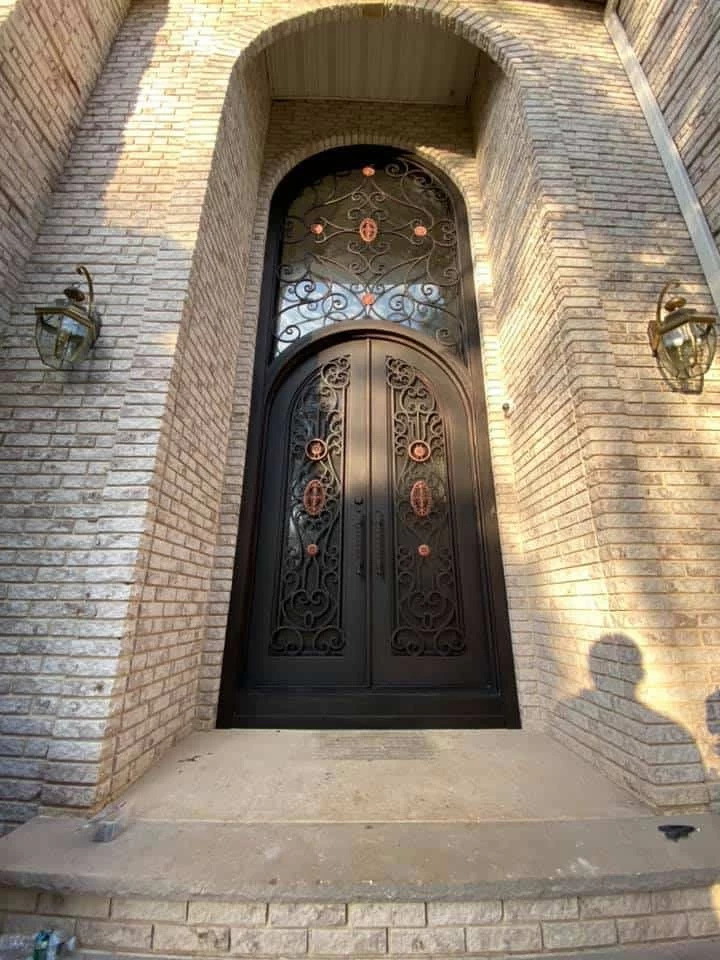
Iron security doors take this further by combining structural steel with custom ironwork that adds both visual appeal and functional strength. The iron itself resists cutting and bending, while the steel core provides the backbone that holds everything together under attack. This dual-layer approach means burglars face multiple barriers, not just one.
Frame construction deserves equal attention. Even the strongest door becomes useless if the frame fails first. High security doors use steel frames that anchor directly into the building structure with multiple fixing points and reinforced corners. This prevents a common tactic where intruders simply pry the entire door unit out of the wall, bypassing the lock entirely.
Quality manufacturers also address hinge security. Exposed hinges on outward-opening doors can be removed, allowing the door to be lifted away. Proper security doors either conceal hinges or use hinge bolts that prevent removal even if the pins are compromised. These details matter because determined burglars know exactly where to look for weaknesses.
The door’s core construction affects more than just security. Insulated cores help regulate temperature while adding mass that resists impact. Sound dampening materials reduce noise transmission, and weather-resistant treatments ensure the door maintains its integrity through New Jersey’s temperature swings, humidity, and seasonal weather patterns.
Standard deadbolts secure one point on your door. Multi-point locking systems engage at three, five, or even more locations simultaneously, distributing the holding force across the entire door perimeter. When you turn the key or handle, steel bolts extend into the frame at the top, middle, and bottom of the door, creating a seal that’s exponentially harder to breach.
This matters during forced entry attempts because burglars typically attack the area around the lock. With a single deadbolt, all their force concentrates on one point. With multi-point locks, that same force has to overcome multiple anchor points, each independently secured to the frame. The math simply doesn’t work in the intruder’s favor.
Advanced locking mechanisms also incorporate anti-drill, anti-pick, and anti-bump features. Standard locks can be picked or bumped open in seconds by someone with basic knowledge. High-security cylinders use unique key profiles and internal mechanisms that resist these techniques, forcing would-be intruders to resort to more obvious, time-consuming methods that increase their risk of detection.
Automatic locking systems take this further by engaging as soon as the door closes, eliminating the human error factor. You can’t forget to lock a door that locks itself. Some systems also include manual override options and backup mechanical components, ensuring you’re never locked out due to power failure or electronic malfunction.
Smart lock integration has become increasingly common, allowing remote monitoring and control while maintaining physical security standards. The key is ensuring the electronic components enhance rather than compromise the mechanical security. Quality systems use encrypted communication, backup power sources, and fail-secure mechanisms that default to locked position during system failures.
The locking system’s strength means nothing if the strike plate fails. High-security installations use reinforced strike plates with four or more 3-inch screws that penetrate through the doorjamb directly into the wall studs. This simple upgrade transforms the strike plate from a weak point into an anchor point that can withstand thousands of pounds of force.
Want live answers?
Connect with a Iron Door Kings expert for fast, friendly support.
Securing your front door accomplishes nothing if intruders simply move to an easier target. Comprehensive home security requires coordinating protection across all entry points, which means addressing windows and secondary doors with the same attention you give your main entrance.
Windows present unique challenges because they need to provide visibility and ventilation while resisting forced entry. Burglar proof windows and doors work together when you use laminated or tempered glass that resists shattering, combined with reinforced frames and lockable security handles with anti-drill protection. Multiple locking points prevent windows from being pried open or lifted out of place.
The coordination between door and window security creates layered defense. Even if an intruder defeats one barrier, they immediately face another, increasing the time and noise required for entry. Most burglars spend 10 to 12 minutes inside homes, so every second you add to their entry time increases the likelihood they’ll abandon the attempt or get caught.
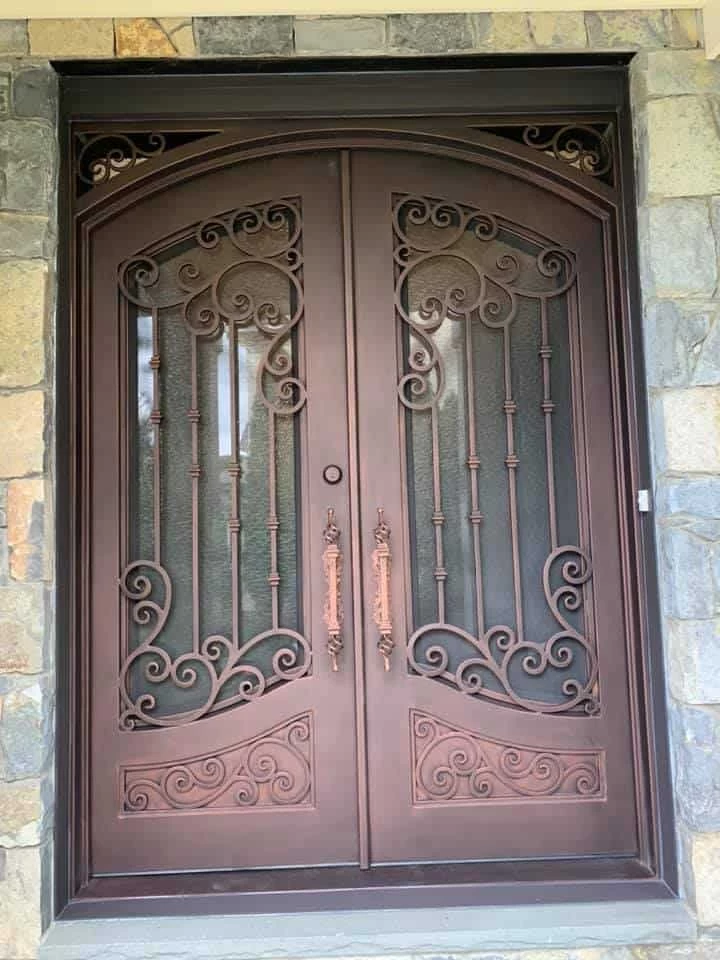
Many homeowners want natural light and visibility without sacrificing security. This creates a design challenge because glass is inherently weaker than steel. The solution lies in using the right type of glass and integrating it properly into the door structure.
Laminated security glass consists of multiple layers bonded together with plastic interlayers. When struck, it might crack, but it holds together rather than shattering into dangerous shards or creating an opening. This forces intruders to strike repeatedly in the same spot, creating noise and taking time they don’t have. Most burglars avoid this type of glass specifically because they know it attracts attention.
Tempered glass offers different benefits. It’s heat-treated to increase strength, making it four to five times more resistant to impact than regular glass. When it does break, it crumbles into small granular chunks rather than sharp shards, reducing injury risk. However, once compromised, it provides no barrier, so it’s often used in combination with other security measures.
Impact-resistant glass, sometimes called hurricane glass, combines laminated construction with tempered glass layers. Originally designed for storm protection, it provides excellent security benefits because it resists both blunt force and repeated strikes. This makes it ideal for doors in areas like Essex County, NJ, where you need protection from both weather and security threats.
The glass-to-iron ratio matters in custom security doors . Too much glass reduces structural integrity. Too little eliminates the visibility and light benefits homeowners want. Quality manufacturers balance these factors by using strategically placed glass panels surrounded by reinforced iron frameworks that maintain security while providing desired visibility. The iron bars themselves become both decorative elements and physical barriers that protect the glass from direct attack.
Some installations incorporate decorative iron grilles over glass sections, adding a second layer of protection without blocking light. This approach allows larger glass areas while maintaining security standards, giving you the open, welcoming aesthetic you want with the protection you need.
New Jersey’s climate tests every exterior door. Summer humidity, winter freeze-thaw cycles, coastal salt air, and temperature swings from single digits to over 90 degrees all take their toll on materials and finishes. Burglar proof doors need to maintain their security properties through all of this, which requires specific material choices and protective treatments.
Iron and steel doors resist warping, swelling, and structural degradation that affect wood doors. They don’t expand and contract with humidity changes, so they maintain consistent fit and function year-round. This means your locking mechanisms continue to engage properly, weather stripping maintains its seal, and the door doesn’t develop gaps that compromise both security and energy efficiency.
Protective coatings make the difference between doors that last decades and those that require constant maintenance. Modern powder coating creates a barrier against moisture, UV radiation, and temperature extremes. It’s more durable than traditional paint, resisting chips, scratches, and fading while maintaining the door’s appearance and protecting the underlying metal from corrosion.
Proper installation accounts for New Jersey’s weather patterns by ensuring adequate drainage, appropriate weather stripping, and thermal breaks that prevent heat transfer. These details affect both comfort and security because a door that doesn’t seal properly creates drafts, increases energy costs, and may not lock correctly as materials expand or contract.
The hardware itself needs weather resistance. Locks, hinges, and handles exposed to the elements should use stainless steel or brass components with corrosion-resistant finishes. Cheap hardware fails quickly in harsh weather, leaving you with a secure door you can’t operate properly. Quality manufacturers specify marine-grade or architectural-grade hardware that maintains function regardless of conditions.
Testing standards for weather resistance include thousands of opening and closing cycles under various temperature and humidity conditions. Doors that pass these tests demonstrate they’ll maintain security and function through years of real-world use. After 200,000 cycles, quality door construction remains completely intact, proving the investment delivers long-term value rather than requiring replacement after a few years.
Real burglar proof doors combine engineering, materials, and installation quality in ways that actually stop determined intruders. They use steel construction, multi-point locking systems, and reinforced frames that address every potential weak point. They’re designed for your climate, installed by professionals who understand the details that matter, and built to last decades rather than years.
The difference between a door that looks secure and one that actually is comes down to these specifics. Material gauge, frame anchoring, locking mechanism design, and installation precision all contribute to whether your door protects your family or just gives you false confidence.
If you’re in Essex County, NJ and ready to upgrade to real protection, we bring superior craftsmanship, high-grade materials, and professional installation to every project. Our team handles everything from custom design through final setup, ensuring your security door functions exactly as it should from day one.
Article details:
Share:
Continue learning: