Selecting security doors that actually protect your home requires understanding material strength, locking mechanisms, and weather resistance for New Jersey's climate.
Share:
Summary:
You’re looking at security doors because something shifted. Maybe it’s the news, maybe it’s a neighbor’s experience, or maybe you just want better peace of mind when you lock up at night. Whatever brought you here, you’re asking the right questions.
Not all security doors deliver what they promise. Some look tough but fail when it counts. Others handle break-in attempts but can’t survive a New Jersey winter without warping or rusting. The best security doors for homes need to do both—stop intruders and stand up to weather that swings from below freezing to humid summers in the same year.
This guide breaks down what actually matters when you’re choosing a security door. No sales pitch. Just the factors that determine whether your door protects your home or becomes your next expensive mistake.
The material you choose determines how well your door performs under pressure. It affects forced-entry resistance, weather durability, maintenance requirements, and how long the door lasts before you’re shopping again.
Steel and iron doors dominate the home security doors market for good reason. They resist forced entry better than wood or fiberglass. They don’t rot, warp, or absorb moisture the way wood does. And when properly finished, they handle New Jersey’s freeze-thaw cycles without breaking down.
But not all metal security doors are created equal. The gauge of the steel, the construction method, and the finishing process all impact performance. Understanding these differences helps you separate real security from marketing claims.
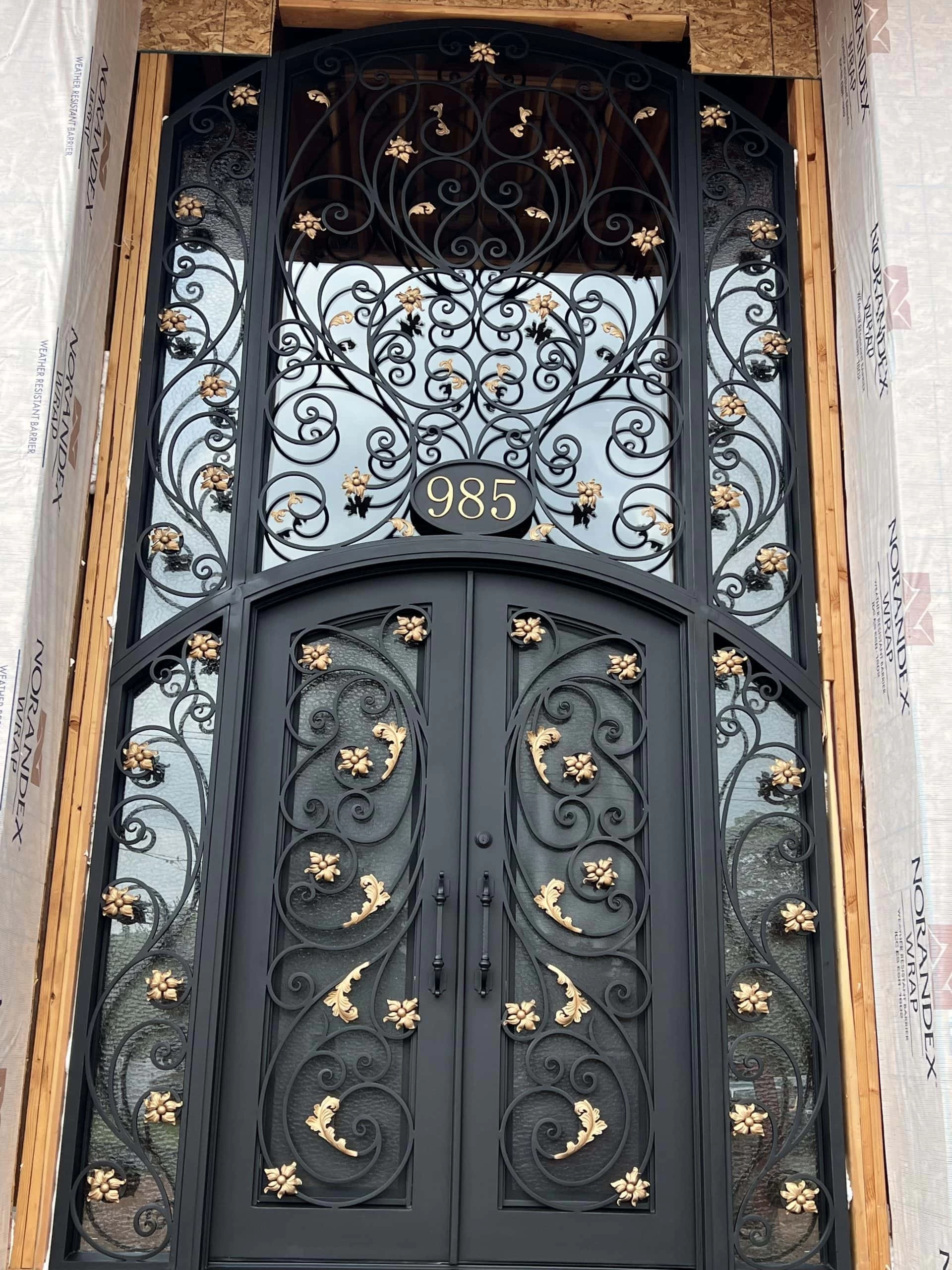
Steel doors offer solid security at a more accessible price point. They’re strong, durable, and resist impact well. Most steel security doors use 16 to 18-gauge steel, though higher-end options go down to 14-gauge for added strength. The lower the gauge number, the thicker and stronger the steel.
Steel doors handle forced entry attempts effectively. They don’t splinter like wood or crack like fiberglass when someone tries to kick them in. They maintain their structural integrity through repeated impacts. For most homeowners, a quality steel door with proper locking mechanisms provides excellent protection.
The tradeoff with steel comes down to rust potential and design limitations. Steel requires proper coating and finishing to prevent rust, especially in humid climates or coastal areas. While modern powder coating helps, any chips or scratches in the finish can expose bare metal to moisture. Design-wise, steel doors tend toward simpler, more modern aesthetics rather than ornate traditional styles.
Iron doors take security and durability further. Modern iron security doors use 12 to 14-gauge steel construction—thicker and stronger than standard steel doors. They’re built with reinforced frames, advanced locking systems, and weather-resistant seals that work together as a complete security system.
Iron doors resist forced entry better than standard steel because of their heavier construction and reinforced design. They’re virtually impossible to kick in or pry open. The weight alone acts as a deterrent. Beyond security, iron doors offer fire-resistant properties that wood and fiberglass can’t match.
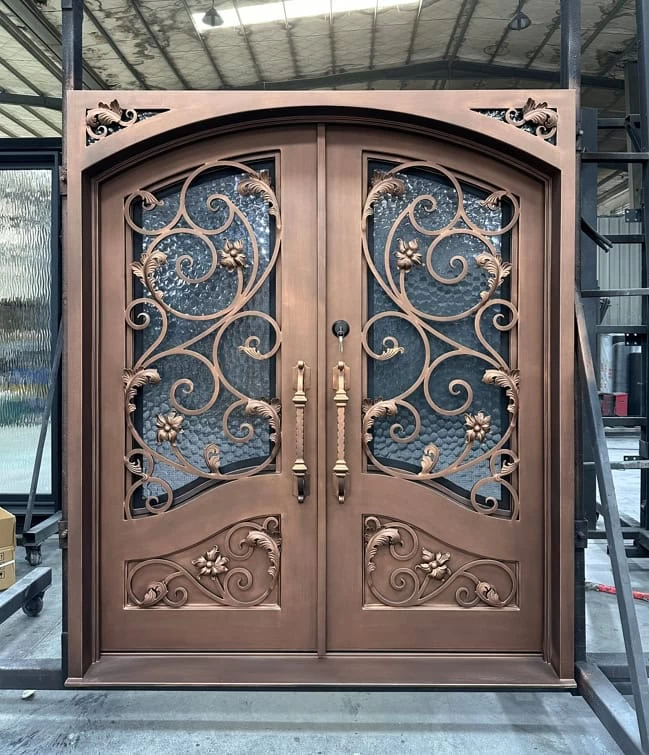
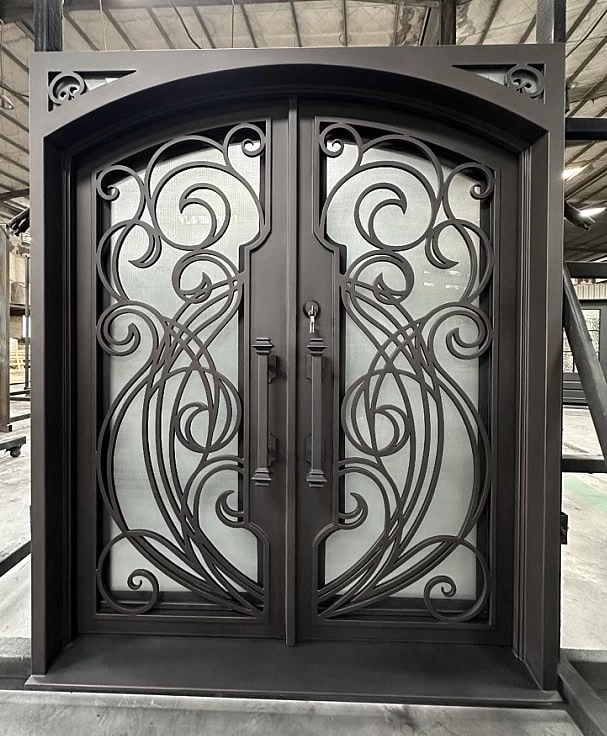
Where iron really separates itself is in customization and longevity. Iron doors can be hand-forged with intricate details, custom scrollwork, and unique designs that steel can’t replicate. They last decades longer with minimal maintenance. You’re not refinishing or repainting every few years. Iron develops a natural patina over time that many homeowners find attractive, and this aging process doesn’t compromise structural integrity.
The investment difference is real. Steel doors typically range from $500 to $3,000. Iron doors run $2,000 to $10,000 or more, depending on size and customization. But that higher upfront cost translates to better long-term value—less maintenance, longer lifespan, and potentially increased home resale value.
For Essex County, NJ homeowners, both materials handle the local climate well when properly installed. New Jersey’s temperature swings, humidity, and winter storms demand doors that don’t absorb moisture or expand and contract with temperature changes. Steel and iron both deliver on that front, unlike wood doors that swell in summer humidity and shrink in winter cold.
New Jersey weather doesn’t play favorites. Your security door faces brutal winters, humid summers, freeze-thaw cycles, and everything in between. If your door wasn’t built for this climate, you’ll see it fail in ways that compromise both security and comfort.
Temperature swings are one of the biggest threats to door durability. When temperatures drop below freezing at night and climb back up during the day, materials expand and contract. Do that enough times and you get cracks, gaps, and seals that don’t seal anymore. Wood doors are especially vulnerable—they absorb moisture during humid periods and release it during dry spells, leading to warping and binding.
Steel and iron doors handle these extremes differently. They don’t absorb moisture, so they won’t rot or swell. They resist rust when properly coated and maintained. And they don’t expand and contract the way wood does, so they stay tight in their frames year after year.
Humidity is another challenge specific to New Jersey. Summer months bring high humidity that can cause wood doors to swell, making them difficult to open or close. That swelling also stresses the door frame and hardware. Metal doors don’t have this problem. They maintain consistent dimensions regardless of humidity levels.
Winter brings its own set of issues. Snow, ice, and freezing rain test your door’s weatherstripping and seals. Poor seals allow cold drafts that you can feel from across the room. Air leaks around doors can account for up to 30 percent of residential heating and cooling loss, directly impacting your energy bills. A properly installed security door with quality weatherstripping creates an effective barrier against air and water infiltration.
The door frame matters as much as the door itself. Even the best security doors for homes underperform if the frame isn’t reinforced and properly sealed. Gaps that seem minor allow significant air leakage. Missing or inadequate flashing leads to water damage in wall cavities. Professional installation addresses these issues by ensuring the door sits level and plumb, gaps are minimized and sealed, and weatherstripping creates effective barriers.
For Essex County specifically, you’re dealing with property crime concerns on top of weather challenges. The area experiences a property crime every 41 minutes. Your security door needs to handle both threats—keeping intruders out while standing up to New Jersey’s climate without degrading over time.
Want live answers?
Connect with a Iron Door Kings expert for fast, friendly support.
The strongest door material means nothing if the locking system fails. Your door’s ability to resist forced entry depends heavily on how it locks and where those locks engage with the frame.
Single-point locks—the standard deadbolt—secure the door at one location. Multi-point locking systems secure the door at three, four, or even more points along the frame. The difference in forced-entry resistance is substantial. When an intruder tries to pry or kick in a door, they’re working against multiple locking points instead of one.
Multi-point locks also improve the door’s seal against weather. By pulling the door into alignment at multiple points, they create a tighter fit that reduces air and water infiltration. This matters in New Jersey, where wind-driven rain and temperature extremes test your door’s weatherproofing daily.
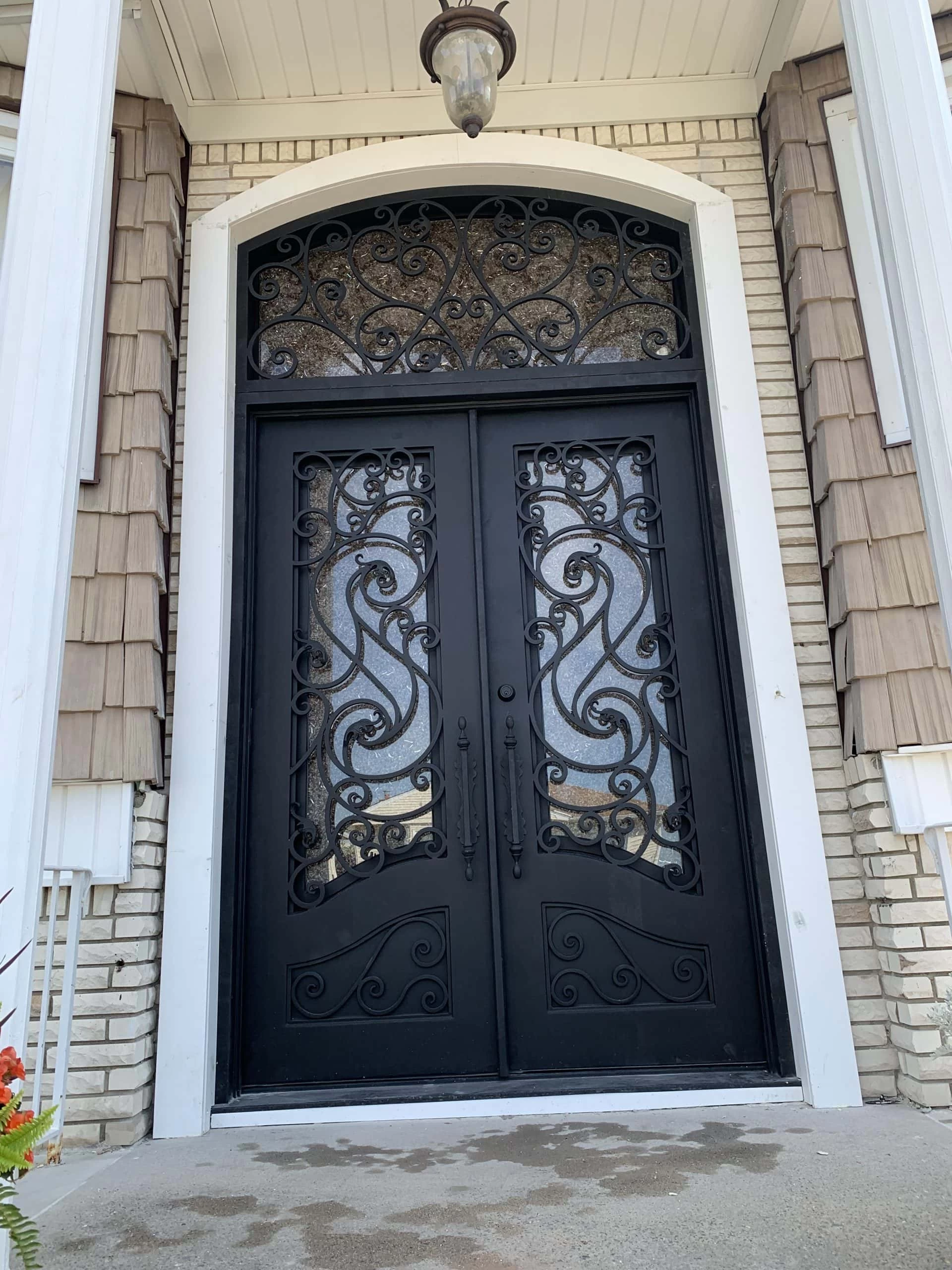
Standard deadbolts have been the go-to security feature for decades. They work by extending a bolt from the door into the frame, preventing the door from opening unless the bolt retracts. A quality deadbolt with a heavy-duty strike plate provides solid basic security. The bolt is housed inside the door frame, making it the most secure single-point option.
But here’s the limitation: a single-point lock only secures one location on the door. If someone applies enough force to that area—through kicking, prying, or using tools—they’re attacking the door’s single point of resistance. Once that point fails, the door opens.
Multi-point locking systems change this dynamic entirely. These systems engage at multiple locations along the door’s height, typically three to four points but sometimes more. When you turn the key or handle, bolts extend from the door into the frame at the top, middle, and bottom simultaneously.
This distributed locking makes forced entry significantly harder. An intruder can’t simply focus force on one area. They’d need to defeat multiple locking points at once, which requires more time, more noise, and more visible effort. Most break-in attempts target easy entry points. A door with visible multi-point locking acts as a strong deterrent.
The security benefits extend beyond just more locking points. Multi-point systems distribute force more evenly across the door and frame. This even distribution means the door is less likely to warp or bend under pressure. The frame experiences less stress at any single point, reducing the risk of the door being pried from its frame or the frame itself failing.
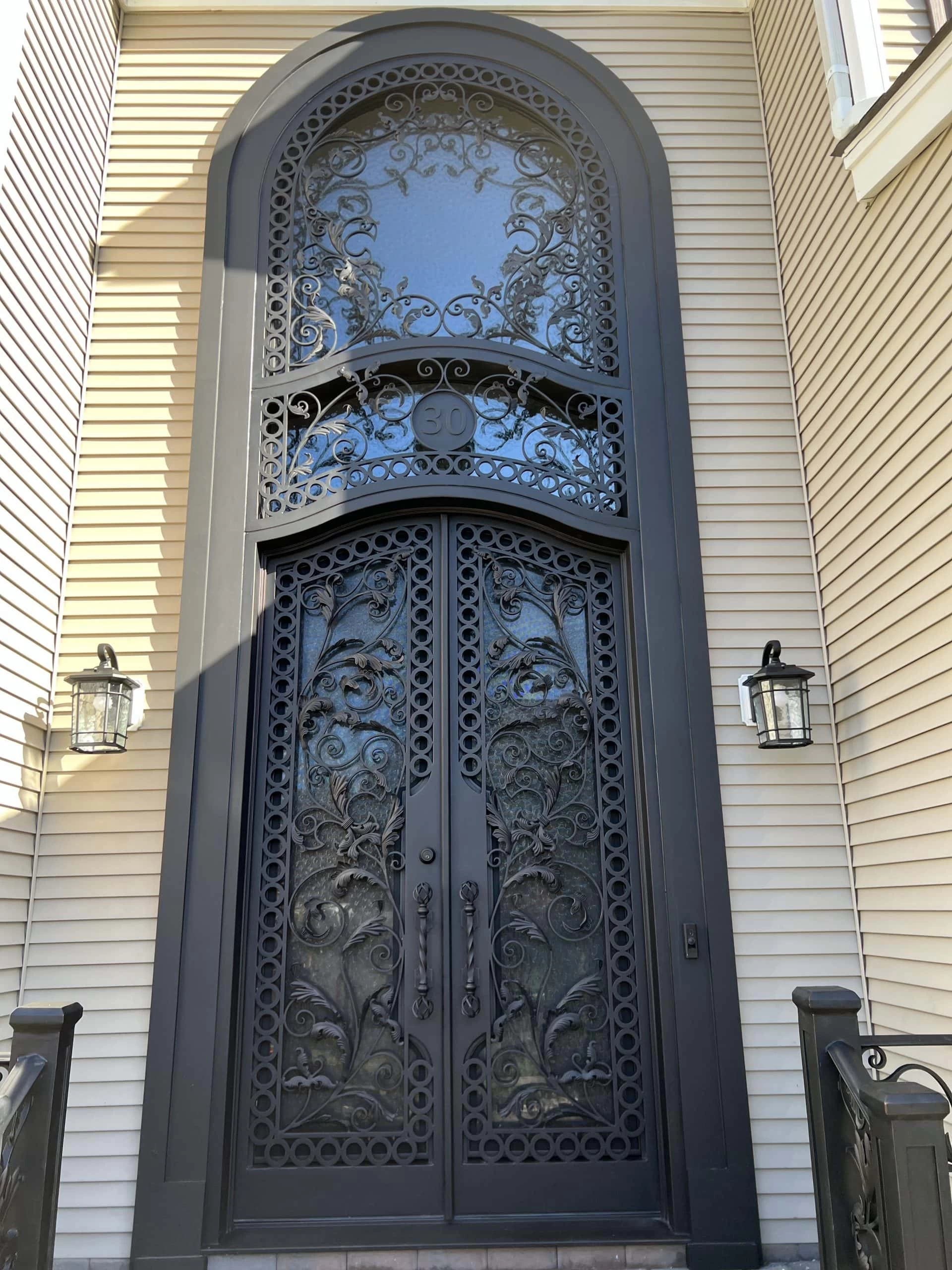
For taller doors—eight feet or more—multi-point locks become especially important. Tall doors are more prone to warping and maintaining a good seal along their entire length. Multi-point systems pull the door into alignment at multiple heights, preventing warping and maintaining effective weatherproofing.
Installation quality matters enormously with multi-point systems. The lock mechanism requires precise preparation in both the door and frame. The channels that connect the mechanism to the locking points must be properly routed. If installation is off, the system won’t engage correctly, and you lose the security benefit you paid for.
The typical break-in occurs when an intruder tries to pry the door from the frame at the lock area. Multi-point locks defeat this method by protecting the door like a bank vault—secured at multiple independent locations that can’t be compromised by attacking a single point.
For homeowners in Essex County, NJ dealing with property crime concerns, multi-point locking systems offer measurably better protection than standard deadbolts. They’re not just marketing hype. The engineering behind distributed locking points creates real barriers to forced entry.
Impact resistance determines what happens when someone tries to kick, ram, or otherwise force their way through your door. The best exterior doors for security are engineered to withstand these attacks without buckling, cracking, or separating from the frame.
Material thickness plays a major role. Doors made from 12 to 14-gauge steel construction offer superior impact resistance compared to thinner materials. The heavier gauge means more metal between an intruder and your home. It also means the door maintains structural integrity even under repeated impacts.
But thickness alone isn’t enough. The door’s construction method matters. Reinforced frames add strength at the points where doors typically fail—around the lock area and hinges. These reinforcements distribute impact force across a larger area rather than concentrating stress at weak points.
Hinges are often overlooked in security door selection, but they’re critical. Security doors should feature hinges with non-removable or tamper-proof pins that prevent the door from being lifted from its frame. Even if someone removes the hinge screws, tamper-proof pins keep the door attached. Without this feature, an intruder can simply remove the hinges and bypass your expensive locking system entirely.
The door frame deserves equal attention. It’s the frame more than the door itself that determines security in many cases. A strong door mounted in a weak frame creates a false sense of security. The frame needs to be reinforced and properly anchored to the wall studs—not just nailed with a few small fasteners. Longer screws that go through the frame and into the wall framing provide the anchoring strength needed to resist forced entry attempts.
Strike plates—the metal plates where the deadbolt engages—must be heavy-duty and properly installed. A standard strike plate with short screws will fail under a strong kick. A reinforced strike plate secured with three-inch screws into the wall studs can withstand thousands of pounds of force.
Glass elements in security doors require special consideration. Doors with windows can be vulnerable if the glass is standard residential glass. An intruder can smash through, reach in, and unlock the door. Tempered or laminated glass resists shattering upon impact. The glass placement also matters—panes located well away from the doorknob make it harder for someone to reach the lock even if they break the glass.
For New Jersey homeowners, impact resistance also relates to storm protection. High winds can drive debris into your door. A door engineered to resist forced entry typically handles storm debris well, but it’s worth confirming that your door meets wind load requirements for your area.
Fire resistance adds another layer of protection. Iron doors offer fire-resistant properties that wood and fiberglass can’t match. In an emergency, that extra fire resistance could provide critical time for your family to escape safely. It’s not the primary reason most people choose security doors, but it’s a valuable secondary benefit.
Testing and certification provide objective measures of impact resistance. Look for doors that have been tested against forced-entry standards. These tests simulate real break-in attempts using common tools and methods. Doors that pass these tests have proven they can withstand actual attacks, not just theoretical ones.
Selecting the best security doors for homes comes down to matching the right material, locking system, and installation quality to your specific needs. Steel doors offer excellent security at accessible price points. Iron doors provide superior durability, customization, and long-term value for homeowners who want the highest level of protection.
Multi-point locking systems deliver measurably better forced-entry resistance than standard deadbolts. Impact-resistant construction and reinforced frames ensure your door withstands both break-in attempts and New Jersey’s challenging weather. Professional installation makes the difference between a door that performs as designed and one that becomes a source of ongoing problems.
For Essex County, NJ homeowners dealing with property crime concerns and harsh climate conditions, investing in quality security doors isn’t just about protection—it’s about peace of mind. When you choose the right door and have it installed correctly, you’re making a long-term investment in your home’s security, energy efficiency, and value. We specialize in custom iron door installation with superior craftsmanship, personalized service, and professional installation designed specifically for New Jersey’s climate and security needs.
Article details:
Share:
Continue learning: