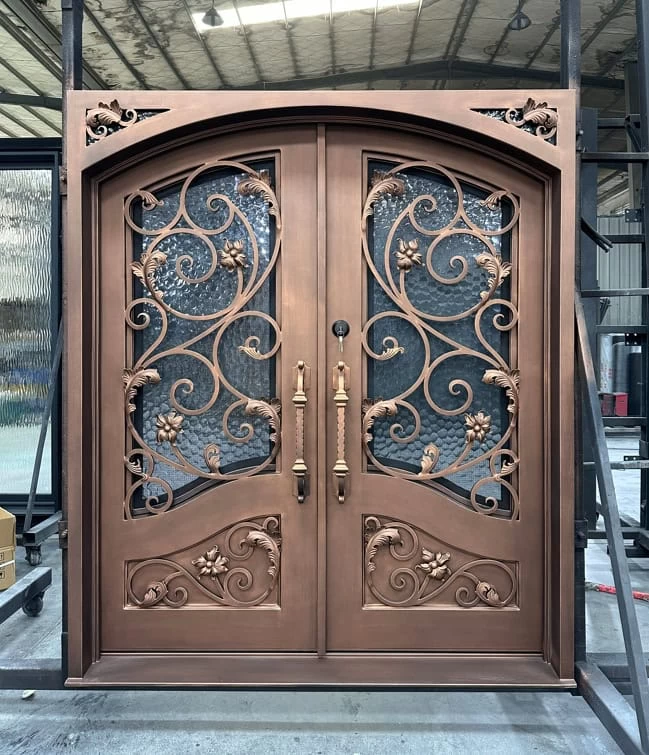
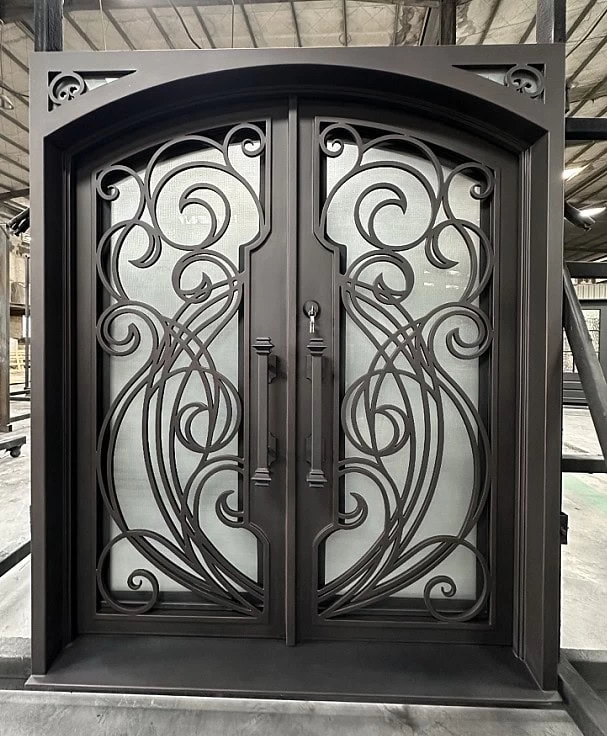
Looking to cut energy costs in your Essex County home? ENERGY STAR certified energy saving doors reduce heating and cooling bills while qualifying for federal tax credits.
Share:
Summary:
Your front door does more than welcome guests. It’s working around the clock either keeping your conditioned air inside or letting it escape straight into your yard. In Essex County, where winter temperatures drop well below freezing and summer humidity puts your AC to the test, that difference shows up on your energy bill every single month.
Heat loss through doors accounts for up to 30% of your home’s heating and cooling costs. That’s not a small number when you’re trying to keep a 1920s colonial comfortable or a modern build efficient. The right energy saving doors don’t just look good—they create a thermal barrier that keeps your HVAC system from working overtime. And when they’re ENERGY STAR certified, they also qualify you for federal tax credits and New Jersey rebates that make the upgrade more affordable than you might think.
ENERGY STAR certification isn’t just a marketing label. It’s a set of strict performance standards set by the U.S. Environmental Protection Agency that doors must meet through independent testing. For a door to earn that blue label, it has to prove it can actually keep heat where it belongs.
In New Jersey’s North-Central climate zone, certified doors must hit a U-Factor of 0.28 or lower and a Solar Heat Gain Coefficient of 0.23 or less. Those numbers tell you how much heat passes through the door and how much solar heat it blocks. Lower is better on both counts, especially when you’re dealing with bitter January mornings and July afternoons that push your systems to their limits.
The benefits go beyond the technical specs. ENERGY STAR certified energy saving doors can cut your heating and cooling costs by around 12 to 13 percent compared to standard doors. That typically translates to $150 to $350 in annual savings, depending on your home’s size and how hard your current door is making your HVAC work. Over the door’s lifetime, those savings add up while you’re also enjoying fewer drafts, more consistent temperatures, and a home that just feels more comfortable.
One of the biggest advantages of choosing ENERGY STAR certified doors right now is the money you can get back. The federal government offers a tax credit worth 30% of the door’s cost, up to $250 per door with a $500 maximum if you’re replacing multiple doors. That credit is available through 2025 for doors installed in your primary residence.
Here’s what matters: the door must be ENERGY STAR certified, and you’ll need to keep the NFRC label that comes with it as documentation. That label shows the U-Factor and SHGC ratings that prove the door meets the requirements for your climate zone. Without it, you can’t claim the credit, so don’t toss it during installation.
New Jersey sweetens the deal even further. Through programs like the Whole Home Energy Solutions initiative, homeowners can access rebates up to $7,500 based on projected energy savings from qualifying improvements. These rebates are stackable with the federal tax credit, meaning you can combine both to significantly reduce your out-of-pocket costs. Some programs even offer zero-interest financing up to $25,000 for qualified borrowers, making it easier to upgrade without draining your savings account.
The catch is you typically need a home energy assessment from a participating contractor to qualify for state rebates. That assessment identifies where your home is losing energy and calculates the projected savings from recommended improvements. If energy saving doors are part of that plan, the rebate helps cover the cost while the federal credit puts more money back in your pocket at tax time. It’s worth exploring both options before you buy, because the combined savings can cut your effective cost nearly in half.
To claim the federal credit, you’ll file IRS Form 5695 with your tax return for the year the door was installed. The credit reduces your tax bill dollar-for-dollar, which is more valuable than a deduction. Just remember that it’s nonrefundable, so you can’t get back more than you owe in taxes, and any excess doesn’t roll over to future years. Plan accordingly if you’re making multiple energy-efficient upgrades in the same year.
If you’ve looked at door labels and felt lost in the alphabet soup of ratings, you’re not alone. But understanding U-Factor and SHGC makes the difference between choosing a door that actually performs and one that just looks energy efficient.
U-Factor measures how much heat passes through the door. Think of it as the door’s insulation grade. The lower the number, the less heat escapes in winter or enters in summer. For ENERGY STAR certification in New Jersey, you need a U-Factor of 0.28 or lower. The best energy saving doors hit 0.20 or even lower, creating a stronger thermal barrier that keeps your indoor temperature stable.
Solar Heat Gain Coefficient tells you how much solar heat comes through the door, particularly through any glass elements. In New Jersey’s climate, you want a lower SHGC—0.23 or less for certification—because it blocks summer heat that would make your air conditioner work harder. Some northern climates actually benefit from higher SHGC to capture passive solar heating in winter, but in the North-Central zone where Essex County sits, keeping that summer heat out matters more.
These ratings come from the National Fenestration Rating Council, which independently tests and certifies door performance. Every qualifying door carries an NFRC label showing its exact U-Factor and SHGC numbers, along with which climate zones it’s certified for. That label is your proof that the door meets the standards, and it’s what you’ll need for tax credits and rebates.
When you’re comparing options, don’t just look for any ENERGY STAR label. Check that it’s certified for the North-Central climate zone specifically. A door certified for southern climates might not meet the requirements for New Jersey, which means no tax credit and potentially less energy savings. The label makes it clear which zones apply, so verify before you buy.
Air leakage is another spec worth noting, though it’s less commonly advertised. ENERGY STAR certified doors must have an air leakage rate of 0.5 cubic feet per minute per square foot or less. That ensures the door isn’t just well-insulated but also properly sealed against drafts. Even a door with excellent insulation fails if air leaks around the edges, so this rating confirms the whole assembly works together to keep your conditioned air inside.
Want live answers?
Connect with a Iron Door Kings expert for fast, friendly support.
Energy saving doors deliver the best results when they’re part of a broader strategy. Your home is a system, and doors work alongside windows, insulation, and HVAC equipment to control energy use. Upgrading just one piece helps, but addressing multiple weak points at once creates compounding benefits that show up in both comfort and cost savings.
Windows and doors together account for 25 to 30 percent of residential heating and cooling energy use. If your home has old single-pane windows and a drafty front door, you’re fighting a losing battle no matter how efficient your furnace or air conditioner is. The conditioned air you’re paying to heat or cool is escaping through those openings faster than your systems can keep up.
That’s where whole-home energy assessments come in. Programs like New Jersey’s Home Performance with ENERGY STAR send certified contractors to evaluate your home’s energy performance using diagnostic equipment. They identify air leaks, measure insulation levels, check HVAC efficiency, and pinpoint exactly where you’re losing energy. Based on that assessment, they recommend a prioritized list of improvements with projected savings for each.
Energy efficient windows and doors often rank high on those lists because they address such a significant source of energy loss. When you combine new ENERGY STAR certified doors with window upgrades, proper insulation, and air sealing, the energy savings multiply. You’re not just plugging one hole—you’re creating a tighter building envelope that requires less energy to maintain comfortable temperatures year-round.
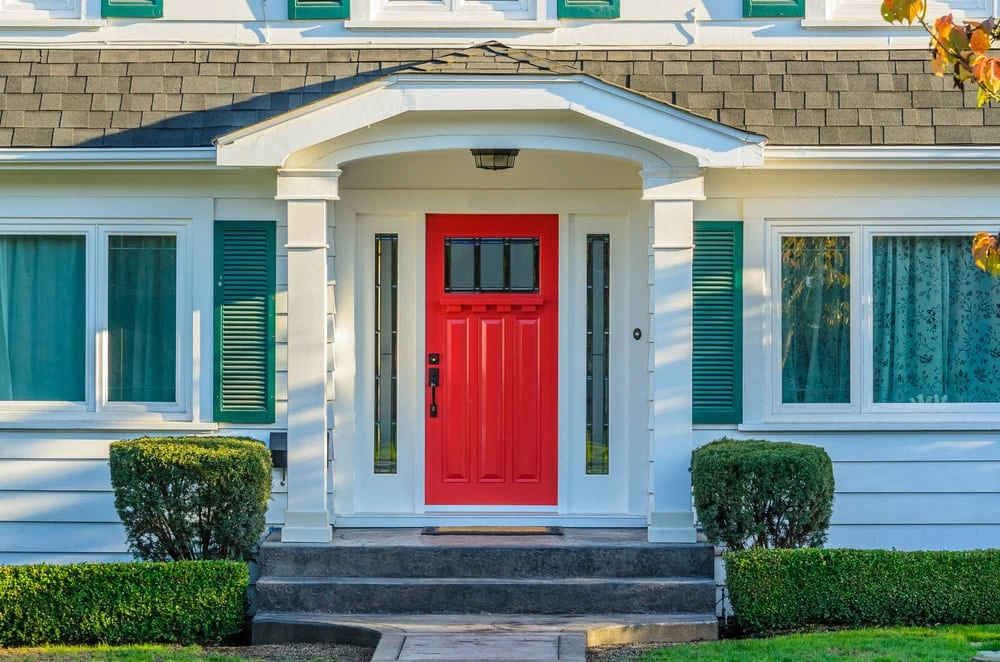
What actually makes a door energy efficient? It’s not one single feature but several working in combination. Understanding how these elements function helps you evaluate options and recognize quality when you see it.
Insulated cores are the foundation. Modern energy saving doors use polyurethane foam injected into the door slab and frame. This foam creates a thermal barrier that resists heat transfer far better than solid wood or uninsulated metal. The foam fills the entire cavity, eliminating air pockets that could allow heat to pass through. Doors with polyurethane cores can achieve R-values of 6 or higher, providing insulation levels that older doors can’t match.
Thermal breaks address a specific problem with metal doors. Iron and steel conduct heat readily, which means without intervention, a metal door becomes a pathway for heat to travel from warm to cold. A thermal break is a layer of non-conductive material—usually a polymer—embedded between the interior and exterior metal surfaces. It physically separates the two sides so heat can’t transfer directly through the frame. This technology allows iron doors to achieve energy efficiency comparable to fiberglass alternatives.
Weatherstripping seals the gap between the door and frame when the door closes. High-quality energy saving doors use multiple weatherstripping systems—magnetic seals similar to refrigerator doors, compression gaskets, and adjustable door sweeps at the bottom. These seals compress when the door shuts, forming a continuous barrier against air infiltration. Even small gaps can let significant amounts of air through, so effective weatherstripping is non-negotiable for energy performance.
Glass elements require special attention. If your door includes windows or decorative glass, those sections need to be energy efficient too. Double-pane or triple-pane insulated glass units with Low-E coatings block heat transfer while still allowing light through. Low-E stands for low emissivity—a thin metallic coating that reflects infrared light, keeping heat on the side where it started. Some units also fill the space between panes with argon gas, which insulates better than air.
The door frame and threshold matter just as much as the door itself. A well-insulated door slab won’t perform if the frame allows air to leak around the edges. Quality installations use insulated frames, proper sealing between the frame and rough opening, and adjustable thresholds that create tight contact with the door sweep. All these components work together to create a complete thermal barrier.
When these features are properly engineered and installed, the result is a door that maintains indoor temperatures with minimal energy loss. You’ll notice the difference immediately—no cold drafts near the door in winter, no hot spots in summer, and fewer temperature swings that force your HVAC system to cycle on and off constantly.
You can buy the most energy-efficient door on the market and still end up with disappointing results if it’s not installed correctly. Installation quality impacts actual performance by 20 to 40 percent, which means a poorly installed premium door might perform worse than a mid-grade door installed by a professional.
Proper installation starts with frame alignment. The doorframe must be perfectly square so the door seals tightly against the jamb when it closes. If the frame is even slightly out of square, the weatherstripping won’t compress evenly, leaving gaps where air can leak through. Professional installers use levels and shims to ensure the frame sits square in the opening, then secure it without forcing it out of alignment.
Air sealing around the frame is critical. Before adding interior trim, installers apply expanding foam caulking between the doorframe and the rough opening. This foam fills gaps and cracks that would otherwise allow air to bypass the door entirely and enter the house through the wall cavity. It’s a step that’s easy to skip or do poorly, but it makes the difference between a door that performs as rated and one that leaks air around the edges.
Weatherstripping installation requires precision. The strips must be positioned so they compress properly when the door closes but don’t prevent the door from shutting completely. Magnetic weatherstripping needs to make full contact around the entire perimeter. Door sweeps at the bottom must be adjusted to the correct height—low enough to seal against the threshold but high enough that they don’t drag or prevent smooth operation.
Threshold adjustment is another detail that matters. The threshold should create firm contact with the door sweep without making the door difficult to open and close. Too much gap and air leaks through. Too tight and the door binds or the sweep wears out prematurely. Professional installers know how to find that balance and make adjustments that maintain the seal over time.
Many manufacturers require professional installation to maintain warranty coverage. That’s not just a way to sell installation services—it’s recognition that even a perfectly manufactured door can fail if it’s not installed correctly. When installation is part of the package, you also get accountability. If something isn’t performing as expected, there’s one company responsible for both the product and the installation, which makes resolution simpler.
For homeowners in Essex County dealing with older homes, professional installation becomes even more important. Houses built in the 1920s through 1950s often have settled foundations, frames that aren’t quite square, and openings that don’t match modern standard sizes. Experienced installers know how to work with these challenges, making adjustments that ensure the new door fits properly and performs as intended despite the quirks of older construction.
The investment in professional installation pays back through energy savings, door longevity, and peace of mind. You’re not just getting a door hung in an opening—you’re getting a complete thermal barrier installed to manufacturer specifications, with all the sealing and adjustment needed to achieve the energy performance you’re paying for.
Energy saving doors make sense for Essex County homeowners dealing with New Jersey’s demanding climate and rising energy costs. The combination of federal tax credits, New Jersey rebates, and long-term energy savings makes this upgrade more accessible and valuable than it’s been in years.
Focus on doors with ENERGY STAR certification for the North-Central climate zone. Verify the U-Factor is 0.28 or lower and SHGC is 0.23 or less. Look for features like insulated cores, thermal breaks if you’re considering metal doors, quality weatherstripping, and Low-E glass in any glazed sections. These elements work together to create the thermal barrier that actually reduces your energy use.
Don’t overlook installation. Even the best door underperforms without proper frame alignment, air sealing, and weatherstripping adjustment. Professional installation ensures you get the energy performance you’re paying for and maintains warranty coverage.
If you’re ready to upgrade your home’s entry with energy saving doors that combine efficiency with the strength and elegance of custom ironwork, we bring the craftsmanship and expertise to make it happen. Our team handles everything from design consultation through professional installation, ensuring your new door performs exactly as intended while enhancing your home’s curb appeal and security.
Article details:
Share:
Continue learning: