Choosing between steel and custom iron doors? Understand the real differences in durability, design flexibility, security, and long-term value to make the right decision for your home.
Share:
Summary:
You’re looking at your front door and realizing it’s time for an upgrade. Maybe it’s showing wear, maybe you’re concerned about security, or maybe you just want something that actually matches your home’s style. Now you’re stuck between two solid options: steel or custom iron.
Both materials promise durability and security. Both look better than what you have now. But they’re not the same, and the differences matter more than most people realize. This isn’t about picking the “best” material in general—it’s about finding the right one for your specific situation, your home’s architecture, and how you actually want to live with this door for the next several decades.
Let’s break down what actually separates these two materials and what that means for your home in Essex County, NJ.
The confusion between iron and steel doors makes sense. They’re both metal. They’re both strong. They both look substantially more secure than a wood door. But the composition difference changes everything about how they perform and what you can do with them.
Wrought iron contains less than 0.08% carbon. That low carbon content makes it malleable—easy to heat, bend, and shape into intricate designs. Steel, on the other hand, is created by mixing iron with anywhere from 0.2% to 2.0% carbon. That higher carbon content makes steel harder and more rigid.
Here’s what that actually means for you: iron gives you nearly unlimited design possibilities because craftsmen can bend and weld it into complex patterns. Steel gives you strength and modern clean lines, but the design options are more limited because the material doesn’t shape as easily.
You might assume steel is stronger because it has higher tensile strength. That’s technically true—steel can handle more pressure before it breaks. But when it comes to your front door’s security, the difference is negligible. Both materials are strong enough to stop forced entry attempts that would easily defeat wood or fiberglass.
The real security difference isn’t about which material is theoretically stronger. It’s about how they handle real-world abuse. Wrought iron stands up to wear exceptionally well thanks to its graphite content, which provides natural lubrication. Day-to-day contact, weather exposure, and minor impacts don’t phase it.
Steel wears faster. Scratches and dents need immediate attention because exposed steel can rust. If someone drops furniture against your door during a move, a steel door might show damage that an iron door would shrug off.
That said, both materials dramatically outperform traditional door options when it comes to preventing break-ins. With 34% of burglaries happening through the front door and homes without security doors being 300% more likely to experience burglary, either choice puts you in a significantly better position than staying with a standard door.
The construction quality and installation matter more than the material itself. A properly installed steel door with a reinforced frame and quality deadbolt will keep intruders out just as effectively as an iron door. The difference shows up in longevity and how much maintenance you’re willing to do, not in whether someone can kick it in.
Both materials can withstand sustained force when installed correctly. Steel doors have been tested to resist over 50 minutes of sustained attack. Iron doors are virtually indestructible under normal circumstances. For most homeowners in Essex County, NJ, either option provides more than adequate security as long as the installation is done right.
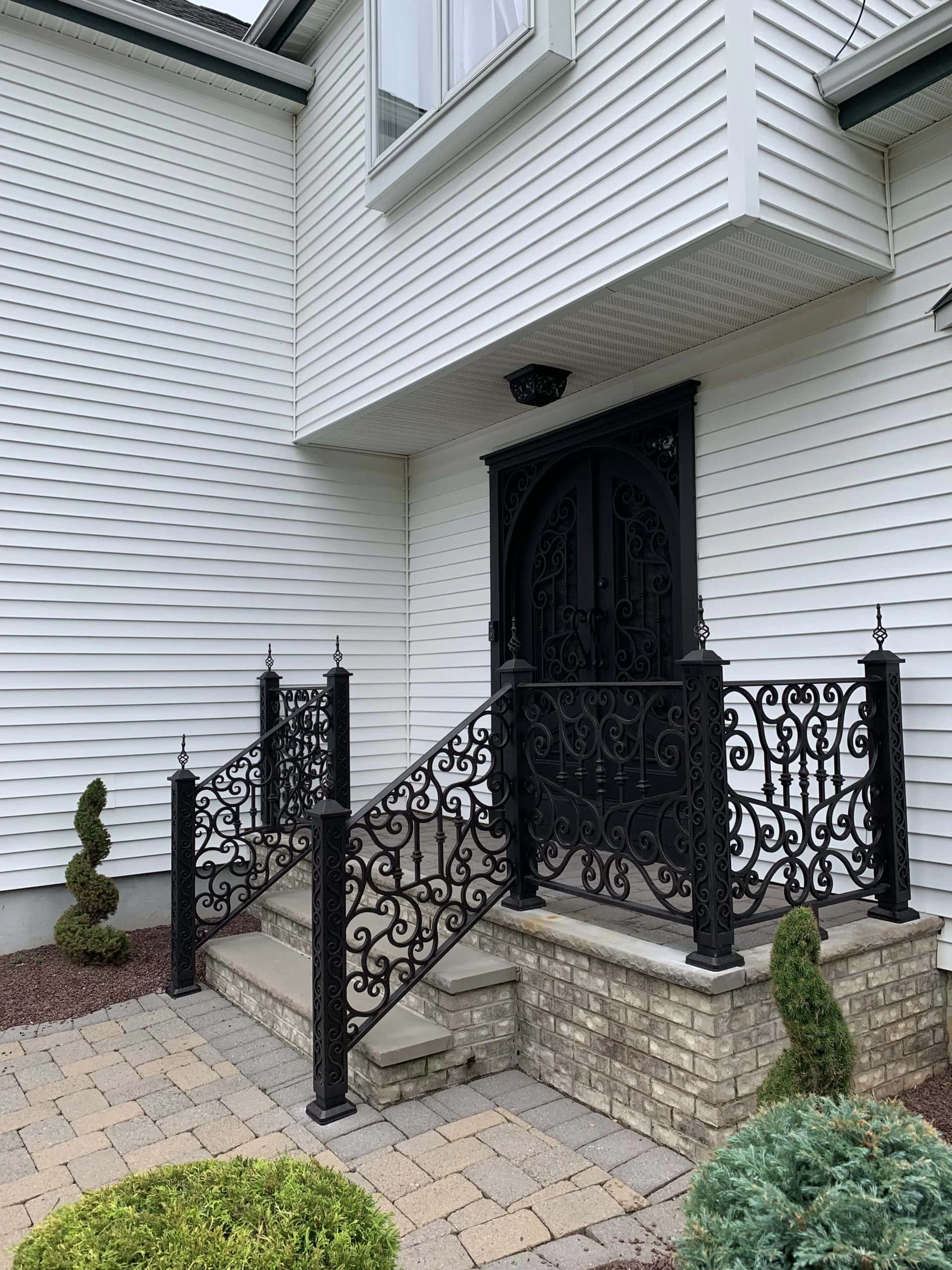
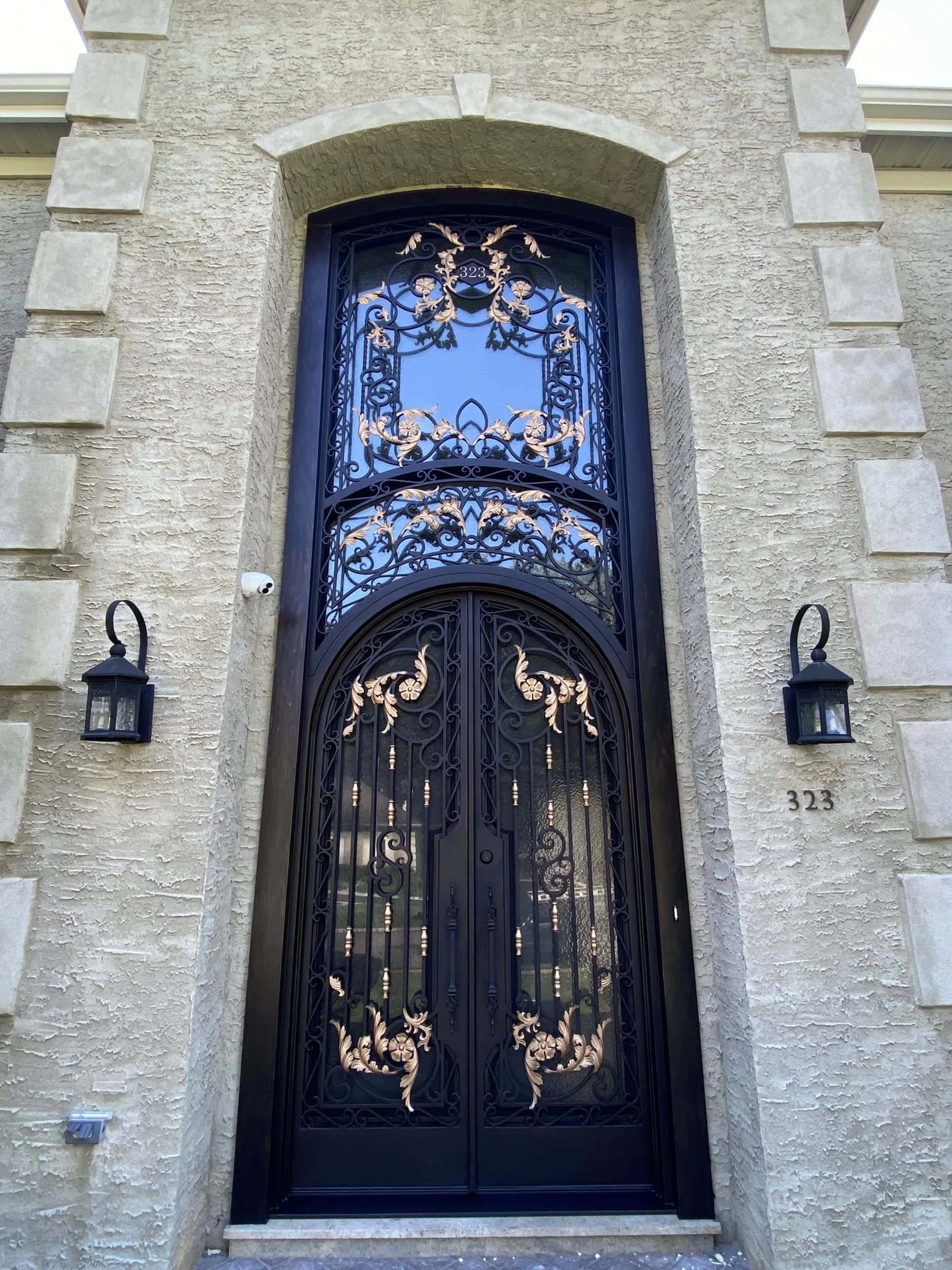
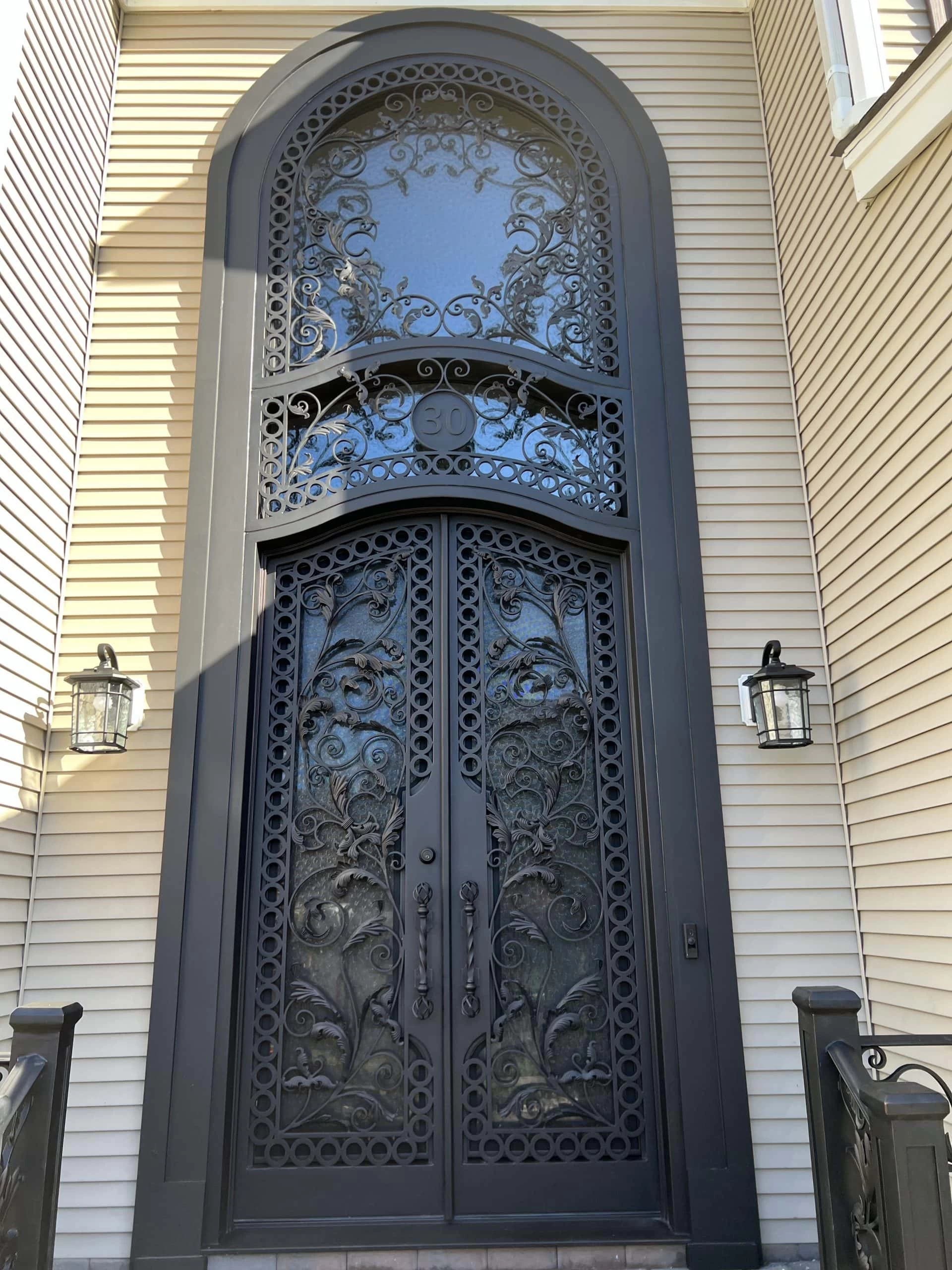
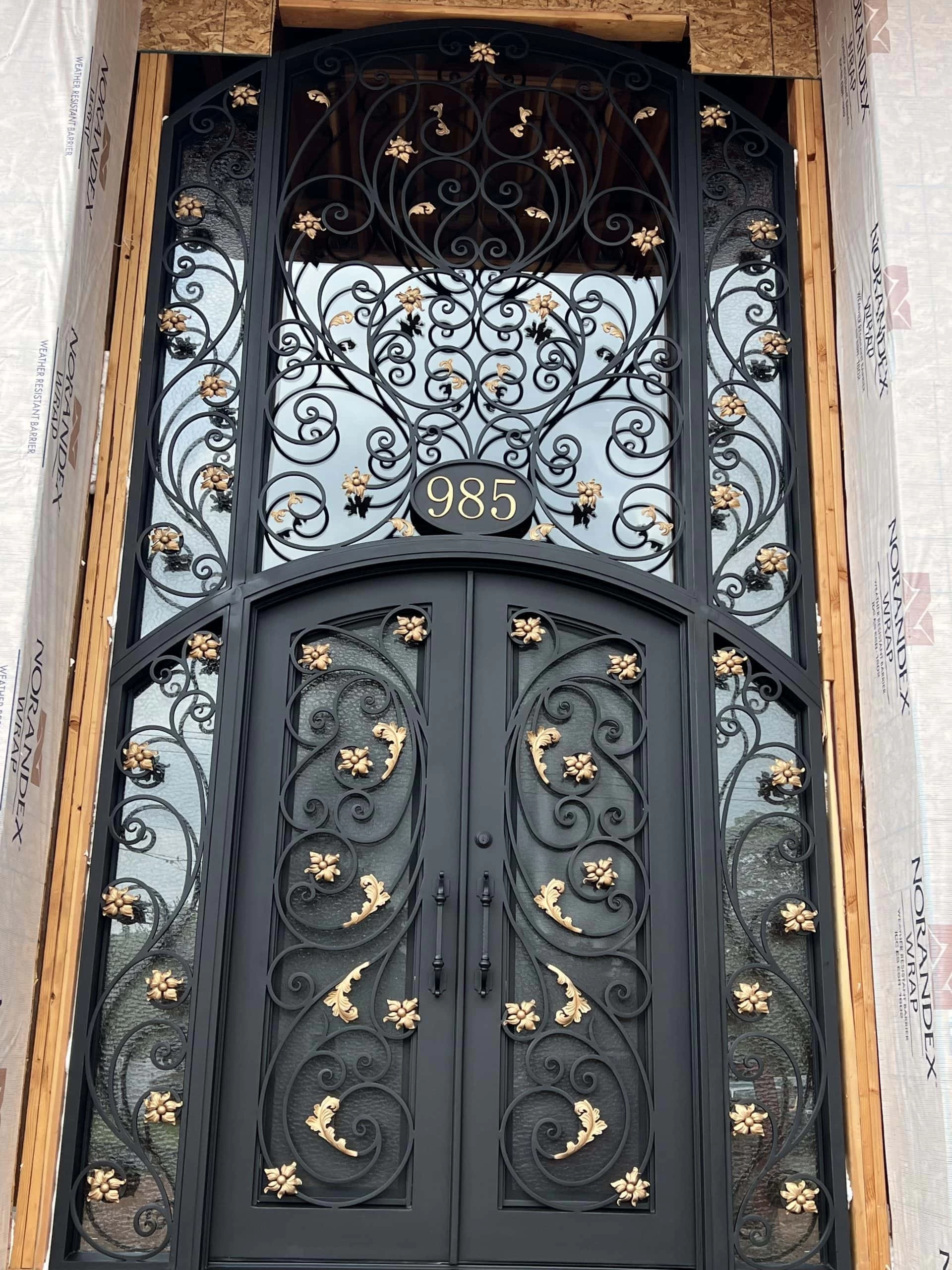
This is where the materials diverge significantly. If you want ornate scrollwork, intricate patterns, or a door that looks like it belongs on a Mediterranean villa, custom iron is your answer. The low carbon content lets craftsmen create virtually any design you can imagine. Curved lines, detailed grillwork, family crest incorporation—all achievable with wrought iron.
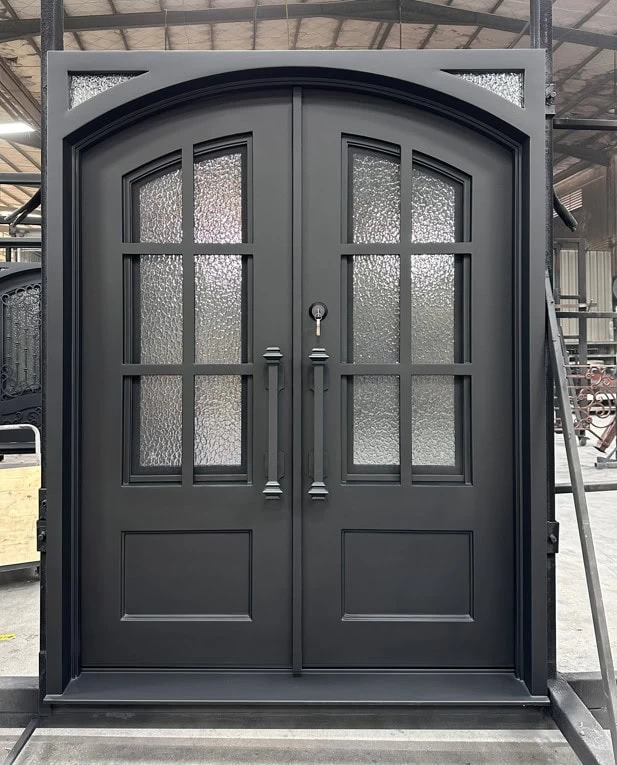
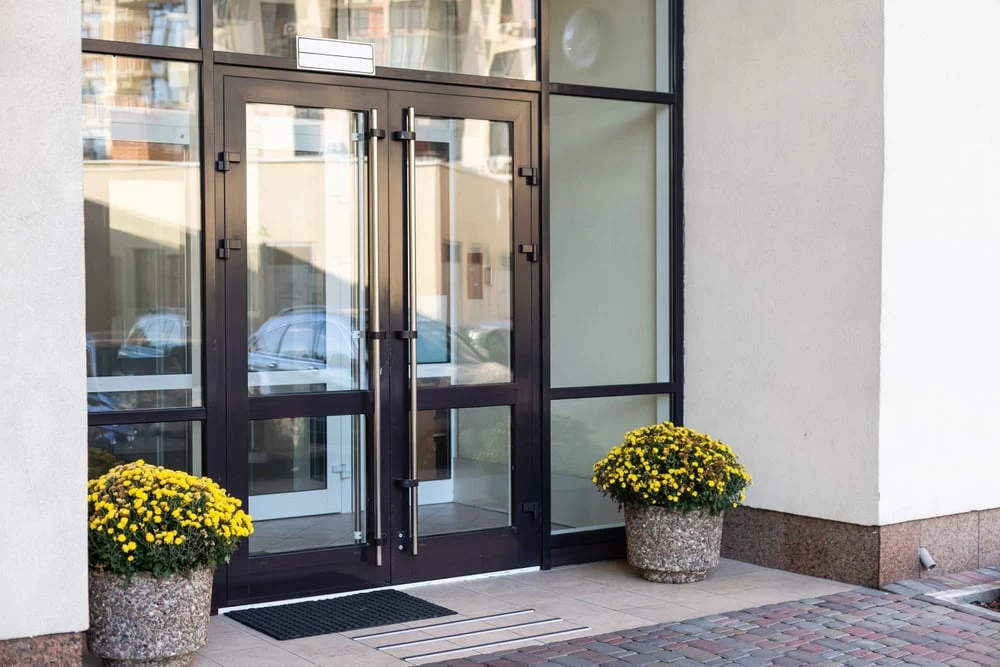
Steel doesn’t bend that way. The higher carbon content makes it rigid, which limits your design options to cleaner, simpler lines. That’s not necessarily a problem if your home has modern or contemporary architecture. Steel doors with minimal frames and large glass panels create a sleek, open aesthetic that works beautifully with current design trends.
The question isn’t which material offers better design flexibility in general. It’s which one matches your home’s architectural style and your personal taste. A colonial home in Newark might look stunning with a custom iron door featuring traditional scrollwork. A modern build in Montclair might call for a steel door with clean lines and expansive glass.
Custom iron doors can be tailored to match virtually any architectural demand. You can work with designers to create unique patterns, choose from dozens of finish options, and incorporate glass in ways that complement the ironwork. The customization possibilities are nearly endless because the material cooperates with the fabrication process.
Steel doors offer customization too, but within narrower parameters. You can choose different finishes, select hardware, and decide on glass configurations. Some manufacturers offer laser-cut patterns or decorative elements. But you won’t get the same level of intricate detail that’s possible with hand-forged iron.
For homeowners who value that ornate, Old World craftsmanship, iron delivers something steel simply can’t match. For those who prefer minimalist modern design, steel’s limitations become advantages—the material naturally lends itself to the aesthetic you’re after.
Both materials can incorporate glass panels, sidelights, and transoms. Both come in single or double door configurations. Both can be finished in various colors from matte black to oil-rubbed bronze to custom hues. The difference is in the decorative metalwork itself and how much detail you can achieve in the door’s design.
Want live answers?
Connect with a Iron Door Kings expert for fast, friendly support.
Custom iron doors offer design freedom that’s hard to match with any other material. Because wrought iron can be heated and shaped, craftsmen can create doors that feel like one-of-a-kind art pieces. You’re not limited to what’s in a catalog. You can bring inspiration photos, sketches, or even vague ideas, and a good fabricator can turn that into a functional door.
That flexibility comes with considerations. Custom fabrication takes time—often 18-20 weeks from design approval to installation. The process involves design consultations, CAD drawings for approval, hand-forging the ironwork, finishing, and finally installation. You’re not picking something off a shelf and having it installed next week.
The investment reflects that craftsmanship. Quality custom iron doors typically start around $3,000 and can exceed $5,000 depending on size, complexity, and finish. When you factor in professional installation and any needed structural work, complete projects often fall in the $2,500-$6,000 range.
Here’s where the long-term ownership experience diverges. Both materials need maintenance, but the frequency and urgency differ significantly.
Iron doors are surprisingly low-maintenance given their longevity. Clean them monthly with mild soap and water. Apply a wax-based sealant every six months—quarterly if you’re in a coastal or high-humidity area. Inspect for rust every three months, paying attention to the base, hinges, and edges where moisture can collect. Touch up any paint chips immediately to prevent rust from spreading. Every 3-5 years, depending on exposure, you’ll want to do a full repaint.
That’s it. Follow that routine, and your iron door will last multiple lifetimes. Many homeowners install iron doors once and never replace them. The door outlasts the house’s other features and often gets passed down when the property changes hands.
Steel doors require more vigilant maintenance. They rust more easily than wrought iron, especially if the protective coating gets scratched or chipped. Any damage to the finish needs immediate attention. Clean them with the same soap and water routine, but you’ll need to inspect more frequently for any coating damage.
The good news is that modern steel doors often come with powder-coated finishes or galvanized coatings that improve rust resistance. Quality steel doors from reputable manufacturers can last 30 years with proper care. But you’ll replace a steel door before you’d replace an iron door, and you’ll spend more time maintaining it along the way.
For New Jersey’s climate specifically, both materials handle the weather well if maintained properly. The cold winters, humid summers, and seasonal temperature swings don’t pose problems for either iron or steel as long as the protective coatings stay intact and moisture doesn’t penetrate the finish.
The maintenance difference becomes a value consideration. Iron doors cost more upfront but require less frequent intervention and last longer. Steel doors cost less initially but need more attention and eventual replacement. Which makes more sense depends on your budget, how long you plan to stay in the home, and how much you want to think about door maintenance over the years.
The price gap between steel and iron doors is significant, but it’s only part of the value equation.
Steel doors range from around $200 for basic options up to $1,000 for quality models with better finishes and features. Even the most expensive steel door costs roughly one-third of what you’d pay for a basic custom iron door. If you’re working with a tight budget or need a door replacement quickly, steel makes the decision easier.
Custom iron doors start around $3,000 for budget-friendly versions and commonly exceed $5,000 for quality options with detailed work. Add professional installation, shipping, and any structural modifications, and you’re looking at a total project cost in the $2,500-$6,000 range for most installations.
Looking only at those numbers, steel seems like the obvious choice. But the long-term picture changes the calculation.
A quality iron door lasts multiple lifetimes with minimal maintenance. You install it once, maintain it properly, and it’s still performing decades later when you sell the home or pass it to the next generation. Over a 30-50 year period, you’re making one investment.
A steel door might last 30 years with diligent maintenance. More realistically, you’re looking at replacement somewhere in that timeframe, especially if maintenance lapses or the coating gets damaged. If you’re the average homeowner, you might purchase multiple steel doors during the same period one iron door would serve you.
Factor in maintenance costs too. Iron doors need periodic cleaning and occasional repainting, but the rust-resistant properties mean you’re not constantly addressing corrosion issues. Steel doors require more frequent intervention to prevent rust, more touch-ups when the finish gets damaged, and more concern about moisture exposure.
The resale value consideration matters as well. Iron doors typically add more to a home’s perceived value than steel doors. The craftsmanship, customization, and durability signal quality to potential buyers. In competitive real estate markets, a custom iron door can be a differentiating feature that makes your home more memorable and valuable.
For homeowners planning to stay in their Essex County property long-term, iron often provides better value despite the higher initial cost. For those who might move within 5-10 years or who need to keep upfront costs down, steel offers a solid middle ground between standard doors and premium iron.
Neither choice is wrong. The right answer depends on your specific situation, budget, and how you weight upfront cost against long-term value and maintenance.
Steel and iron doors both deliver security, durability, and aesthetic appeal that standard doors can’t match. The material you choose should align with your home’s architecture, your design preferences, your maintenance willingness, and your budget.
If you want intricate designs, Old World craftsmanship, and a door that lasts multiple lifetimes with minimal maintenance, custom iron makes sense despite the higher cost. If you prefer clean modern lines, need to control upfront expenses, and don’t mind more regular maintenance, quality steel delivers solid performance and value.
The installation quality matters as much as the material itself. Proper weatherproofing, frame reinforcement, and precise fitting determine how well your door performs regardless of whether it’s iron or steel. Working with experienced installers who understand New Jersey’s climate and know how to handle these materials correctly protects your investment.
For homeowners in Essex County, NJ ready to upgrade to a premium metal door, we bring the expertise, craftsmanship, and professional installation that makes either choice work beautifully for your home.
Article details:
Share:
Continue learning: