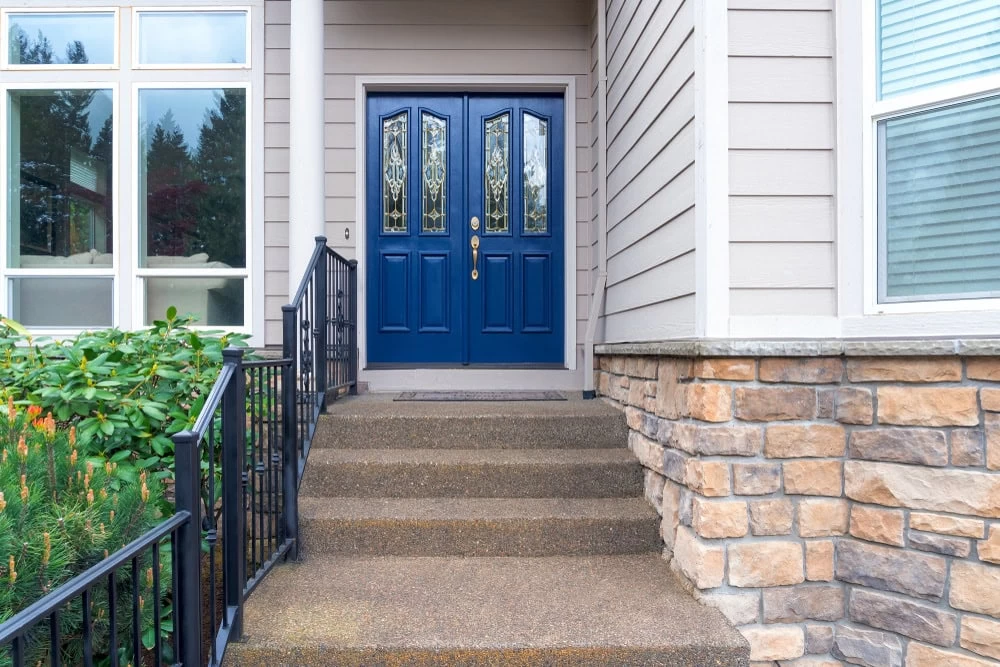
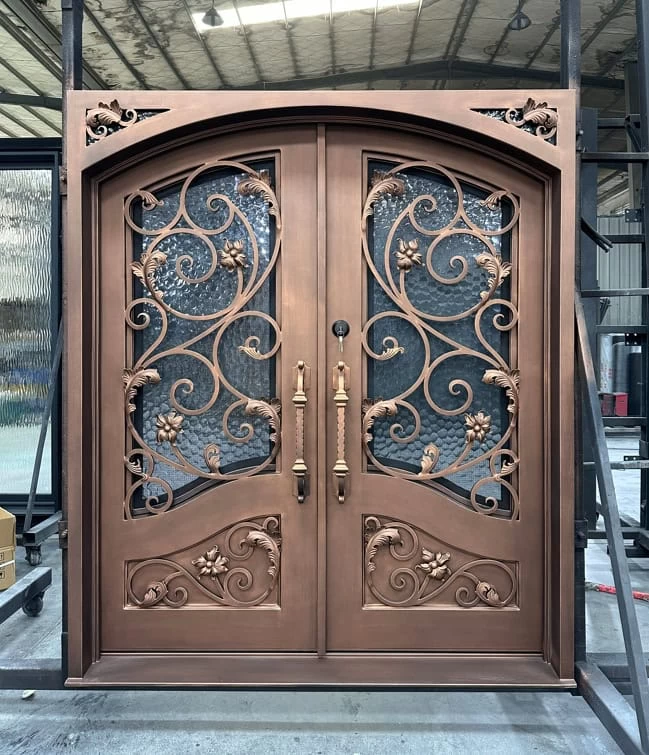
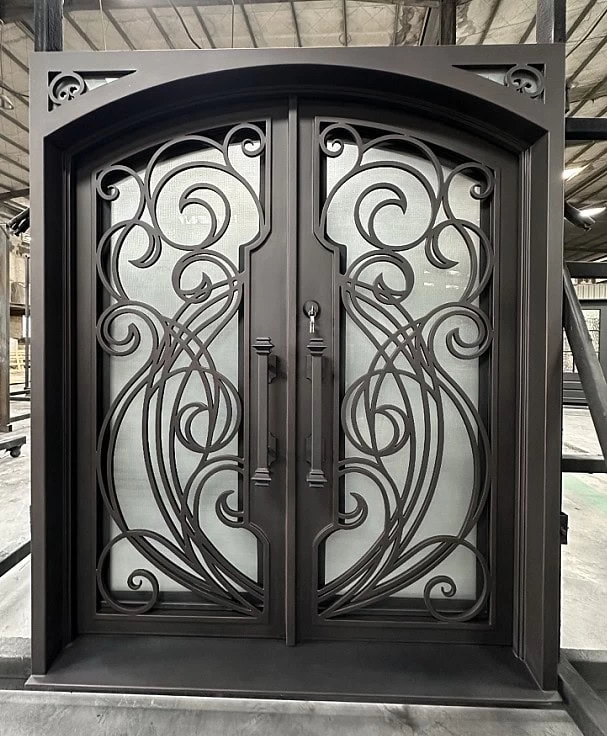
Your door upgrade could return double your investment or sit there looking pretty. The difference comes down to knowing which features buyers in Middlesex, Bergen, Monmouth, and Essex Counties actually pay premiums for.
Share:
Summary:
You’re planning to sell eventually. Maybe next year, maybe in five. Either way, you want your renovation dollars working for you, not just making things look nicer. You’ve heard front door replacement delivers strong returns—but walk into any showroom and you’ll face dozens of options, each promising to boost your home’s value.
Here’s what matters. Not all custom door features deliver equal returns at closing. Some upgrades get noticed during showings and factor into offers. Others just look expensive. When you’re spending $5,000 to $10,000 on a custom door, knowing the difference isn’t optional.
Let’s break down which features actually move your home’s value in Middlesex County, NJ, Bergen County, NJ, Monmouth County, NJ, and Essex County, NJ—starting with the ROI numbers that separate smart investments from expensive mistakes.
Steel and custom iron entry doors return 188% to 216% of their installation cost at resale. That’s not a typo. According to the 2024 Cost vs Value Report, door replacement consistently ranks in the top two home improvements you can make—ahead of kitchen remodels, bathroom updates, and deck additions.
The reason is simple. Buyers decide whether they want your home in the first few minutes of their showing. Your front door is that first impression. When it looks substantial, secure, and well-maintained, everything else gets judged more favorably.
In competitive New Jersey markets where multiple offers are common, a custom iron door doesn’t just add appeal—it signals quality throughout the property. Buyers assume if you invested in a premium entrance, you probably maintained the rest of the home to the same standard. That assumption translates directly into offer prices.

Custom fabrication means the door is built to your exact specifications—not adapted from a pre-hung catalog option. You’re specifying dimensions, materials, design elements, security features, and finish details. The door fits your home perfectly instead of forcing your home to accommodate a standard size.
This precision matters during appraisals. Custom doors seal tighter, operate smoother, and look intentional rather than retrofitted. Buyers notice when a door sits perfectly in its frame with no visible gaps, no weather stripping peeking out, and no signs that someone struggled to make it fit. It reads as quality construction.
The fabrication process involves plasma cutting for precise component shaping, MIG welding for structural joints, and powder coating that outlasts paint by 15-20 years. You’re looking at 12-16 gauge steel construction weighing 200-400 pounds compared to 50-80 pounds for standard doors. That weight is noticeable. The door sounds different when it closes. It feels substantial when you operate the handle.
Custom also means you can integrate the specific features that deliver ROI—smart locks, thermal barriers, impact-resistant glass, and commercial-grade security hardware—without compromising the design. Off-the-shelf doors force you to choose between aesthetics and functionality. Custom doors give you both, and buyers recognize the difference immediately.
The investment typically ranges from $3,000 to $10,000 depending on size and complexity. Spread that over a 25-30 year service life and you’re looking at better economics than conventional doors that need replacement every 8-12 years. Factor in the immediate $3,000 to $8,000 boost to home value, and the custom door ROI becomes clear before you even calculate energy savings or insurance discounts.
Appraisers aren’t just eyeballing curb appeal. They’re checking specific boxes that affect comparable sales and market positioning. Understanding what gets documented helps you prioritize which custom features to include when maximizing resale value.
Security features rank high on appraisal notes. Multi-point locking systems, reinforced strike plates, and solid steel construction all get recorded. These aren’t just safety upgrades—they’re quantifiable improvements that separate your property from comparables with standard deadbolts. Enhanced security features can also qualify you for homeowners insurance discounts of up to 15%, which appraisers may factor into overall value calculations.
Energy efficiency ratings carry more weight now than five years ago. ENERGY STAR certification, U-Factor ratings below 0.25, and documented thermal barrier construction all appear in appraisal documentation. These specs translate to lower operating costs for the next owner. When buyers see proof that your door reduces energy bills by $150-350 annually, that factors directly into what they’re willing to pay.
Material quality and expected lifespan also get assessed. A powder-coated steel door with documented 25-30 year durability holds more value than wood that’ll need replacement in 8-12 years. Appraisers calculate deferred maintenance costs. When your door eliminates a future $5,000-$8,000 replacement expense, that adds to current market value.
Smart home integration is increasingly relevant, especially in Monmouth County, NJ and Essex County, NJ where tech-forward buyers dominate. Doors pre-wired for smart locks or already integrated with August, Yale, or Schlage systems get positive documentation. The infrastructure is in place. The next owner doesn’t face retrofit costs or compatibility issues.
Architectural cohesion matters more than most homeowners realize. Custom doors that clearly complement your home’s style—whether colonial, contemporary, or transitional—demonstrate thoughtful renovation rather than random upgrades. Appraisers distinguish between improvements that enhance the property’s character and those that feel forced. Custom fabrication ensures the former, which translates to better comparable positioning.
Want live answers?
Connect with a Iron Door Kings expert for fast, friendly support.
Smart home compatibility isn’t a luxury feature anymore. It’s expected in homes above a certain price point. Your door either integrates seamlessly with modern systems or it immediately feels outdated during showings.
The technology has matured significantly since the early days of buggy apps and dead batteries. Current systems from August, Yale, Schlage, and Kwikset offer fingerprint access, keypad entry, remote locking via smartphone, and integration with Alexa, Google Home, and Apple HomeKit. Some 2026 models include facial recognition and palm vein authentication for completely touchless entry.
The security ROI is measurable. Homes with integrated smart security systems sell 5-7% faster and often command premiums in competitive markets. But the infrastructure matters as much as the technology. We fabricate custom iron doors with concealed wiring channels, dedicated power routing for electronic components, and reinforced mounting areas for smart lock mechanisms—all without compromising structural integrity or aesthetics.
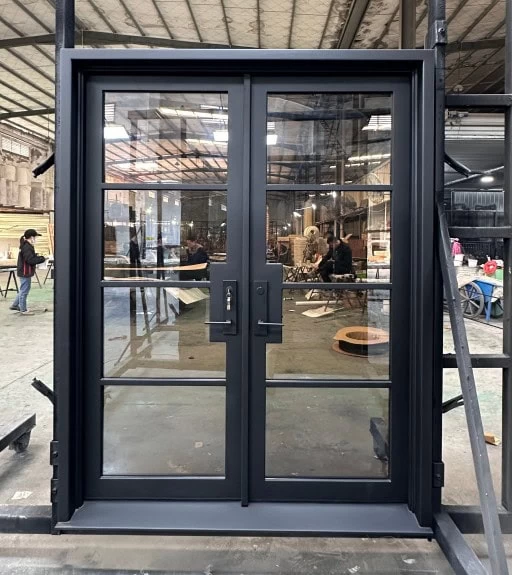
Not every smart feature delivers equal value. Some get used multiple times daily. Others sit dormant after the novelty wears off. Understanding which features buyers actually rely on helps you invest wisely rather than paying for gimmicks.
Remote locking and unlocking tops every usage study. The ability to let in contractors, delivery personnel, or family members without being home solves real daily problems. Buyers with kids, aging parents, or rental properties particularly value this feature. It’s not theoretical convenience—it’s practical functionality they’ll use 3-5 times per week minimum.
Temporary access codes rank second in actual usage. Creating time-limited codes for guests, cleaning services, or short-term rentals eliminates the hide-a-key security risk while providing complete access tracking. Users can see exactly who entered and when, which matters for both insurance purposes and peace of mind. This feature particularly appeals to buyers in Bergen County, NJ who travel frequently for work or own vacation properties.
Auto-lock functionality prevents the “did I lock the door” anxiety that sends people back home or keeps them up at night. The door automatically secures itself after closing or after a preset time period. Simple, but it addresses a genuine daily concern. Buyers with hectic schedules or multiple family members coming and going appreciate not having to double-check or verify remotely.
Activity monitoring provides real-time alerts when the door is accessed. You receive notifications showing who used which entry method and at what time. For families with teenagers or properties with multiple access points, this visibility matters. It’s not surveillance—it’s awareness that helps coordinate schedules and verify expected arrivals.
Voice control through Alexa, Google Assistant, or Siri adds convenience but ranks lower on must-have lists. It’s genuinely helpful when your hands are full with groceries or luggage, but it’s not a dealbreaker. Still, the integration demonstrates that your home’s smart ecosystem is properly configured and future-ready, which tech-savvy buyers in Essex County, NJ specifically look for during showings.
Energy efficiency directly impacts operating costs, which affects what buyers are willing to pay for your home. A door with superior thermal performance saves $150-350 annually on heating and cooling costs. Over a 30-year mortgage, that’s $4,500-$10,500 in cumulative savings. Buyers absolutely calculate this during their decision process.
The key metrics are U-Factor and Solar Heat Gain Coefficient (SHGC), both certified by the National Fenestration Rating Council (NFRC). U-Factor measures how much heat passes through the door—lower numbers mean better insulation. For New Jersey’s four-season climate, you want U-Factor ratings of 0.25 or lower. SHGC measures how much solar heat enters through glass elements. Lower SHGC reduces summer cooling costs while higher values can provide beneficial winter solar gain.
ENERGY STAR certification provides a quick benchmark for quality. Certified doors meet strict efficiency guidelines and typically reduce energy bills by approximately 12% compared to non-certified options. That translates to roughly $180-300 annually for the average household spending $1,500-$2,500 on energy costs.
Construction details matter as much as the ratings themselves. Polyurethane foam cores provide four times more insulating value than solid wood of the same thickness. The foam fills the entire door cavity without thermal bridging—those problematic areas where heat bypasses insulation through conductive materials. Quality custom doors achieve air leakage rates of 0.3 cubic feet per minute per square foot or less, compared to 1.0+ for standard doors.
Weatherstripping technology has evolved significantly beyond the foam strips that compress and fail after two winters. Modern systems use magnetic seals similar to refrigerator doors, compression seals with multiple contact points, and adjustable thresholds that eliminate bottom gaps. These are engineered sealing systems designed for decades of daily use in temperature extremes, not temporary solutions.
For homes in Middlesex County, NJ where winter temperatures regularly drop below freezing and summer humidity stays oppressively high, thermal performance isn’t optional. Buyers know their HVAC systems will work harder with poor door insulation. They’re calculating ongoing costs during inspections. A door with documented NFRC thermal efficiency ratings removes a future expense concern and adds immediate value to your property.
The custom door features that maximize resale value aren’t always the flashiest options in the showroom. They’re the ones that solve real problems buyers face daily—security concerns, energy costs, convenience, and long-term durability. When you focus on these practical benefits backed by measurable ROI data, your investment pays off both in immediate home value and eventual sale price.
Custom iron doors deliver exceptional returns because they combine multiple value drivers in one upgrade. You get the curb appeal impact that influences first impressions, the security features that lower insurance costs, the energy efficiency that reduces monthly bills, and the longevity that eliminates future replacement expenses. That’s why the ROI numbers consistently outperform virtually every other home improvement category.
If you’re considering a custom door upgrade for your property in Middlesex County, NJ, Bergen County, NJ, Monmouth County, NJ, or Essex County, NJ, we can walk you through which specific features make sense for your home’s architecture, your timeline for selling, and what buyers in your local market prioritize most. The right combination depends on your unique situation, but the features that deliver measurable returns remain consistent across all markets.
Article details:
Share:
Continue learning: