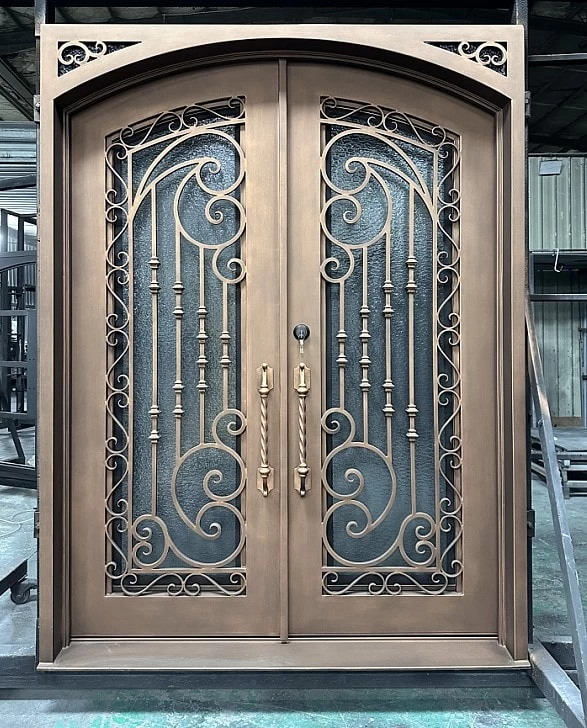
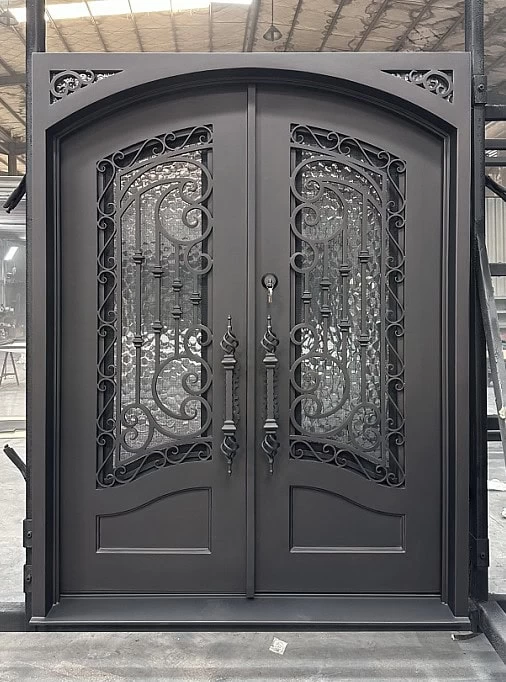
Wrought iron screen doors offer Essex County homeowners the perfect blend of security, ventilation, and timeless style—engineered to withstand New Jersey's demanding climate while protecting what matters most.
Share:
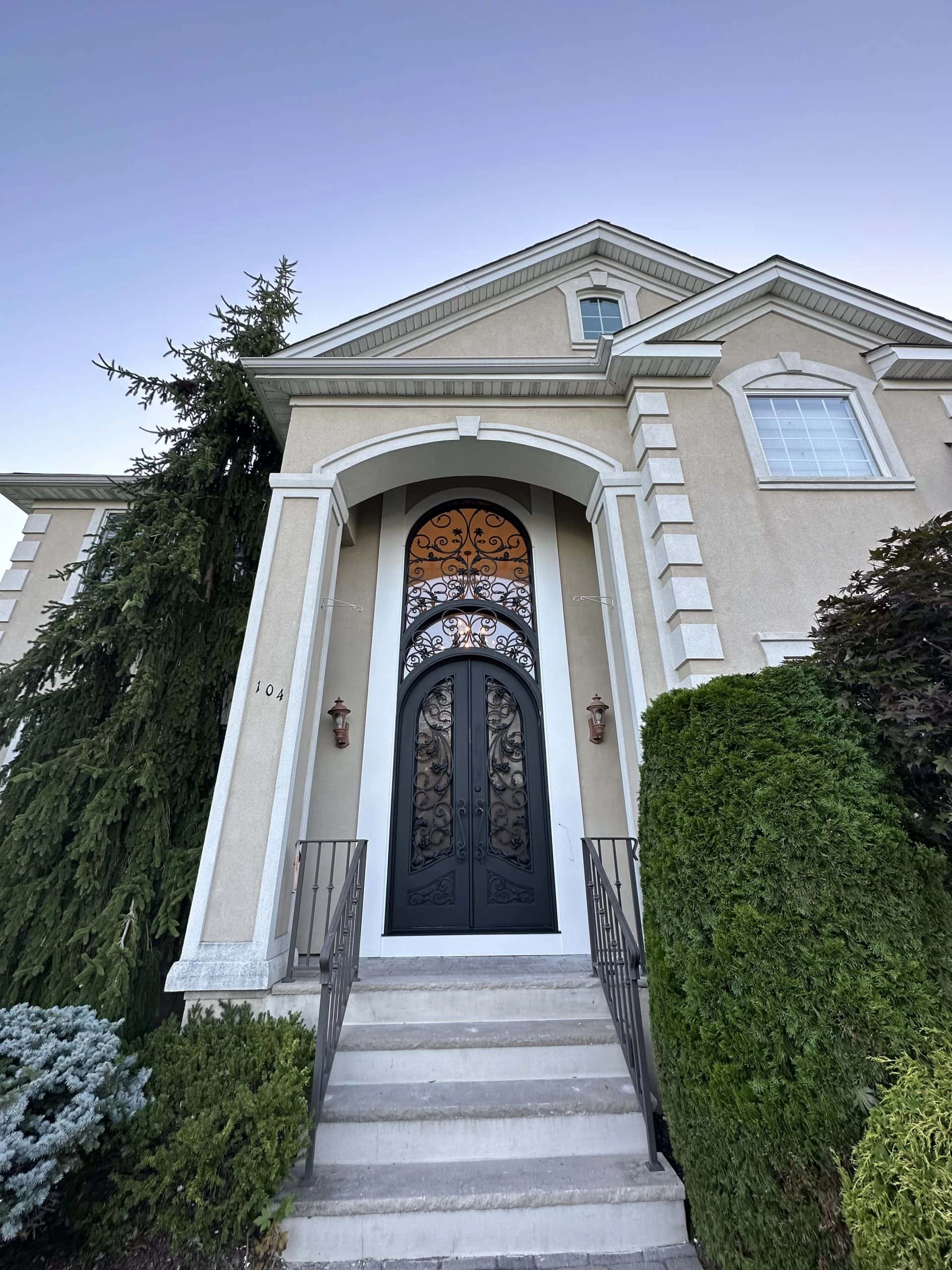
Summary:
You want to enjoy a breeze without worrying about who might walk through your front door. That’s the problem with standard screen doors—they give you ventilation but zero real security. Lightweight aluminum frames and flimsy mesh might keep bugs out, but they won’t stop anything else.
Wrought iron screen doors solve that problem. They let air flow while standing firm against forced entry, harsh weather, and decades of daily use. You get the fresh air you’re after plus the peace of mind that comes with a door built from materials that actually hold up. Here’s what makes them different and why they matter for homes in Essex County, NJ.
Iron screen doors aren’t just heavier versions of what you’d find at a big box store. They’re built differently from the ground up. Where aluminum bends and dents, iron holds its shape. Where lightweight mesh tears, steel screen material stays intact.
The difference shows up in how long they last and how well they protect your home. Standard screen doors might give you a few years before the frame warps or the screen rips. Iron doors are still standing strong decades later, handling everything from summer storms to winter freeze-thaw cycles without breaking down.
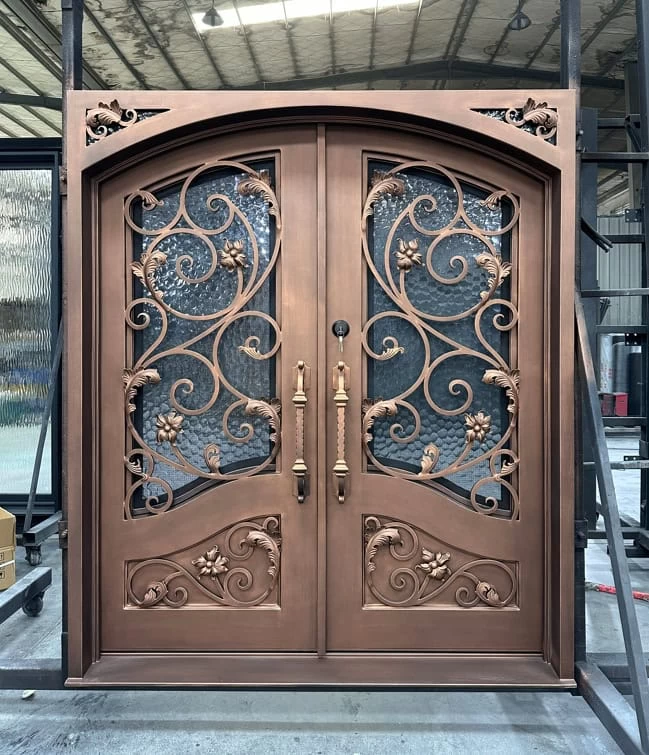
Custom iron screen doors give you control over every detail. You’re not limited to what’s sitting in a warehouse somewhere. You choose the design, the finish, the hardware, and how it all comes together to match your home’s style.
Maybe you want ornate scrollwork that complements a traditional colonial. Or clean geometric lines that fit a modern aesthetic. Custom work means the door fits your opening exactly—no gaps, no compromises on security, and no settling for close enough.
The process starts with measurements. We take exact dimensions of your door frame because iron doors are heavy and need perfect alignment to operate smoothly. Then you work with our design team to select patterns, glass inserts if you want them, and finishes that hold up to New Jersey weather. Powder coating protects against rust and fading far better than standard paint, which matters when your door faces humidity, snow, and temperature swings year after year.
Custom doesn’t have to mean months of waiting either. We offer pre-designed templates you can modify, cutting down lead time while still giving you a door that feels like yours. You get the benefit of proven designs with room to adjust details like color, hardware style, and decorative elements. It’s a middle ground that works when you want something better than stock options but don’t need a completely original design.
Installation matters as much as the door itself. Iron screen doors weigh significantly more than aluminum, and improper installation leads to misalignment, gaps, and doors that don’t close properly. Our professional teams handle the weight, ensure the frame sits level, and adjust hinges so the door swings smoothly without sagging over time. That upfront work prevents problems that would otherwise show up months later when the door starts sticking or leaving gaps that let drafts through.
Aluminum screen doors are cheaper upfront. That’s their main advantage. But the cost difference shows up in how they perform and how long they last.
Aluminum frames are lightweight, which makes them easy to install but also easy to damage. A hard push, a piece of furniture bumping the door, or even a strong gust of wind can bend the frame. Once aluminum bends, it doesn’t straighten back out cleanly. You’re left with a door that doesn’t close right and gaps that let air leak through.
Iron doesn’t have that problem. The material is dense enough to absorb impacts without bending. It holds its shape through years of use, which means the door keeps closing properly and the seal stays tight. That matters in New Jersey where winter drafts aren’t just uncomfortable—they drive up heating bills.
The screen material differs too. Standard aluminum doors use lightweight mesh that tears if something sharp hits it or if a pet scratches at it. Iron screen doors often use heavier gauge steel mesh or stainless steel screening that resists damage. You can leave the door open for ventilation without worrying that one accident ruins it.
Rust is a common concern with iron, but modern manufacturing addresses it. Powder coating creates a protective barrier that seals the metal against moisture. As long as the coating stays intact, rust doesn’t develop. Aluminum doesn’t rust, but it does corrode, especially in areas with high humidity or salt air. The corrosion shows up as white powder or pitting on the surface, and it weakens the frame over time.
Maintenance requirements are similar for both materials if you’re comparing quality products. Aluminum needs occasional cleaning to remove dirt and prevent corrosion. Iron needs the same cleaning plus inspection of the powder coating to catch any chips before moisture reaches the metal. Neither one demands constant attention, but iron gives you more durability for that minimal upkeep.
Security is where the gap widens. Aluminum screen doors aren’t designed to stop forced entry. The frames bend easily, and the mesh tears with minimal effort. They’re fine for keeping bugs out, but they don’t add meaningful protection. Iron screen doors are built with security in mind. The frames resist prying, the mesh holds up to cutting attempts, and the overall construction makes forced entry significantly harder. That difference matters if security is part of why you’re installing a screen door in the first place.
Want live answers?
Connect with a Iron Door Kings expert for fast, friendly support.
Wrought iron screen doors deliver benefits that go beyond what you see from the curb. Security is the obvious one—these doors stop forced entry attempts that would blow right through aluminum. But they also handle ventilation, weather resistance, and long-term value in ways that standard options don’t.
You’re not choosing between security and fresh air. You get both. The iron frame and steel mesh let air flow through while keeping intruders out, which means you can open your main door on mild evenings without second-guessing whether it’s safe.
Essex County sees property crime at rates that make security a real concern, not just a nice-to-have. A crime happens every 15 minutes on average, and property crimes occur every 41 minutes. Those numbers mean your home needs protection that actually works when tested.
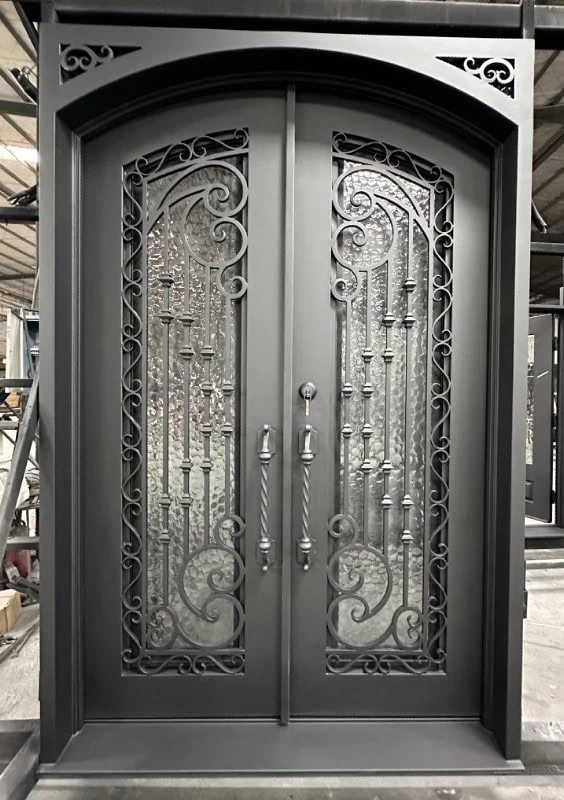
Wrought iron screen doors are built from materials that resist forced entry. The doors use 12 to 14-gauge steel, which is thick enough to withstand prying and kicking. The frames are reinforced, the hinges are heavy-duty, and the locking mechanisms are designed to hold up under pressure. Compare that to aluminum frames that bend with a hard push, and the difference in security becomes obvious.
Durability matters just as much as strength. New Jersey’s climate is hard on exterior doors. Winters bring freezing temperatures, snow, and ice. Summers are humid. Spring and fall see temperature swings that cause materials to expand and contract. Wood doors warp. Aluminum corrodes. Cheap steel rusts. Iron doors with proper powder coating handle all of it without breaking down.
The doors don’t absorb moisture, so they won’t swell in humidity or rot over time. They don’t expand and contract the way wood does, which means they stay tight in their frames year after year. Rust resistance comes from the powder coating, which seals the metal against moisture far better than paint. As long as the coating stays intact, the door keeps performing.
You’re also getting a door that holds up to daily use. Heavy doors need strong hinges and frames to support the weight without sagging. Professional installation ensures everything is aligned correctly from the start, and quality materials mean the door keeps operating smoothly for decades. You’re not replacing it in five years because the frame bent or the finish wore off. You’re looking at a door that outlasts cheaper alternatives by a significant margin.
Fire resistance is another benefit that doesn’t get talked about enough. Iron doesn’t burn. In an emergency, that extra fire resistance could make a real difference in how quickly fire spreads. Wood doors fuel fires. Fiberglass can melt. Iron stands up to extreme heat, giving you and your family more time to get out safely.
New Jersey’s weather tests every part of your home, and your front door takes the worst of it. Cold, snowy winters. Hot, humid summers. Freeze-thaw cycles that crack weak materials. Rain that seeps into gaps and causes rot. Your door has to handle all of it without failing.
Iron doors are engineered for these conditions. They don’t absorb moisture, which eliminates the warping and rot that destroy wood doors. They don’t rust when properly coated, unlike cheap steel that starts showing rust spots after one winter. And they don’t crack or become brittle in cold temperatures the way some fiberglass doors do.
The powder coating is key to weather resistance. It’s not just paint—it’s a baked-on finish that bonds to the metal and creates a protective seal. That seal keeps moisture out, prevents rust, and holds up to UV exposure without fading. You’re not repainting every few years to keep the door protected. The finish lasts for decades with minimal maintenance.
Temperature swings cause expansion and contraction in most materials. Wood swells when it’s humid and shrinks when it’s dry, which leads to gaps, sticking, and misalignment. Iron doesn’t have that problem. It stays dimensionally stable, which means the door keeps fitting properly in the frame regardless of temperature or humidity. You don’t end up with drafts in winter or a door that won’t close in summer.
Snow and ice don’t damage iron the way they do other materials. Wood absorbs moisture from melting snow and starts to deteriorate. Aluminum corrodes when exposed to road salt tracked onto porches. Iron with powder coating resists both. You brush off the snow, and the door keeps performing without showing wear.
Wind resistance matters too, especially during storms. Lightweight doors can blow open or get damaged by strong gusts. Iron doors are heavy enough to stay put, and the reinforced frames don’t flex under wind pressure. That stability keeps your home sealed against drafts and prevents damage during severe weather.
Professional installation ensures the door is weathertight from day one. We use weatherstripping around the frame to seal gaps, and we make sure the threshold creates a tight seal at the bottom. Those details prevent drafts, keep rain out, and improve energy efficiency. A well-installed iron screen door actually helps reduce heating and cooling costs by eliminating air leaks that standard screen doors create.
The right wrought iron screen door gives you security, ventilation, and durability that lasts decades. You’re not settling for flimsy aluminum that bends under pressure or wood that warps in New Jersey’s climate. You’re choosing a door built from materials that hold up to forced entry attempts, weather extremes, and daily use without breaking down.
Custom options let you match your home’s style without compromising on protection. Professional installation ensures the door fits correctly and operates smoothly from the start. And the long-term value—both in home security and increased property value—makes the investment worthwhile.
If you’re ready to upgrade your home’s security and curb appeal with a door that’s built to last, we can help you find the right solution for your Essex County, NJ home.
Article details:
Share:
Continue learning: