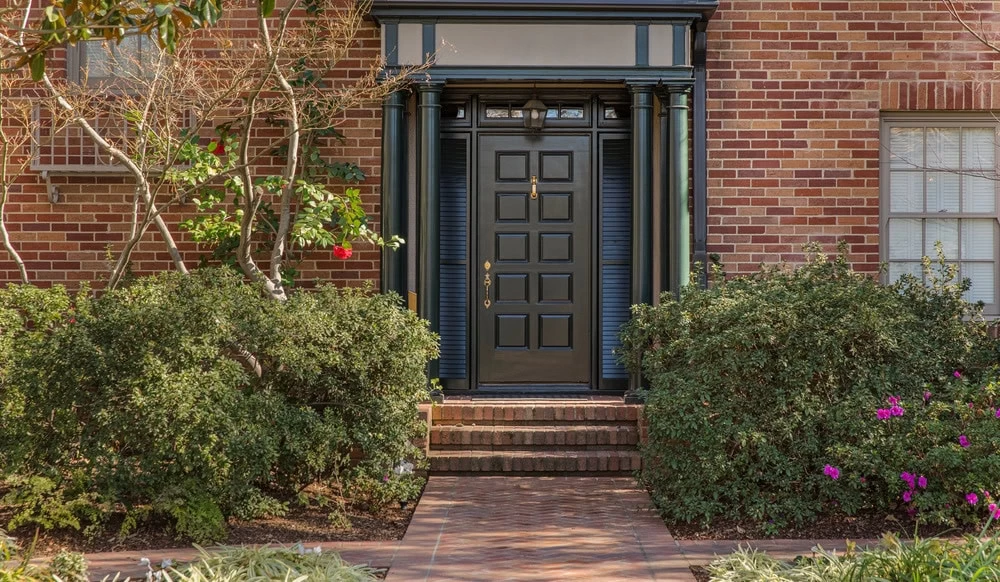
Your entry door isn't just an entrance—it's the single most important element of your home's curb appeal, influencing value, buyer perception, and neighborhood presence.
Share:
Summary:
Walk up to any home and you’ll notice something happens before you even knock. Your eyes go straight to the door. Not the landscaping. Not the siding. The door.
That’s where the judgment starts. Whether you’re selling, staging, or simply living in your home, that entry point is doing more work than any other feature on your exterior. It’s setting expectations. Communicating value. Telling a story about what’s inside.
If your door isn’t making the right impression, nothing else gets a fair chance. Here’s why that matters more than most homeowners realize—and what you can actually do about it.
Curb appeal isn’t a soft concept. It’s measurable, and the numbers back it up. Homes with strong curb appeal can sell for up to 7% more than comparable properties with less attractive exteriors. That’s real money—thousands of dollars—tied directly to how your home looks from the street.
Your entry door sits at the center of that equation. It’s the focal point. The anchor. Everything else on your exterior either supports it or fights it.
Real estate agents know this. In fact, 79% of them say curb appeal is the key to attracting buyers, and 94% recommend improvements before listing. But here’s what most miss: curb appeal doesn’t start with the lawn or the paint. It starts at the door. That’s the first thing buyers see up close. That’s where the emotional connection either happens or doesn’t.
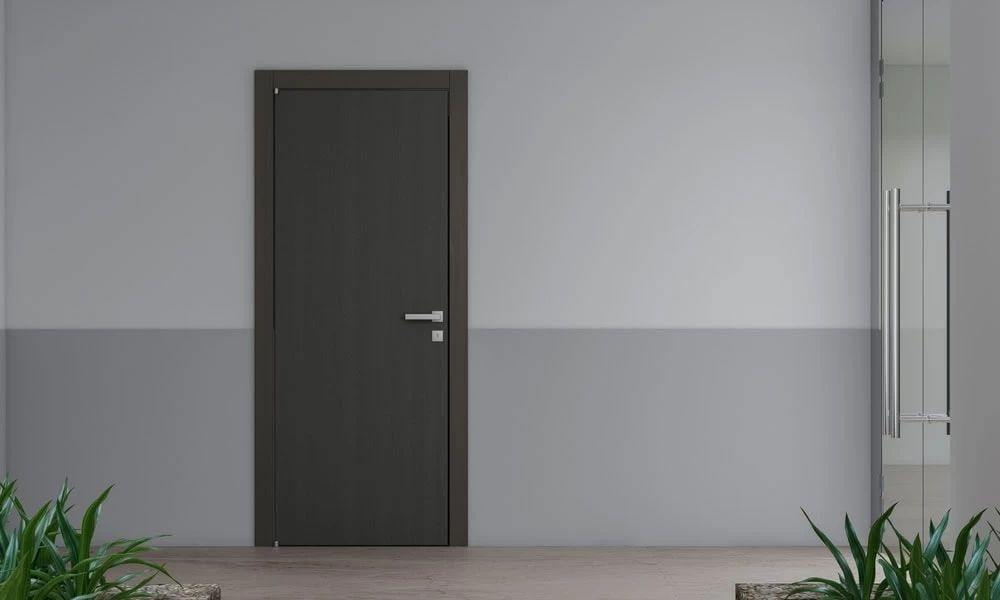
You’ve got about seven seconds. That’s how long it takes for someone to form a lasting opinion about your home. Not seven minutes. Seven seconds.
And where does that happen? At the threshold. Before they’re inside. Before they see your kitchen or your master suite or your backyard. They’re standing at your front door, and their brain is already deciding what kind of home this is.
Home stagers understand this better than most. The entryway gets double the attention because it’s the first thing buyers see when they arrive and the last thing they see when they leave. If your door looks dated, flimsy, or generic, that impression sticks. If it looks solid, custom, and intentional, that sticks too.
Think about what your door is saying right now. Does it communicate quality? Does it suggest the home has been cared for? Or does it blend in with every other door on the block?
Here’s the reality: buyers connect features like a standout entry door with quality construction, attention to detail, and proper maintenance. They assume that if you invested in the entrance, you probably invested in what they can’t see—the roof, the HVAC, the foundation. That assumption drives offers.
In competitive markets like Bergen County and Monmouth County, where buyers are comparing multiple homes in a single afternoon, your front door can be the detail that makes your property memorable. It’s not about being flashy. It’s about being intentional.
And if you’re not selling anytime soon? The same principle applies. Every time you pull into your driveway, you’re seeing your home through the same lens a buyer would. You either feel proud of what you’re coming home to, or you feel like something’s missing. That’s not a small thing. That’s your daily experience of the place you live.
Let’s talk numbers. Entry door replacement consistently ranks among the highest-ROI home improvement projects. According to recent cost-versus-value reports, homeowners can recoup up to 188% of their investment on a quality steel entry door. That’s not a typo. You’re not just recovering costs—you’re adding measurable value.
Even fiberglass doors show strong returns, with homeowners recouping around 97% of costs. Compare that to most renovations, where you’re lucky to break even, and it becomes clear why smart sellers focus here first.
But ROI isn’t just about resale. It’s also about what you’re not spending. A quality entry door with proper insulation and weatherstripping can reduce your heating and cooling costs. In New Jersey, where you’re dealing with freezing winters and humid summers, that’s not theoretical. Your door is either holding conditioned air inside or letting it escape. The difference shows up in your utility bill every month.
Maintenance costs matter too. Wood doors look great initially, but they require regular sanding, staining, and repainting to stay that way. They warp. They crack. They rot when moisture gets in. Over ten or fifteen years, you’re either paying a contractor to maintain them or spending your weekends doing it yourself.
Iron and steel doors with quality powder-coat finishes? You wash them with soap and water. That’s the maintenance. No sanding. No staining. No repainting every few years. The time and money you save over the life of the door add up faster than most people realize.
Then there’s the security factor, which has its own kind of ROI. Standard residential doors fail within two or three kicks from a determined intruder. That’s the reality. A solid iron door with a multi-point locking system and reinforced frame? It requires specialized tools to breach. You’re not just buying peace of mind—you’re buying actual protection that could prevent a loss you can’t put a price on.
For homeowners in Middlesex County, Essex County, and surrounding areas, where property values are high and competition is fierce, the entry door is one of the few upgrades that pays you back in multiple ways: resale value, energy savings, reduced maintenance, and security. That’s a rare combination.
Want live answers?
Connect with a Iron Door Kings expert for fast, friendly support.
Design trends shift, but certain principles hold. In 2026, the emphasis is on authenticity, craftsmanship, and materials that actually perform. Homeowners are moving away from anything that looks mass-produced or temporary.
Grand entrance design isn’t about being over-the-top. It’s about creating a sense of arrival. A threshold that feels intentional. An entry point that matches the quality of what’s inside.
The homes that stand out right now are the ones where the front door feels like it was chosen, not just installed. Where the style aligns with the architecture. Where the materials communicate durability and care.
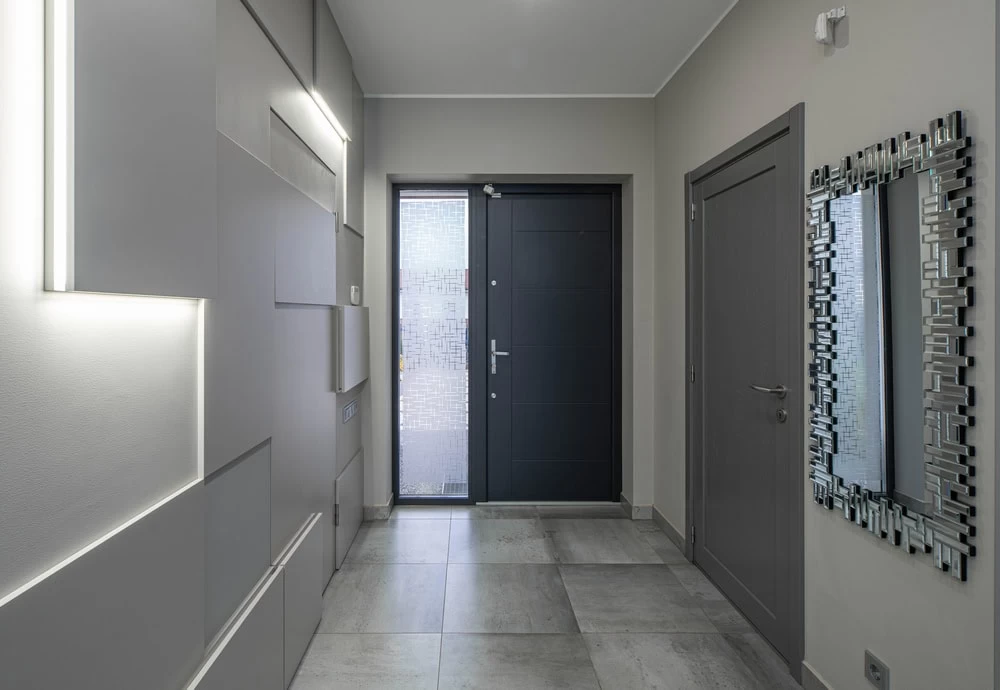
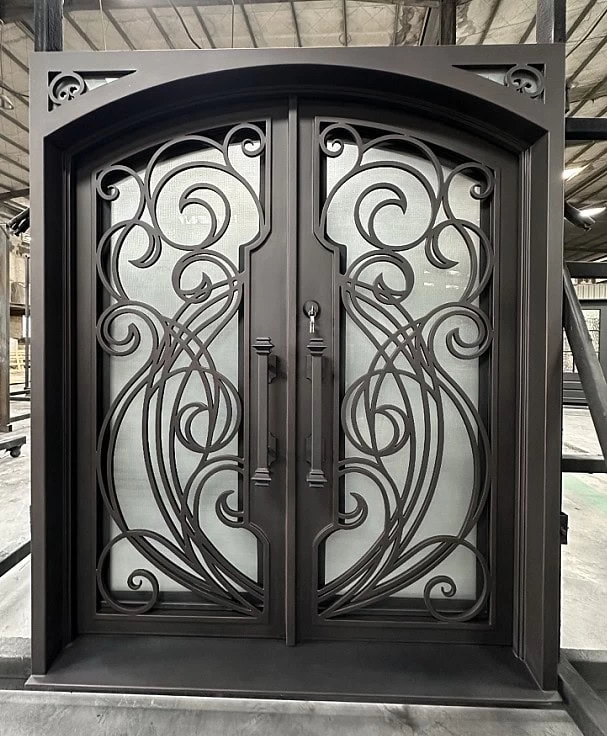
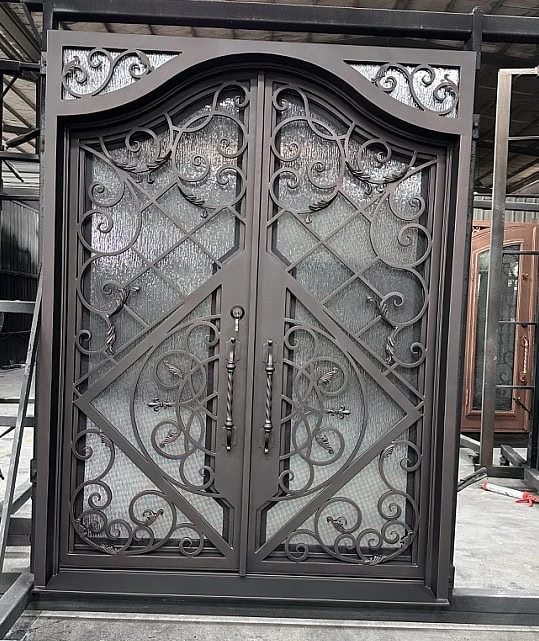
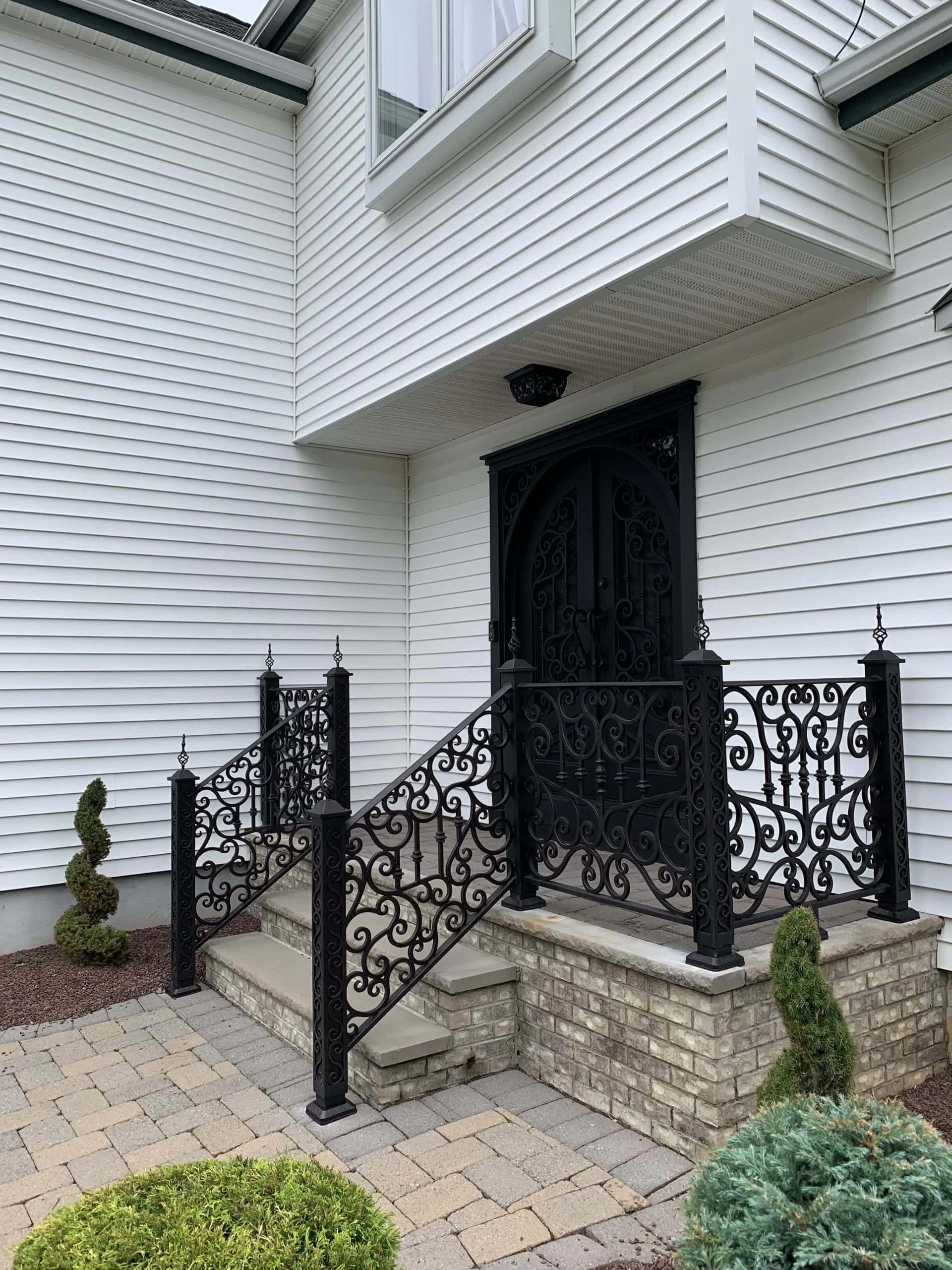
Wrought iron is having a moment, and it’s not hard to see why. It offers something most materials can’t: the combination of strength, customization, and timeless appeal.
In 2026, luxury door trends are leaning into clean lines, expanded glass panels, and finishes that feel substantial—matte black, bronze patina, brushed steel. These aren’t trends that will look dated in five years. They’re rooted in craftsmanship and material honesty, which is exactly what discerning homeowners are looking for.
Decorative ironwork has evolved beyond the ornate Mediterranean scrollwork most people picture. Yes, that style still has its place, especially in homes with Spanish or European-inspired architecture. But modern iron doors are just as likely to feature minimalist geometry, sleek profiles, and large glass sections that let in natural light while maintaining structural integrity.
The versatility is the point. You can go traditional or contemporary. You can add intricate hand-forged details or keep it understated. The material adapts to your vision instead of forcing you into a narrow aesthetic lane.
What’s driving adoption right now is the combination of design flexibility and real performance. Modern iron doors integrate smart technology—keyless entry, video doorbells, biometric locks—without looking like they’re trying too hard. The robust construction actually makes them ideal for this kind of hardware because the frames can support heavier components and conceal wiring cleanly.
Thermal break technology is another game-changer. Older iron doors had a reputation for being cold in winter. Not anymore. Today’s thermally broken steel doors meet or exceed 2026 energy standards for Climate Zone 5, which includes all of New Jersey. We’re talking R-values of R-5 to R-6, compared to wood’s R-3 to R-4. That difference translates directly into comfort and lower energy bills.
Finishes have improved dramatically too. Powder-coat applications provide superior weather protection compared to traditional paint. They resist fading, corrosion, and UV damage. In New Jersey’s climate—where you’re dealing with temperature swings of 50 to 70 degrees between inside and outside—that durability matters. You’re not repainting every few years. You’re not dealing with rust or peeling. The door looks the same in year ten as it did on day one.
For homeowners in Bergen County and Monmouth County, where architectural styles range from colonial to ultra-modern, the ability to customize iron doors to match your home’s character is a major advantage. You’re not settling for what’s in stock. You’re working with a design team to create something that fits your specific opening, complements your exterior, and reflects your personal taste.
New Jersey sits in Climate Zone 5, which is a polite way of saying your entry door takes a beating. Winters drop below 20°F. Summers push past 90°F with high humidity. Your door has to perform in both extremes without warping, cracking, or leaking air.
Wood doors struggle here. They expand and contract with temperature and moisture changes. Over time, that movement leads to gaps, sticking, and eventual failure. You’re either dealing with drafts in winter or paying a carpenter to plane and adjust the fit every few years.
Fiberglass holds up better than wood, but it can fade and develop surface damage that’s difficult to repair invisibly. And while it offers decent insulation, it doesn’t provide the same level of security or visual impact as metal.
Steel and iron doors, particularly those with proper thermal breaks and weatherstripping, are built for this climate. The thermal break is a layer of insulating material that runs through the entire frame, preventing heat transfer. It stops cold from conducting through the metal in winter and keeps heat out in summer. This isn’t a minor detail—it’s the difference between standing near your front door on a cold morning and feeling a draft versus feeling nothing.
Quality installation matters just as much as the door itself. If the frame isn’t square, if the weatherstripping isn’t seated correctly, if the threshold isn’t sealed properly, you lose all the performance benefits. That’s why working with professionals who understand both the product and the local climate is critical. You’re not just buying a door. You’re buying a complete system that has to function flawlessly in real-world conditions.
Energy efficiency also ties directly to long-term cost. A door with a U-factor of 0.30 or less (which is what ENERGY STAR requires for this region) will save you money every month. That adds up over the 20 or 30-year lifespan of the door. You’re essentially paying for the upgrade once and collecting the savings indefinitely.
Security is another climate-related consideration that doesn’t get talked about enough. When temperatures drop and people are inside more, break-in attempts increase. A standard hollow-core door or even a basic wood door won’t stop a determined intruder. A 16-gauge steel door with a multi-point locking system and reinforced strike plates will. That’s 4 to 5 times the strength of a standard residential door. It’s not just about feeling safe—it’s about being safe.
For homeowners in Middlesex County and Essex County, where property values are high and homes are close together, the combination of energy performance, durability, and security isn’t optional. It’s what makes sense for the investment you’ve already made in your home.
Your entry door is doing more than you think. It’s shaping first impressions. Influencing resale value. Protecting your family. Reducing energy costs. And either adding to or subtracting from your daily experience of coming home.
The homes that stand out in competitive markets like Bergen, Monmouth, Middlesex, and Essex Counties are the ones where every detail feels intentional. Where the front door matches the quality of what’s inside. Where curb appeal isn’t an afterthought—it’s the strategy.
If you’re ready to explore what a custom iron entry door can do for your home, we can walk you through options that fit your style, your architecture, and your budget. Real solutions. Real materials. Real results.
Article details:
Share:
Continue learning: