New Jersey's extreme temperatures demand sliding glass doors with thermal break frames and Low-E coatings that actually prevent heat loss and condensation damage.
Share:
Summary:
Your sliding glass door shouldn’t be the reason you’re cranking up the heat every January or watching condensation pool on your floor. But if you’re dealing with drafts, foggy glass, or energy bills that don’t match your thermostat settings, that’s exactly what’s happening. Standard sliding doors weren’t built for New Jersey’s temperature extremes—cold winters that drop below 20°F and humid summers pushing past 90°F.
The difference between a standard door and one that actually performs comes down to how it handles heat transfer. Thermal break technology, Low-E glass, and proper insulation cores work together to create a barrier that keeps conditioned air inside your home instead of letting it escape through metal frames and single-pane glass. For Essex County, NJ homeowners, choosing the right door means fewer comfort issues, lower energy costs, and no more condensation damage.
Energy efficiency in sliding glass doors isn’t about one feature. It’s about how multiple components work together to stop heat from moving through the door assembly. The frame, glass, insulation core, and weatherstripping all play a role in thermal performance.
New Jersey sits in Climate Zone 5, which means your doors face serious temperature differentials. When it’s 70°F inside and 15°F outside, that 55-degree difference creates constant pressure on your door to transfer heat. Standard doors with aluminum frames and basic glass can’t resist that transfer effectively. The metal conducts cold directly through, creating cold spots, condensation, and wasted energy.
The best energy efficient sliding glass doors address this with thermal break technology in the frame, Low-E coatings on the glass, and polyurethane foam insulation in the core. These features create multiple barriers against heat transfer, keeping your home comfortable while your HVAC system works less.
Metal frames are strong and durable, but they’re also excellent conductors of heat. That’s a problem when you’re trying to keep warm air inside during a New Jersey winter. Standard aluminum or steel frames create a direct thermal bridge between your home’s interior and the cold outdoors, conducting heat right through the material. Your furnace works overtime trying to compensate, and you’re paying for heat that’s literally flowing out through your door frame.
Thermal break technology solves this by inserting a low-conductivity material between the interior and exterior metal surfaces. This barrier—usually made from polyamide, carbon, or ABS composite—physically separates the inside and outside of your door frame. Think of it like a firewall for thermal energy. Heat can’t conduct through the metal anymore because the thermal break stops the transfer before it happens.
The performance difference is substantial. A thermal break can reduce heat loss through the frame by 50% compared to non-thermally broken systems. For Essex County, NJ homes where heating costs spike every winter, that translates directly to lower monthly bills. You’re not constantly fighting your door to maintain comfortable temperatures.
When you’re evaluating energy efficient patio doors, ask specifically about thermal break construction in both the door panels and the frame. Some manufacturers only include it in one component, which limits effectiveness. A fully thermally broken system—where both the door and the frame have this technology—delivers the best performance in New Jersey’s climate.
The material used for the thermal break matters too. Fiberglass-reinforced polymer offers superior strength compared to standard polyamide, which can absorb moisture and lose effectiveness over time. Quality manufacturers use materials that maintain their insulating properties even when exposed to the humidity and temperature fluctuations common in our region. You want a thermal break that performs year after year, not one that degrades after a few seasons of New Jersey weather.
Installation quality affects thermal break performance as well. Even the best thermally broken door won’t perform if it’s not installed correctly. Gaps around the frame, improper sealing, or misalignment can create air leaks that bypass the thermal break entirely. Professional installation ensures the door fits precisely, weatherstripping makes full contact, and the entire assembly works as designed.
Glass is where most heat transfer happens in a sliding door, which is why the type of glass you choose has a massive impact on energy efficiency. Single-pane glass offers almost no insulation—it’s essentially a thin barrier between you and the outdoors. Double-pane glass with an air space between the panes improves things, but it’s still not enough for New Jersey’s climate without additional technology.
Low-emissivity glass coatings—called Low-E glass—add a microscopically thin layer of metallic oxide to the glass surface. This coating reflects heat while still allowing visible light to pass through. In winter, Low-E glass reflects your home’s heat back inside instead of letting it escape through the glass. In summer, it reflects solar heat from outside, reducing the load on your air conditioning. You get year-round performance that adapts to what your home needs.
The best energy efficient sliding glass doors use double-pane or triple-pane glass with Low-E coatings and argon or krypton gas fills between the panes. These inert gases are denser than air, which reduces convection and heat transfer. The combination creates an insulating barrier that significantly outperforms standard glass. You’ll notice the difference immediately—rooms near your doors stay comfortable, and you’re not feeling that cold radiating off the glass on winter nights.
For New Jersey homes, look for a U-factor of 0.30 or lower. U-factor measures how well a door prevents heat from escaping—lower numbers mean better insulation. You’ll also want to consider the Solar Heat Gain Coefficient, which measures how much solar radiation passes through the glass. A SHGC between 0.25 and 0.40 typically works well for our climate, balancing winter warmth with summer heat rejection.
Triple-pane glass adds another layer of insulation and is particularly effective in Essex County, NJ’s cold winters. While it costs more upfront, the additional energy savings and improved comfort often justify the investment, especially if you’re dealing with rooms that are consistently uncomfortable near your current doors. The extra pane creates two insulating air spaces instead of one, dramatically improving thermal performance.
Proper glass selection also prevents condensation problems that plague so many New Jersey homes. When the interior glass surface stays warmer because of good insulation, you don’t get moisture forming on the glass when indoor humidity meets a cold surface. This eliminates foggy glass, water damage to your floors and walls, and the mold growth that often develops around doors with poor thermal performance. You’re protecting both your comfort and your home’s structure.
The visible light transmission matters too. You want natural light coming through your sliding glass doors, not just insulation. Quality Low-E coatings and proper glass selection allow 60-70% of visible light to pass through while still blocking heat transfer. You get bright, naturally lit rooms without sacrificing energy efficiency.
Want live answers?
Connect with a Iron Door Kings expert for fast, friendly support.
Steel doors with proper insulation and thermal breaks outperform wood, fiberglass, and standard aluminum options by a significant margin. We’re talking R-values of R-5 to R-6 for quality steel doors compared to R-3 to R-4 for wood. That difference translates directly to how much conditioned air stays inside your home instead of leaking out through gaps and poor insulation.
Steel’s strength allows for thinner profiles while maintaining structural integrity, which means more glass area for natural light without sacrificing energy performance. The material doesn’t warp, crack, or rot like wood, and it resists the humidity and temperature swings that New Jersey throws at it year-round. When combined with thermal break technology, steel frames eliminate the conductivity issues that plague standard metal doors.
The insulation core matters just as much as the frame material. Polyurethane foam cores provide superior insulation compared to stamped polystyrene alternatives. Polyurethane fills the entire door cavity, creating a continuous thermal barrier without gaps or voids. This consistent insulation prevents cold spots and maintains performance even in extreme temperatures.
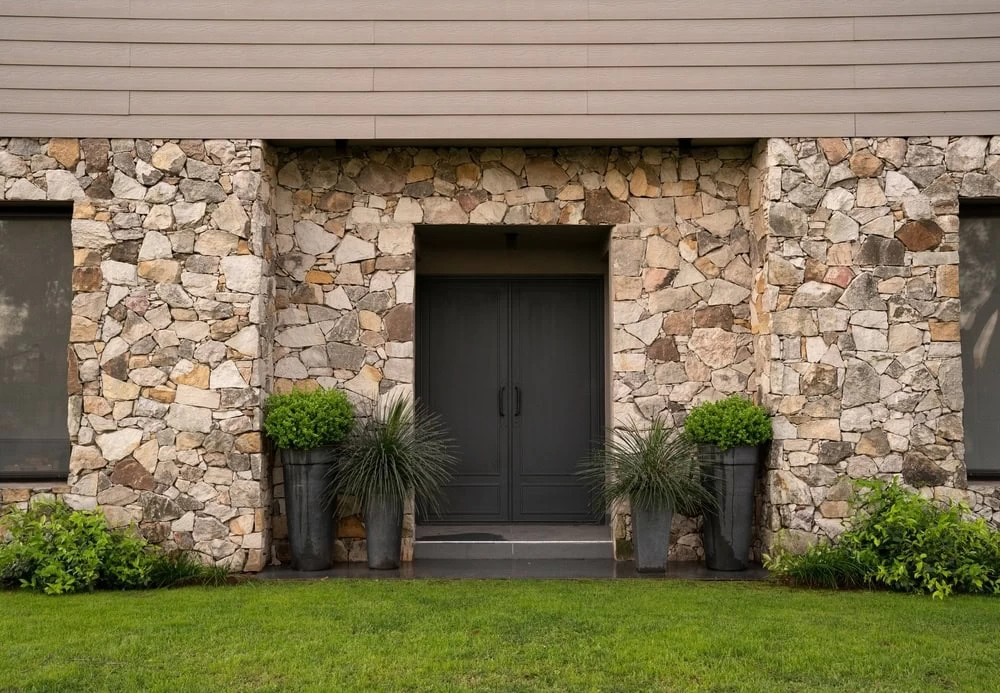
New Jersey’s weather puts serious stress on any exterior door. You’re dealing with freezing temperatures, ice, snow, and salt in winter, then switching to high humidity, intense sun, and severe storms in summer. Temperature swings from single digits to 95°F aren’t unusual within the same year. Wood doors expand and contract with these changes, creating gaps that compromise energy efficiency. They also require regular maintenance—scraping, priming, and repainting every few years to prevent moisture damage.
Steel doors engineered for energy efficiency don’t have these problems. The material remains dimensionally stable through temperature swings. It won’t warp from humidity or crack from cold. Quality powder coating finishes resist fading, chipping, and weather damage without the ongoing maintenance wood requires. You install them once, and they perform consistently for decades.
For Essex County, NJ homeowners, this stability means your door maintains its thermal performance year after year. The weatherstripping stays in contact with the frame because nothing’s shifting or warping. The seals around the glass remain intact. You’re not developing air leaks that undermine your energy efficiency and drive up your heating costs.
Steel’s durability also matters for long-term value. When you invest in energy efficient steel doors with thermal breaks, you’re installing a product that will perform for 20-25 years or more with minimal maintenance. Compare that to wood doors that need refinishing every 3-5 years, or aluminum doors without thermal breaks that conduct heat and develop condensation problems that damage your home.
The security benefits of steel shouldn’t be overlooked either. The material’s strength provides superior protection against forced entry compared to wood or vinyl. Multi-point locking systems integrate seamlessly with steel frames, and the doors resist impact better than other materials. You’re getting both energy efficiency and enhanced home security in one upgrade—protection from both intruders and energy loss.
Modern steel doors also offer design flexibility that matches any architectural style. You can get clean, contemporary lines for modern homes or traditional details for classic architecture. Glass panels can be configured in numerous patterns, and finishes range from classic black to custom colors that complement your home’s exterior. The misconception that steel doors look industrial or commercial is outdated. Today’s energy efficient steel doors combine high performance with attractive designs that enhance your home’s curb appeal.
Condensation on sliding glass doors is one of the most common complaints from New Jersey homeowners, and it’s a clear sign that your door isn’t performing properly. When warm, moist indoor air meets a cold glass or metal surface, water vapor condenses into liquid. You see this as foggy glass, water droplets running down the door, or moisture pooling on the floor near your door. It’s not just annoying—it’s actively damaging your home.
The problem goes beyond aesthetics. Persistent condensation leads to mold growth on frames and weatherstripping. It can rot subfloors and damage drywall around the door. If moisture gets between the panes of double-pane glass because of a failed seal, the only solution is replacing the entire glass unit—an expensive fix that doesn’t address the underlying thermal performance issue. You’re treating the symptom, not the cause.
The most energy efficient doors prevent condensation by keeping the interior glass and frame surfaces warm enough that moisture doesn’t condense on them. This requires excellent insulation in both the glass and the frame. When the interior surface temperature stays close to room temperature, even humid indoor air won’t condense. You eliminate the problem entirely instead of constantly wiping down your doors every morning.
Thermal break technology is critical here. Without it, metal frames become cold bridges that drop well below the dew point, causing condensation even when the glass itself is well-insulated. You’ll see moisture forming on the frame, around the edges of the glass, and along the bottom track where cold air from outside meets warm air inside. That moisture doesn’t just disappear—it soaks into your flooring, promotes mold growth, and creates an environment for rot and structural damage.
Quality weatherstripping and proper installation also play a role. If cold air leaks in around the door, it creates localized cold spots where condensation forms. An interlocking meeting rail system with double weatherstripping—like what’s found in energy efficient patio doors designed for condensation reduction—controls air infiltration and maintains consistent temperatures across the entire door assembly. You’re not just blocking air leaks; you’re creating a thermal barrier that prevents the temperature differences that cause condensation.
For Essex County, NJ homes, condensation resistance ratings matter when you’re shopping for sliding glass door replacement. Look for doors with high condensation resistance scores from the National Fenestration Rating Council. Higher numbers indicate better resistance to condensation. This rating takes into account the entire door system—glass, frame, spacers, and seals—to predict how it will perform in real-world conditions, not just lab tests.
If you’re currently dealing with condensation problems, upgrading to energy efficient sliding glass doors with thermal breaks and Low-E glass will likely eliminate the issue entirely. The improved insulation keeps surfaces warm, proper sealing prevents air leakage, and quality materials resist moisture damage even in New Jersey’s humid summers. You’re investing in a solution that actually fixes the problem instead of just managing it.
Energy efficient sliding glass doors make sense for Essex County, NJ homes because they address the real problems you’re facing—high energy costs, uncomfortable rooms, and condensation damage. The best options combine thermal break technology in the frame, Low-E glass coatings, polyurethane foam cores, and professional installation that ensures proper sealing.
When you’re evaluating doors, focus on performance ratings that matter for New Jersey’s climate. Look for U-factors of 0.30 or lower, SHGC values between 0.25 and 0.40, and high condensation resistance ratings. Ask about thermal break construction in both the door and frame, not just one component. Verify that the insulation core is polyurethane foam, which outperforms alternatives.
The investment in quality energy efficient doors pays back through lower monthly energy bills, reduced HVAC maintenance, elimination of condensation problems, and improved comfort year-round. For homeowners ready to stop fighting their sliding glass doors and start enjoying the performance they should have had all along, we combine energy-efficient technology with custom craftsmanship designed for New Jersey’s demanding climate.
Article details:
Share:
Continue learning: