Discover the custom door projects that turned ordinary entryways into showstoppers across Middlesex, Bergen, Monmouth, and Essex Counties.
Share:
Summary:
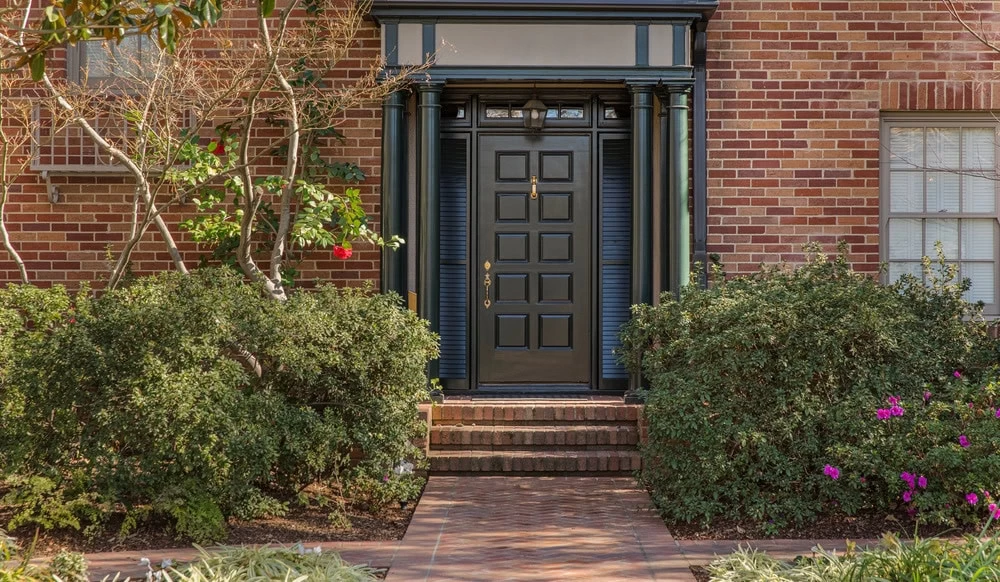
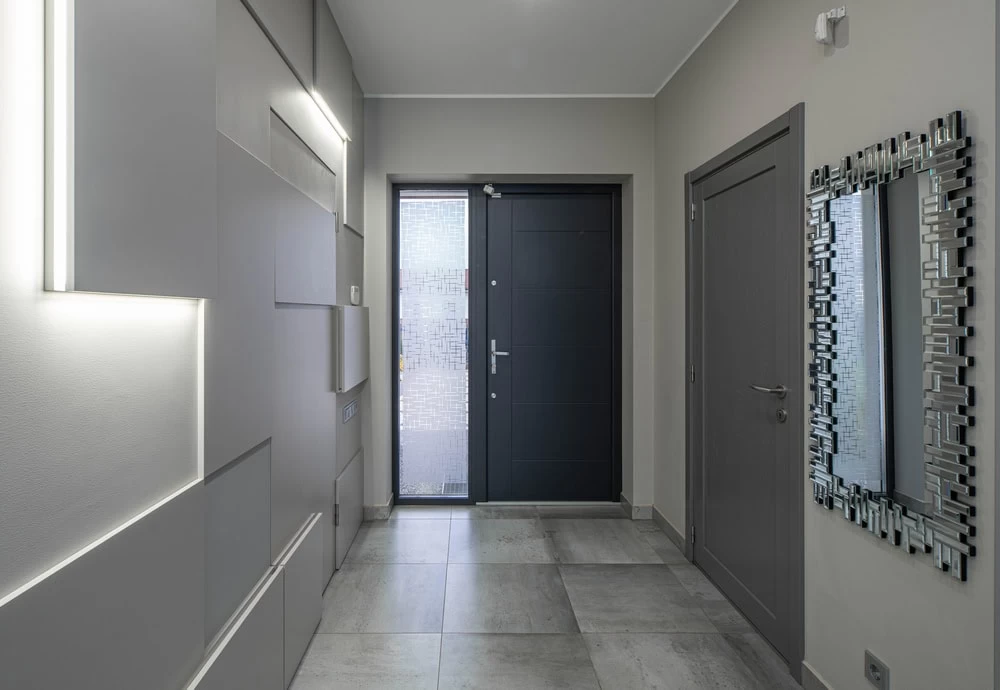
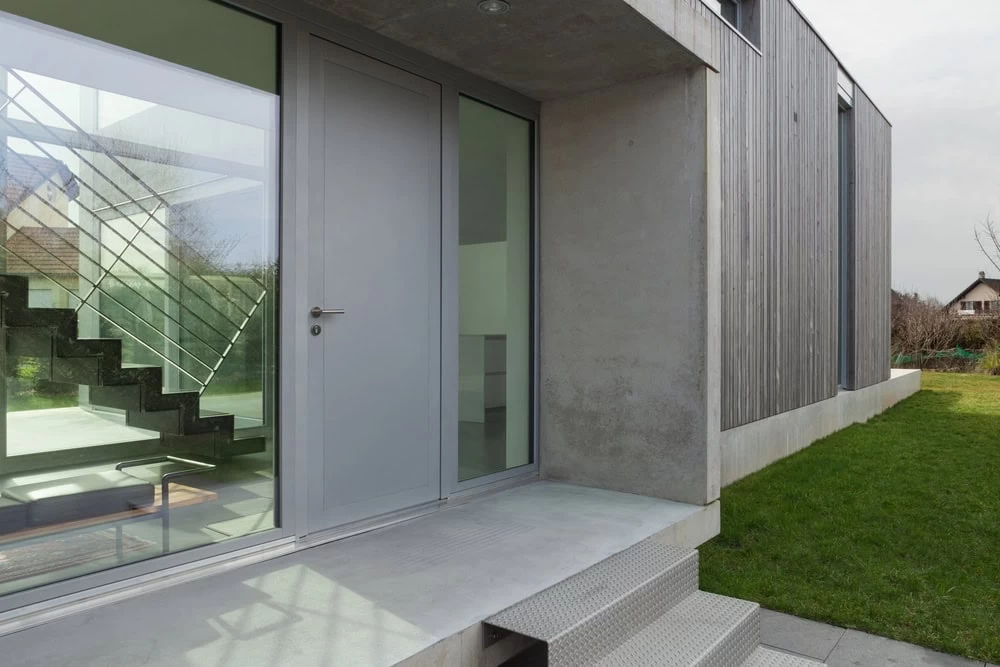
This project in Bergen County started with a homeowner who loved their 1920s colonial but felt the entrance lacked personality. The existing wooden door was drafty, required constant maintenance, and didn’t reflect the homeowner’s modern aesthetic.
We designed a custom iron door with clean, minimalist lines and a matte black powder-coated finish. The door featured a single vertical glass panel with frosted treatment for privacy while still allowing natural light into the foyer. The contrast between the traditional colonial architecture and the contemporary door created visual interest without clashing. The installation included a full frame replacement to ensure proper sealing against New Jersey winters, and the result was a door that reduced energy costs while making a bold statement from the street.
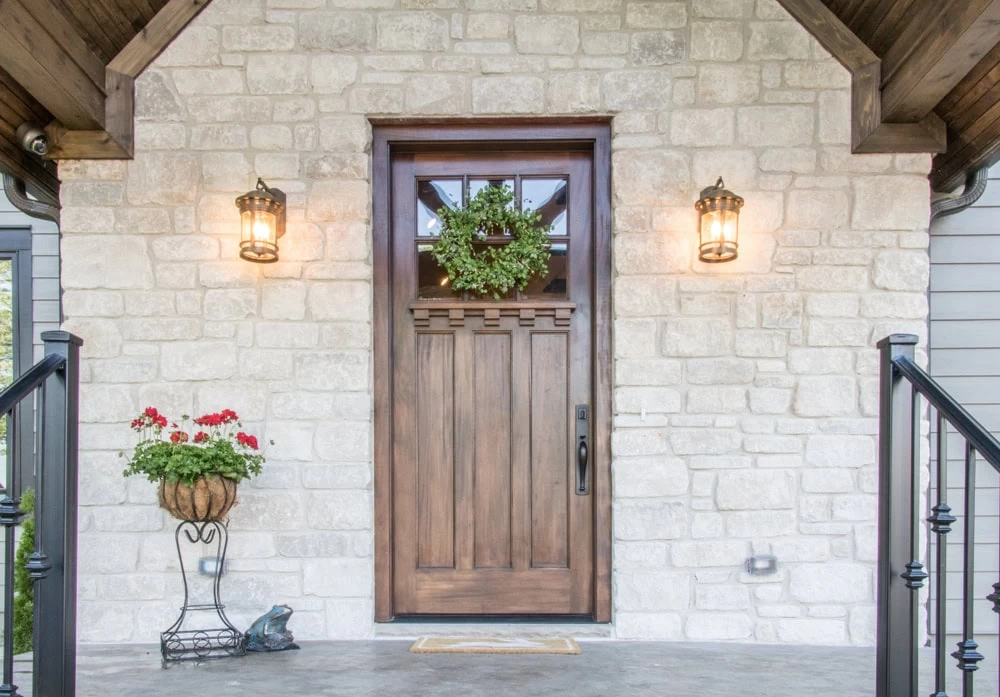
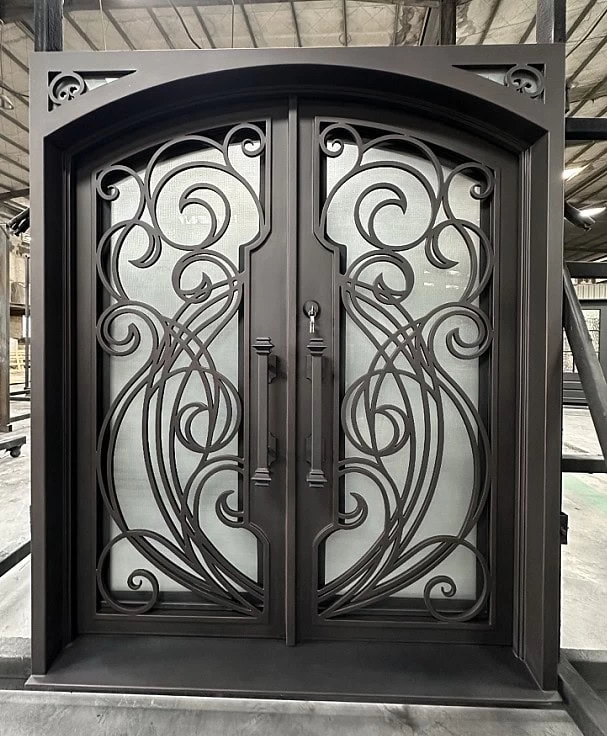
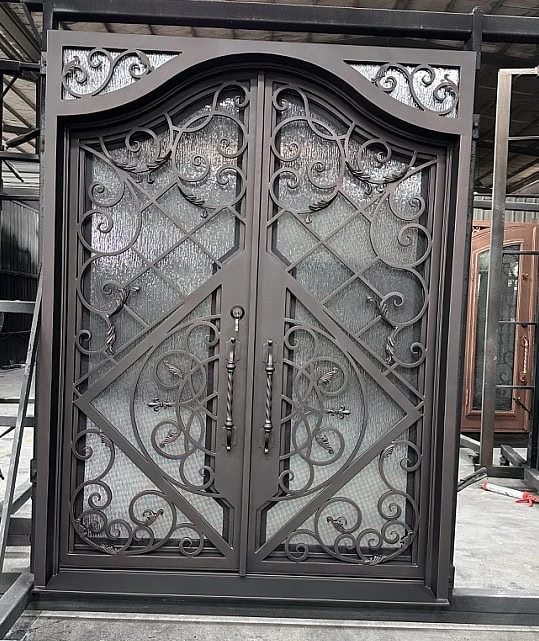
A homeowner in Monmouth County wanted to replace their standard single door with something that matched the scale of their home’s grand entryway. They had a specific vision: double iron doors with custom scrollwork that incorporated elements from their family crest.
The design process took several weeks. We worked with the homeowner to create a scrollwork pattern that felt personal without being overly ornate. The doors featured hand-forged iron details, tempered glass inserts with a subtle texture, and oil-rubbed bronze hardware. The installation required reframing the existing opening to accommodate the wider double-door configuration, which meant coordinating with the homeowner’s contractor to ensure structural integrity.
The finished doors transformed the entryway. They added curb appeal, increased security with multi-point locking systems, and gave the homeowner something they’d been envisioning for years. The custom scrollwork made the doors truly one-of-a-kind, and the quality of materials ensured they’d withstand coastal weather conditions without deteriorating.
What made this project work wasn’t just the design—it was the attention to detail during installation. Double doors require precise alignment to operate smoothly and seal properly. We spent extra time ensuring the doors hung perfectly, the weatherstripping created an airtight seal, and the locking mechanism engaged smoothly on both doors. That level of care is what separates professional door installation from a quick replacement job.
A homeowner in Monmouth County wanted to replace their standard single door with something that matched the scale of their home’s grand entryway. They had a specific vision: double iron doors with custom scrollwork that incorporated elements from their family crest.
The design process took several weeks. We worked with the homeowner to create a scrollwork pattern that felt personal without being overly ornate. The doors featured hand-forged iron details, tempered glass inserts with a subtle texture, and oil-rubbed bronze hardware. The installation required reframing the existing opening to accommodate the wider double-door configuration, which meant coordinating with the homeowner’s contractor to ensure structural integrity.
The finished doors transformed the entryway. They added curb appeal, increased security with multi-point locking systems, and gave the homeowner something they’d been envisioning for years. The custom scrollwork made the doors truly one-of-a-kind, and the quality of materials ensured they’d withstand coastal weather conditions without deteriorating.
What made this project work wasn’t just the design—it was the attention to detail during installation. Double doors require precise alignment to operate smoothly and seal properly. We spent extra time ensuring the doors hung perfectly, the weatherstripping created an airtight seal, and the locking mechanism engaged smoothly on both doors. That level of care is what separates professional door installation from a quick replacement job.
Want live answers?
Connect with a Iron Door Kings expert for fast, friendly support.
Arched doorways present unique challenges for custom door installation. Standard doors don’t fit, and creating a custom arched door requires specialized fabrication. This project in Middlesex County involved a Mediterranean-style home with a beautiful arched entryway that had been fitted with an ill-fitting wooden door that left gaps at the top.
We fabricated a custom iron door that followed the arch’s curve perfectly. The door featured wrought iron details with a warm bronze finish, clear glass panels to maximize light, and hardware that complemented the home’s Spanish tile and stucco exterior. The installation required custom-built framing to support the arched door’s unique shape and ensure proper weatherproofing along the curved top edge.
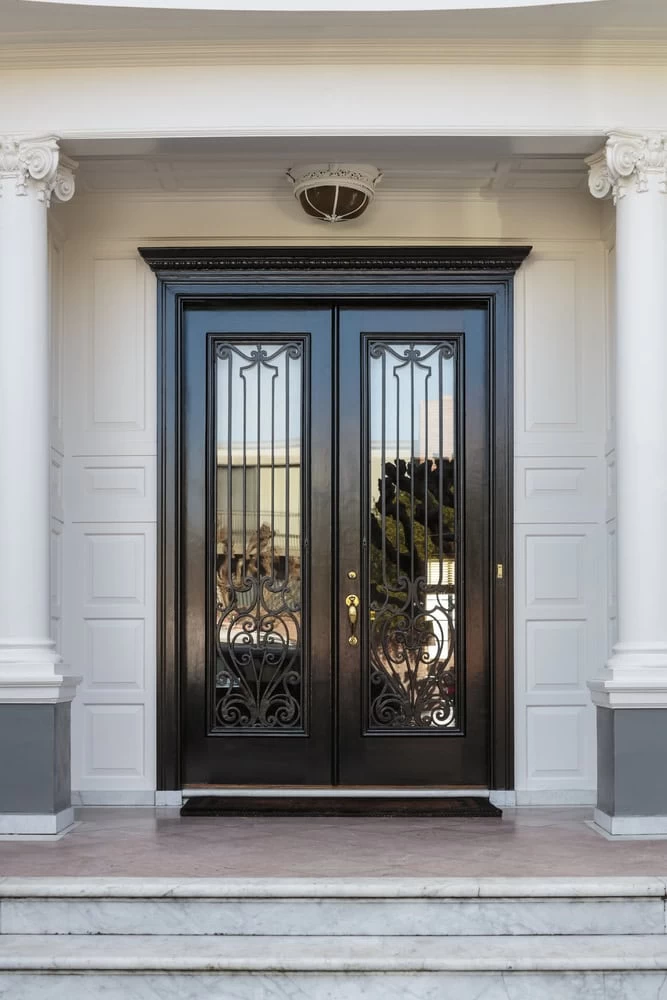
Sometimes the best design solution is simpler than you’d expect. This homeowner in Bergen County had a standard-sized door that felt too small for their home’s proportions. They didn’t want double doors, but they wanted more presence at the entrance.
The solution was an oversized single custom door with matching sidelights on both sides. The door itself was 42 inches wide instead of the standard 36, and the sidelights extended the visual width of the entryway to nearly 8 feet. We used custom iron with a traditional scrollwork pattern, clear glass in the sidelights for maximum light, and a rich espresso finish that tied into the home’s exterior color palette.
The installation required expanding the existing opening and adding structural support to handle the larger door’s weight. We also installed energy-efficient glass in both the door and sidelights to prevent heat loss during winter. The sidelights were fixed, not operable, which improved security while still achieving the open, airy feel the homeowner wanted.
What made this project successful was understanding that the homeowner’s goal wasn’t just a bigger door—it was creating an entrance that felt proportional to the home. The sidelights achieved that without the complexity and cost of double doors. And because we handled the entire process from design through installation, the homeowner didn’t have to coordinate between multiple contractors or worry about whether everything would come together correctly.
Homes near the New Jersey coast face unique challenges. Salt air accelerates corrosion, high winds test door integrity, and moisture can wreak havoc on poorly sealed installations. This project involved a custom door for a home less than a mile from the ocean.
The homeowner had replaced their front door twice in ten years. Both times, rust and corrosion forced premature replacement despite regular maintenance. They wanted something that would actually last. We designed a custom iron door with a marine-grade powder-coated finish specifically formulated to resist salt air. The door featured minimal ornamentation—every decorative element was a potential point for moisture to collect, so we kept the design clean and simple.
The glass was impact-resistant and sealed with marine-grade weatherstripping. The hardware was stainless steel, not just coated steel, to prevent rust. And the installation included additional weatherproofing measures: a custom threshold designed to shed water away from the door, extra caulking at every seam, and a protective overhang recommendation to minimize direct weather exposure.
Five years later, that door still looks new. No rust, no deterioration, no operational issues. The homeowner recently told us it was the best investment they’d made in their home. That’s what happens when you match materials and installation methods to actual conditions instead of just installing a generic door and hoping it holds up.
Tudor homes have distinctive character, and the front door needs to honor that without looking like a medieval castle entrance. This project in Middlesex County involved creating a custom iron door that felt authentic to the home’s 1930s Tudor revival style while incorporating modern security and energy efficiency.
We designed a door with vertical iron straps and decorative clavos (iron nail heads) that referenced traditional Tudor design. The glass was the focal point—a custom leaded glass pattern with amber and clear panels that filtered light beautifully while maintaining privacy. The finish was a hand-rubbed oil bronze that developed a natural patina over time, adding to the door’s aged, authentic appearance.
The installation presented an interesting challenge. The existing door frame was original to the home and slightly out of square after decades of settling. Rather than force a perfectly square door into an imperfect opening, we adjusted our measurements and fabrication to accommodate the frame’s irregularities. The result was a door that fit perfectly, operated smoothly, and looked like it had always been there.
This project reinforced something we’ve learned over years of custom door work: respecting a home’s architectural heritage doesn’t mean sacrificing modern performance. The Tudor door had contemporary weatherstripping, a high-security multipoint lock, and insulated glass—all invisible to anyone admiring it from the curb. It looked period-appropriate while performing better than the original door ever did.
Article details:
Share:
Continue learning: