Thermal break technology stops the condensation and energy loss that plague traditional iron doors in New Jersey's humid, freezing climate—here's how it works and why it matters.
Share:
Summary:
You’ve noticed the beads of water forming on your iron door frame when it’s cold outside. Maybe you’ve seen rust spots starting to appear, or you’re tired of cranking up the heat only to feel a draft near your front door. These aren’t minor annoyances—they’re signs that your door is costing you money and potentially damaging your home. Thermal break iron doors solve these exact problems by preventing the heat transfer and condensation that plague traditional metal doors in New Jersey’s climate. Here’s what you need to know about how this technology works and whether it’s worth the investment for your Essex County home.
Thermal break iron doors use a simple but effective design: they split the door frame into two separate pieces—interior and exterior—with a low-conductivity material placed between them. This barrier stops heat from conducting directly through the metal from one side to the other.
Think of it like this: metal is an excellent conductor. When it’s freezing outside and warm inside your home, a standard iron door becomes a bridge that transfers that cold directly into your house. The interior surface of the door gets cold, your heating system works overtime, and moisture in your warm indoor air hits that cold surface and condenses into water droplets.
The thermal break interrupts that transfer. Materials like polyurethane or polyamide strips are positioned within the iron structure, creating an insulated barrier that dramatically reduces how much temperature passes through. Your door’s interior surface stays closer to room temperature, condensation stops forming, and your home holds heat better.
Condensation happens when warm, moist air meets a cold surface. In Essex County, where winter temperatures regularly drop below 20°F and indoor humidity stays elevated, this creates the perfect conditions for moisture problems on traditional iron doors.
Without a thermal break, the metal frame conducts outdoor cold directly to the interior surface. When your warm indoor air touches that cold metal, water vapor converts to liquid—just like a cold glass of water “sweating” on a summer day. That moisture drips down onto your floors, seeps into the threshold, promotes mold growth, and accelerates rust formation on the door itself.
Thermal break technology solves this by keeping the interior surface warmer. The insulating barrier prevents the outside temperature from reaching the inside of the door frame. When the interior metal stays closer to room temperature, condensation can’t form because there’s no cold surface for the moisture to collect on.
This matters more than you might think. Persistent moisture doesn’t just create unsightly water stains. It damages wood floors, promotes mold in areas with poor ventilation, degrades the door’s finish, and creates rust spots that compromise both appearance and structural integrity over time. In New Jersey’s humid climate, where temperature differences between indoors and outdoors can exceed 50-60 degrees during winter, condensation issues on non-thermal doors are nearly inevitable.
The thermal break also helps during summer. When hot, humid air hits a cold, air-conditioned interior surface, the same condensation problem occurs in reverse. By maintaining more consistent surface temperatures year-round, thermal break doors prevent moisture issues regardless of the season.
Thermal bridging occurs when conductive materials create pathways for heat to escape through your home’s envelope. Iron and steel have high thermal conductivity—they move heat quickly and efficiently. That’s great for cookware, terrible for exterior doors.
A standard iron door acts as a thermal bridge. Heat flows from your warm house, through the metal, and straight outside. In winter, you’re essentially heating the outdoors. In summer, outdoor heat conducts inside, making your air conditioning work harder. Either way, you’re wasting energy and money.
The numbers tell the story. A non-thermally broken iron door can have a U-factor of 4.0, which measures how much heat passes through. Lower numbers are better. A thermally broken door achieves U-factors around 0.30 to 0.41—that’s roughly 10 times better insulation performance.
This difference translates directly to your energy bills. Thermal breaks can reduce heat loss through your door by 50% or more. For most Essex County homeowners, that means $150-300 in annual savings on heating and cooling costs. Over the 25-30 year lifespan of a quality iron door, those savings add up to $3,750-9,000—often more than the cost of the door itself.
Beyond the financial impact, thermal bridging affects comfort. Cold spots near your front door make your entryway uncomfortable during winter. Drafts pull warm air toward the door, creating uneven temperatures throughout your home. Your HVAC system runs longer cycles trying to compensate for the constant heat loss.
Thermal break technology addresses all of this by breaking the conductive pathway. The polyurethane or polyamide barrier has extremely low thermal conductivity—it doesn’t transfer heat well at all. This forces heat to find another way through, which it can’t do easily. The result is a door that insulates almost as well as your walls, rather than acting like a giant heat sink in the middle of your home’s envelope.
Want live answers?
Connect with a Iron Door Kings expert for fast, friendly support.
Thermal break iron doors cost more upfront than standard iron doors. The additional engineering, materials, and manufacturing complexity add to the price. You’re looking at an extra investment of anywhere from several hundred to over a thousand dollars depending on door size and manufacturer.
The question isn’t whether thermal break doors cost more—they do. The question is whether that extra cost delivers enough value to justify the investment. For most Essex County homeowners, the answer depends on three factors: energy savings, longevity, and avoided problems.
Let’s break down what you’re actually paying for and what you get in return.
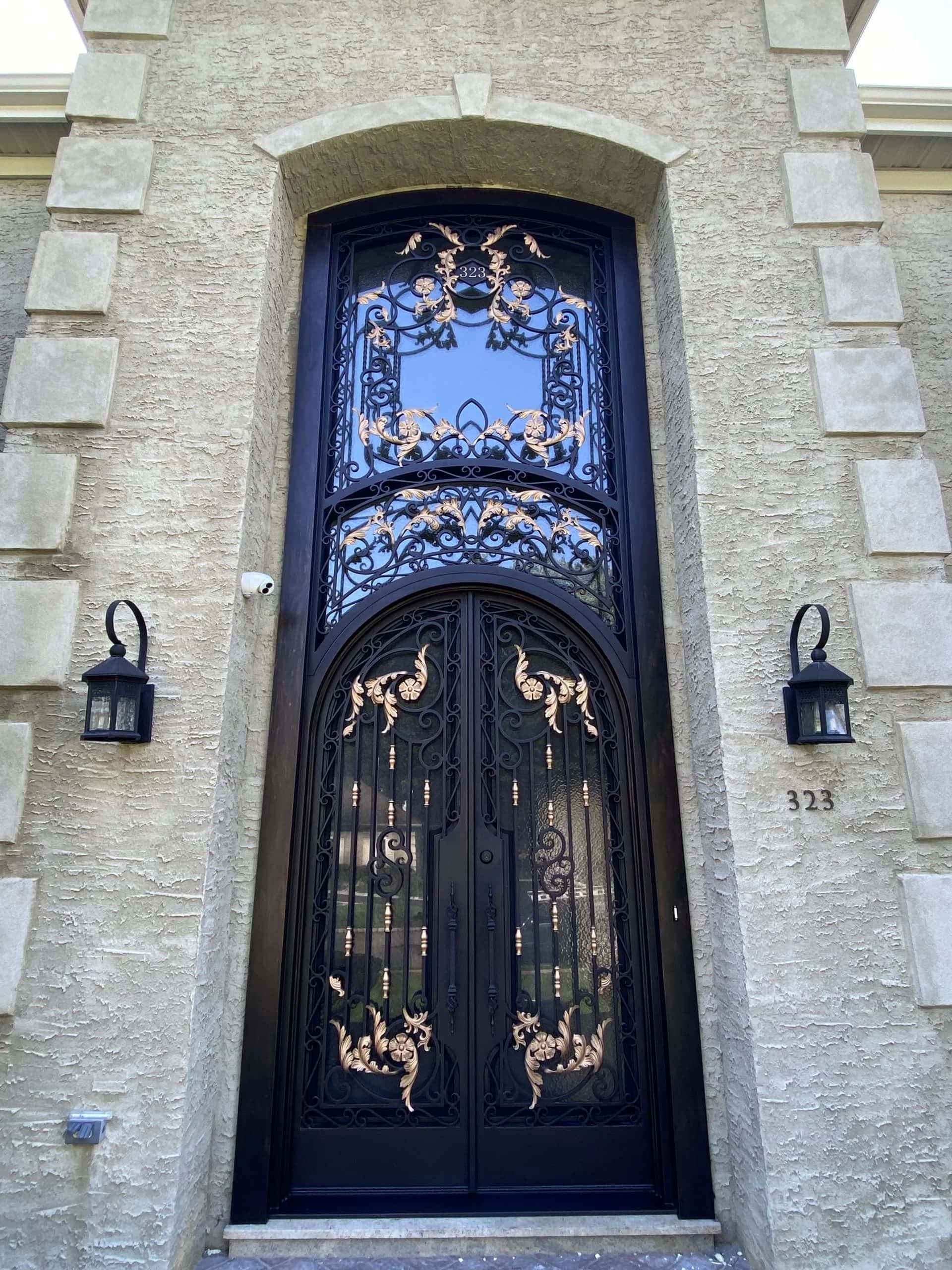
A standard iron door for Essex County installation typically runs $1,500-$5,000 for the door itself, depending on size, design complexity, and manufacturer. Add professional installation ($400-$1,000), shipping ($200-$500), and any structural modifications needed ($0-$1,000), and most complete projects land in the $2,500-$6,000 range.
Thermal break iron doors add to that base cost. The upgrade typically increases the door price by $500-$1,500, bringing total project costs to roughly $3,000-$7,500 for a complete installation. That’s a significant jump, and it’s worth understanding what drives that difference.
The thermal break itself requires splitting the door frame and inserting specialized insulating materials throughout the entire structure—not just in one spot, but continuously through the frame, jamb, threshold, and around any glass panels. This demands more complex manufacturing, additional materials, and precise engineering to maintain structural integrity while creating the thermal barrier.
Compare this to wood or fiberglass doors. Quality wood doors range from $1,500-$4,000 but require refinishing every 2-3 years ($300-600 per refinishing) and typically need replacement after 8-12 years. Fiberglass doors cost $800-$3,000 and last 15-20 years but don’t offer the same security or aesthetic impact as iron.
When you factor in lifespan, thermal break iron doors deliver 25-30+ years of service. That’s 2-3 replacement cycles for wood doors or 1-2 for fiberglass. The total cost of ownership over 30 years tells a different story than the upfront price tag.
A $6,000 thermal break iron door that lasts 30 years costs $200 per year. Two wood door replacements over that same period ($5,000-$8,000 total) plus refinishing costs ($1,800-$3,600) totals $6,800-$11,600, or $227-$387 per year. And that doesn’t account for the energy savings.
The energy efficiency advantage of thermal break iron doors isn’t theoretical—it shows up in your monthly utility bills. By reducing heat transfer by 50-70%, these doors cut the amount of energy needed to maintain comfortable indoor temperatures throughout the year.
In Essex County’s climate, where winter heating and summer cooling both demand significant energy, that reduction matters. Most homeowners see $150-300 in annual savings on their energy bills compared to poorly insulated traditional doors. That might not sound dramatic on a monthly basis—$12-25 per month—but over the door’s lifespan, it adds up.
Over 25 years, $150-$300 annual savings totals $3,750-$7,500. Over 30 years, that’s $4,500-$9,000. In many cases, the energy savings alone offset the entire cost difference between a standard iron door and a thermal break version. Everything after that is pure benefit.
Beyond the direct cost savings, there are comfort and performance factors that don’t show up on your energy bill. Thermal break doors eliminate cold spots near your entryway. They reduce drafts that pull warm air toward the door. They allow your HVAC system to cycle less frequently, which extends equipment lifespan and reduces maintenance costs.
These doors also help you meet modern energy codes. New Jersey follows the International Energy Conservation Code (IECC), and 2026 standards require stricter U-factor performance for doors in Climate Zone 5, which includes all of Essex County. Thermal break doors typically meet or exceed these requirements, while standard iron doors may not.
There’s also a resale value component. Energy-efficient upgrades appeal to buyers, and iron doors in general deliver strong ROI—industry data shows 98-188% return on investment for steel door replacements. A thermal break iron door combines that curb appeal and security benefit with demonstrable energy performance, making it an easier selling point when you eventually move.
The long-term value proposition is straightforward: you pay more upfront for a door that costs less to own, performs better throughout its lifespan, and solves problems that would otherwise require ongoing maintenance, repairs, or premature replacement.
Thermal break iron doors solve specific problems that matter in New Jersey’s climate: condensation damage, energy waste, and the constant battle to keep your home comfortable despite temperature extremes. If you’re dealing with moisture issues, watching your energy bills climb, or tired of maintaining a door that can’t handle the weather, the technology delivers measurable benefits.
The upfront cost is higher, but the total ownership cost over 25-30 years is often lower than alternatives when you factor in energy savings, eliminated maintenance, and avoided replacement cycles. You get a door that performs better, lasts longer, and protects your home from the moisture and temperature issues that plague traditional iron doors without thermal breaks.
If you’re ready to explore whether a thermal break iron door makes sense for your home, we bring the expertise and craftsmanship to design and install a solution that fits your specific needs and budget.
Article details:
Share:
Continue learning: