Iron works doors combine centuries-old blacksmithing artistry with modern engineering to create entryways that protect, impress, and last decades—not years.
Share:
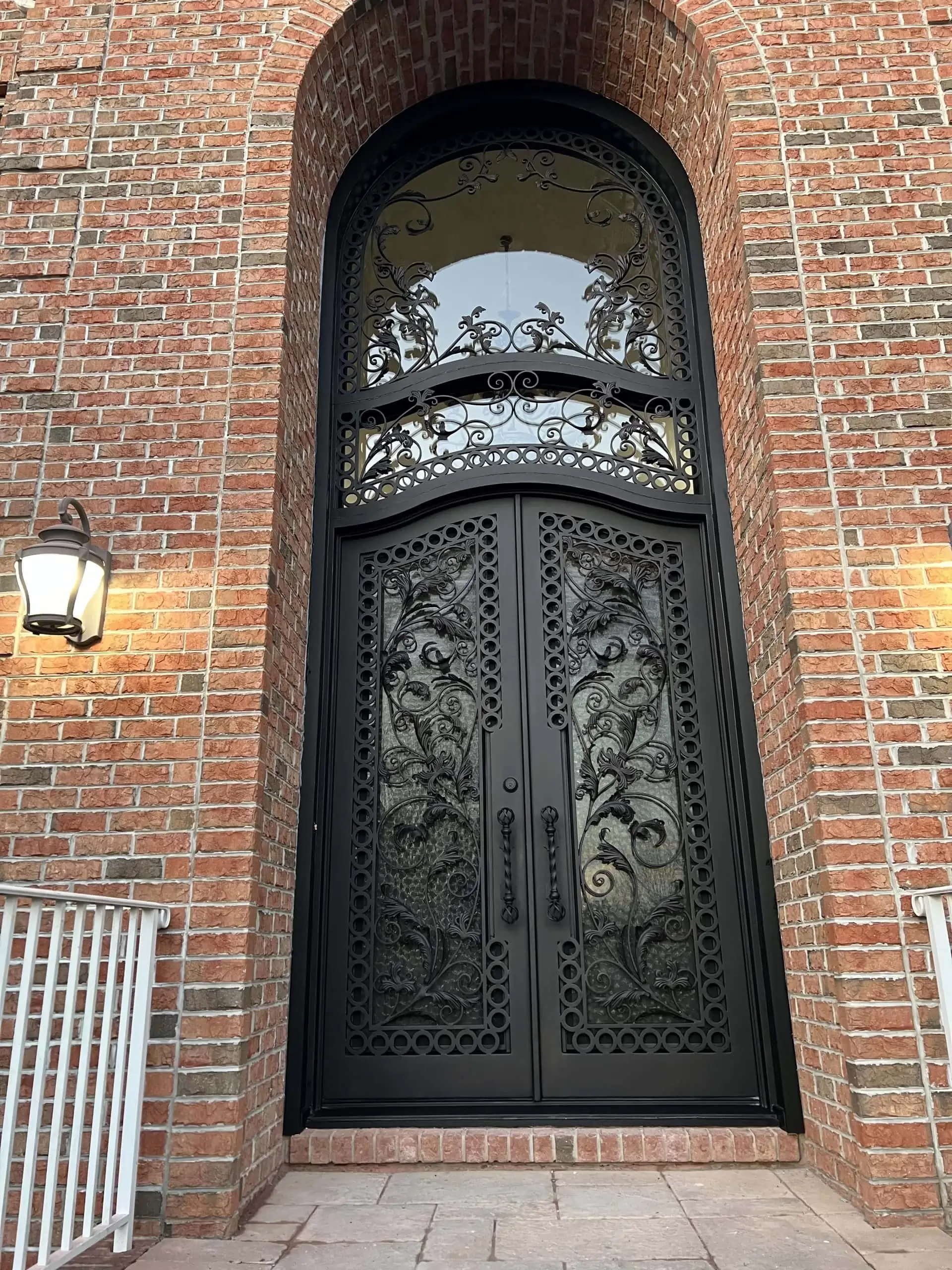
Summary:
Your front door gets tested every single day. Weather, wear, and the occasional shoulder check from someone carrying groceries. Most doors show their age within a few years—warping, fading, requiring touch-ups that eat into your weekends.
Iron works doors take a different approach. They’re built using metalworking techniques that date back centuries, combined with modern engineering that addresses today’s security and energy efficiency demands. The result is an entry that looks better in ten years than most doors look after one New Jersey winter.
If you’ve been weighing your options and wondering what actually justifies the investment in custom ironwork, here’s what you need to know about the craft, the quality markers, and the process that creates doors worth keeping for decades.
The difference starts with how they’re made. Standard doors get stamped out in factories using molds and assembly lines. Iron works doors involve actual metalworking—heating, shaping, joining—where craftsmen make decisions about every curve and weld.
This matters because metal behaves differently depending on how it’s worked. Hand-forged elements have structural integrity that cast pieces simply can’t match. When a blacksmith heats iron to forging temperature and shapes it under hammer strikes, the metal’s grain structure aligns in ways that increase strength.
You’re also getting materials that handle New Jersey’s climate without the constant babysitting wood requires. No annual repainting. No warping through humid summers or cracking during freeze-thaw cycles. Iron works doors are engineered to resist rust, withstand impacts, and maintain their appearance with nothing more than occasional cleaning.
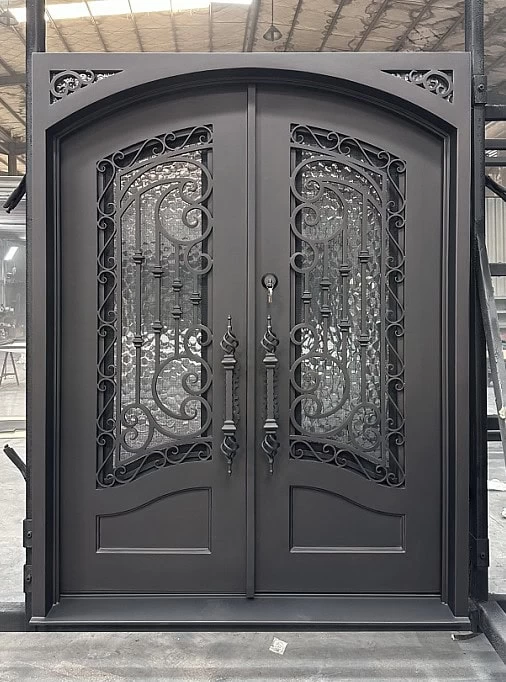
Real ironwork starts at the forge. Blacksmiths heat steel to a bright yellow-orange glow—what’s called forging temperature—where the metal becomes soft enough to shape but retains its structural integrity. At this stage, the iron can be hammered, bent, twisted, or drawn out to create the scrollwork and decorative elements that give each door its character.
Drawing is one of the fundamental techniques. The smith hammers heated metal to make it longer and thinner, creating the graceful curves you see in quality scrollwork. Bending involves heating specific sections and shaping them over an anvil horn to achieve precise angles. Twisting adds visual interest—rotating heated metal to create spiral patterns that catch light differently throughout the day.
The way iron is worked directly affects its final strength. Proper forging aligns the metal’s grain structure, similar to how wood grain runs in a specific direction. A skilled craftsman works with this grain, not against it. What you end up with are decorative elements that look exceptional and hold up structurally for decades.
Modern iron works doors combine these traditional techniques with precision manufacturing. CNC cutting ensures frame components fit together perfectly. Laser measurement guarantees your door will fit your opening without gaps. Powder-coating—a seven-step automotive finishing process—creates a rust-resistant barrier that outperforms standard paint by years.
The collaborative process matters too. When you work with an in-house design team, you’re not choosing from a limited catalog. You’re describing what you want, and craftsmen translate that vision into technical drawings. We consider your home’s architecture, your security needs, your climate challenges, and your aesthetic preferences—then build something that addresses all of them.
This is where the “custom” in custom iron works doors actually means something. Your Victorian home in Montclair gets scrollwork that complements its period details. Your contemporary build in Newark gets clean geometric lines that respect minimalist principles. The door is designed for your specific situation, not adapted from a one-size-fits-all template.
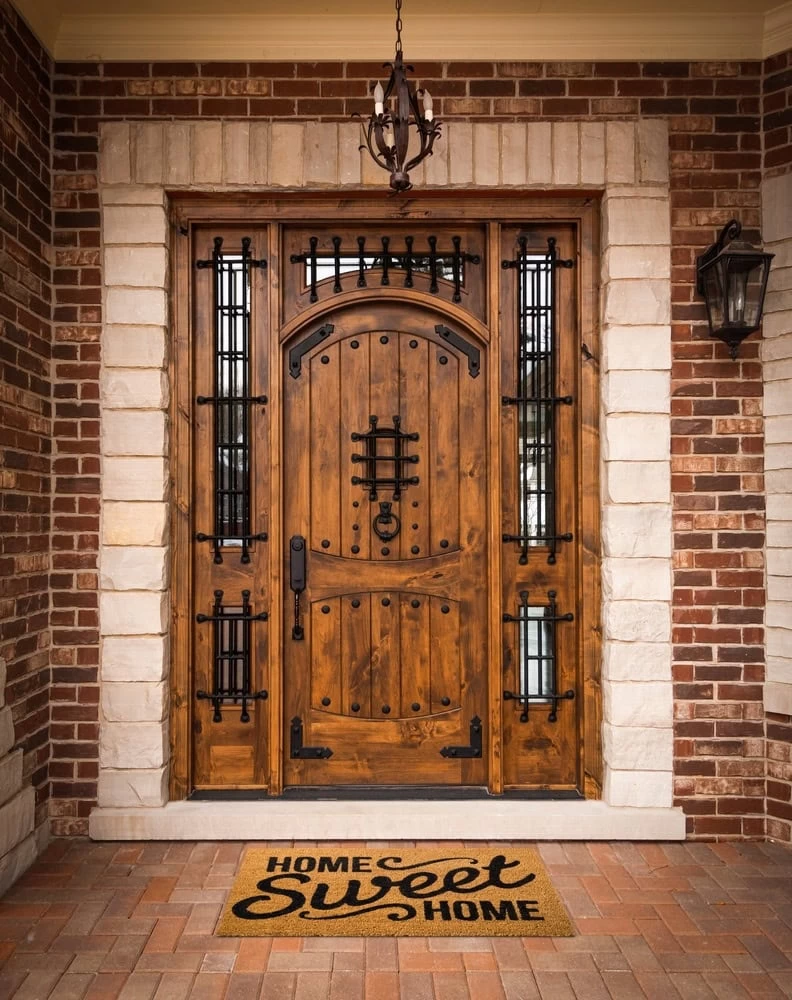
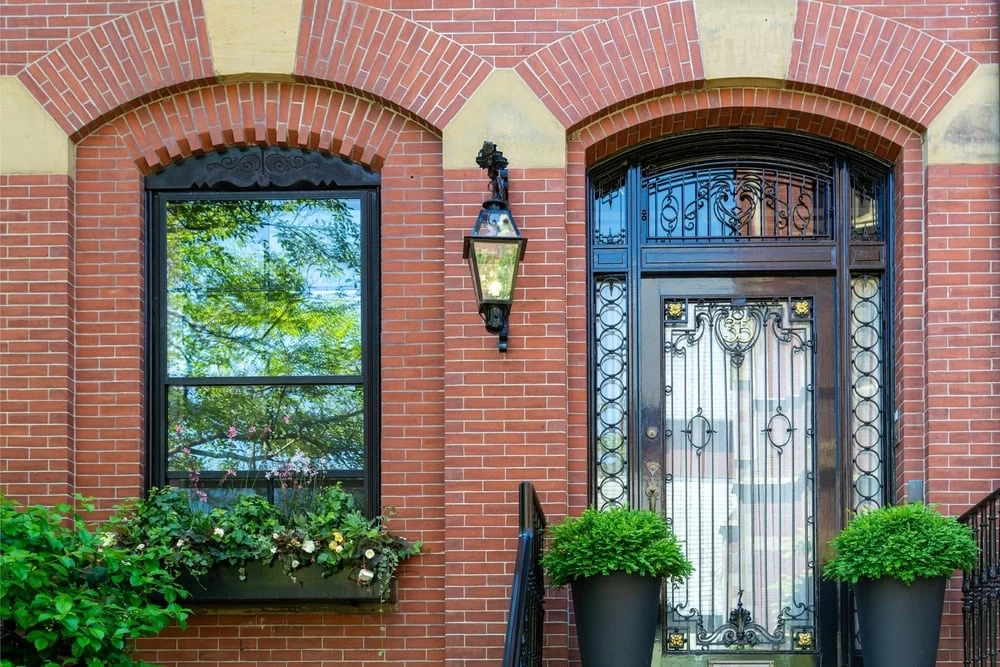
Ironwork styles give your door its personality. Scrollwork is the classic choice—those curved, twisting designs that resemble unfurling scrolls. Simple scrollwork might feature gentle S-curves and modest flourishes. Intricate scrollwork incorporates rosettes (decorative circular elements), vine patterns, leaf details, and complex interwoven designs that create depth and visual interest.
Scrollwork does more than look good. Those curves and spirals cast shadows that change throughout the day as sunlight moves across your entryway. Morning light might highlight the raised elements. Afternoon sun creates dramatic shadow patterns. It’s functional art that evolves with the light.
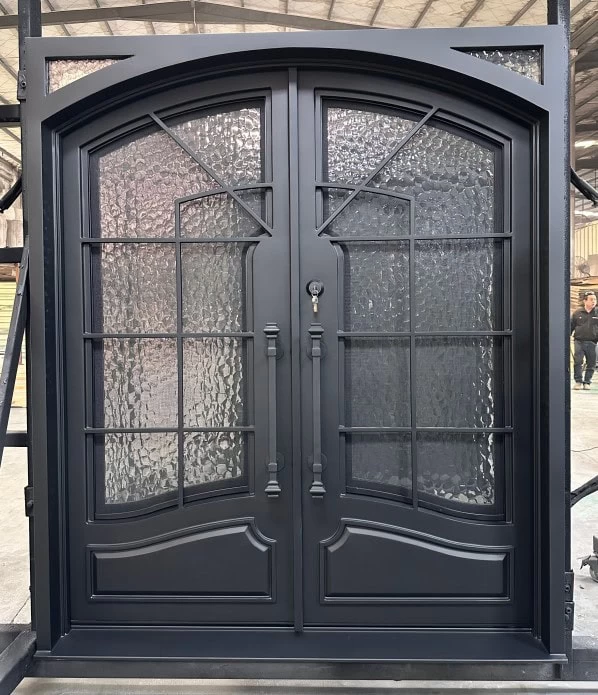
Geometric patterns suit modern and contemporary homes. Think clean horizontal lines, rectangular frames, square patterns, or asymmetric designs that create visual impact through simplicity rather than ornamentation. These doors often feature larger glass panels framed by minimal ironwork, allowing natural light while maintaining the security benefits of metal construction.
Custom artistic elements let you incorporate personal touches. Some homeowners in Essex County integrate family crests or monograms. Others request nature-inspired motifs—branches, flowers, even abstract representations of local landmarks. The limitation isn’t the ironwork itself. It comes down to finding craftsmen skilled enough to execute your vision properly.
Glass integration adds another layer of customization. Clear tempered glass maximizes light and creates an open feel. Frosted or textured glass provides privacy while still allowing illumination. Rain glass, seeded glass, or custom patterns add visual interest. The glass isn’t just decorative—it’s typically double-pane with argon fill for insulation, contributing to energy efficiency that matters during New Jersey summers and winters.
Color and finish choices affect the final impression. Matte black remains popular for its contemporary appeal and versatility across architectural styles. Oil-rubbed bronze adds warmth and pairs beautifully with brick or stone exteriors common throughout Essex County. Dark copper creates a distinctive look that develops character over time. Custom colors can match your home’s specific palette, ensuring the door feels integrated rather than added-on.
The combination of these elements—metalwork style, glass selection, finish choice—creates an entry that’s distinctly yours. Not just different from your neighbor’s door, but designed specifically for your home’s proportions, your neighborhood’s character, and your personal aesthetic.
Want live answers?
Connect with a Iron Door Kings expert for fast, friendly support.
Not all iron doors are created equal. Some are genuinely hand-crafted using traditional techniques and quality materials. Others are mass-produced overseas, shipped in containers, and marketed as “custom” despite being pulled from a standard catalog.
Knowing what to look for helps you separate real craftsmanship from convincing marketing. The details reveal everything—how joints are constructed, how finishes are applied, how the door is engineered to handle stress and weather. These aren’t things you’ll find in a product description. You need to know what questions to ask and what answers should raise red flags.
Quality iron works doors are investments that pay dividends for decades. Inferior doors start showing problems within months—rust spots, loose joints, poor operation. Understanding the markers of superior craftsmanship protects you from expensive mistakes.
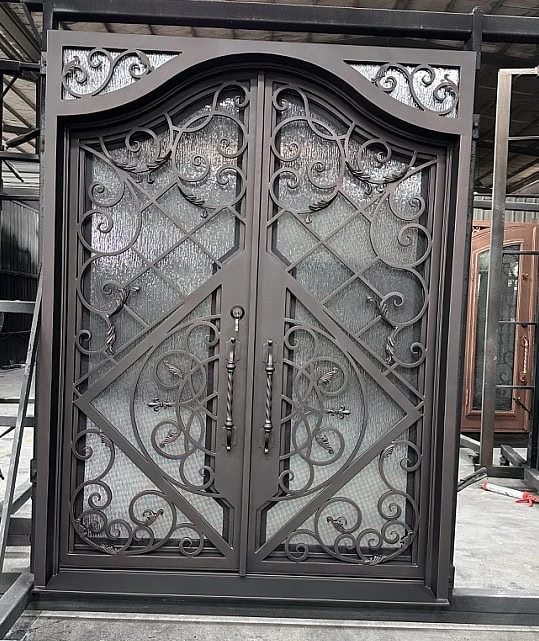
Weld quality tells you immediately whether you’re looking at professional work or rushed production. Superior welds are smooth, consistent, and nearly invisible after finishing. The metal flows together seamlessly. Poor welds show gaps, inconsistent bead patterns, or obvious grinding marks where someone tried to hide sloppy work.
Check where decorative elements meet the main frame. Quality craftsmen use mortise and tenon joinery—the same technique used in historical ironwork—bonded with marine-grade welding. This creates joints that won’t separate even after decades of temperature fluctuations and stress. Cheaper doors simply tack-weld pieces together. Those weak points fail over time.
Finish consistency matters more than most people realize. Powder-coating should be uniform across all surfaces—no thin spots, no drips, no areas where the base metal shows through. The coating needs to cover every edge, every weld, every decorative element. Incomplete coverage creates entry points for moisture and rust.
Run your hand along the door’s surface. It should feel smooth and consistent. Any rough patches, bubbles, or texture variations indicate problems with the finishing process. Quality powder-coating involves multiple steps: cleaning, chemical treatment, application, and high-temperature curing. Skipping steps or rushing the process produces inferior results that won’t last.
Structural integrity comes down to engineering. The door should feel solid when you push on it—no flex, no give. The frame needs to be properly reinforced, especially on larger doors. Hardware mounting points should be backed with metal plates that distribute stress rather than relying on the door skin alone.
Weight is actually a good indicator. Quality iron works doors are heavy—often 200-300 pounds for a standard single door. That weight comes from gauge thickness (12-14 gauge steel is standard for quality work) and solid construction. If a door feels surprisingly light, it’s probably made from thinner material that won’t provide the same security or longevity.
Weatherstripping and seals separate doors that perform from doors that leak. Look for multi-point weatherstripping—not just a single strip at the bottom. Quality doors have seals along all four sides, often with adjustable components that let installers fine-tune the fit. The weatherstripping should be substantial, not flimsy foam that’ll compress and fail within a year.
The design process separates custom work from catalog selection. When you work with an in-house design team, you’re collaborating with people who understand both the artistic possibilities and the practical limitations of ironwork. We know what designs will work structurally. We understand what glass options provide the right balance of light and privacy. We’ve seen what finishes hold up in Essex County’s specific climate challenges.
Start by thinking about your home’s architecture. A Victorian home with detailed trim work and ornate features calls for scrollwork that matches that level of detail. A mid-century modern with clean lines and minimal ornamentation needs geometric patterns that respect that aesthetic. Your door should feel like it belongs, not like it was borrowed from a different architectural style.
Bring reference images to your consultation. Photos of doors you like, ironwork patterns that catch your eye, even images of architectural details from your home that you want the door to complement. Visual references give designers a much clearer understanding of your taste than verbal descriptions alone.
Discuss your practical needs honestly. If you have kids who’ll be slamming the door, mention that. If you’re concerned about energy costs, say so. If security is your top priority, make that clear. Good designers incorporate these functional requirements into the aesthetic design, creating doors that look beautiful and perform exactly how you need them to.
The design team should provide detailed drawings before fabrication begins. These aren’t rough sketches—they’re precise technical drawings showing dimensions, scrollwork patterns, glass placement, hardware locations, and finish specifications. Review them carefully. This is your opportunity to request changes before metal gets cut and welded.
Ask about the timeline. Custom iron works doors aren’t pulled off a shelf. Fabrication takes time—typically several weeks from final design approval to completion. Rushing the process compromises quality. If someone promises a custom door in days, they’re either lying about the customization or cutting corners on craftsmanship.
Installation matters as much as fabrication. The most beautifully crafted door will perform poorly if it’s installed incorrectly. Professional installation includes proper measurement of your opening, structural assessment to ensure the frame can support the door’s weight, weatherproofing to prevent leaks, and adjustment of hardware to ensure smooth operation. This typically takes 4-6 hours. It should be performed by experienced installers who specialize in iron doors , not general contractors trying to figure it out as they go.
The collaborative process should feel supportive, not sales-driven. You’re working with craftsmen who take pride in their work and want you to be thrilled with the result. If you feel pressured, rushed, or dismissed when asking questions, that’s a red flag. Quality ironwork companies know their value and don’t need to use high-pressure tactics.
Iron works doors represent more than an upgrade to your entry. They’re a statement about quality, a commitment to craftsmanship, and an investment that protects your home while elevating its appearance for decades.
The difference between superior ironwork and mass-produced alternatives comes down to technique, materials, and expertise. Hand-forged elements created using traditional blacksmithing methods. Quality materials engineered to withstand your specific climate. Professional design and installation that ensures every detail is executed correctly.
When you’re ready to explore what custom iron works doors can do for your Essex County, NJ home, you’re looking at an entry solution that won’t need replacing in five years, won’t require constant maintenance, and won’t compromise on either security or style. We bring the craftsmanship, materials, and installation expertise that turn these doors from products into lasting additions to your home.
Article details:
Share:
Continue learning: