Not all security doors are built the same. Learn how wrought iron security screen doors outperform standard options in strength, durability, and curb appeal for New Jersey homes.
Share:
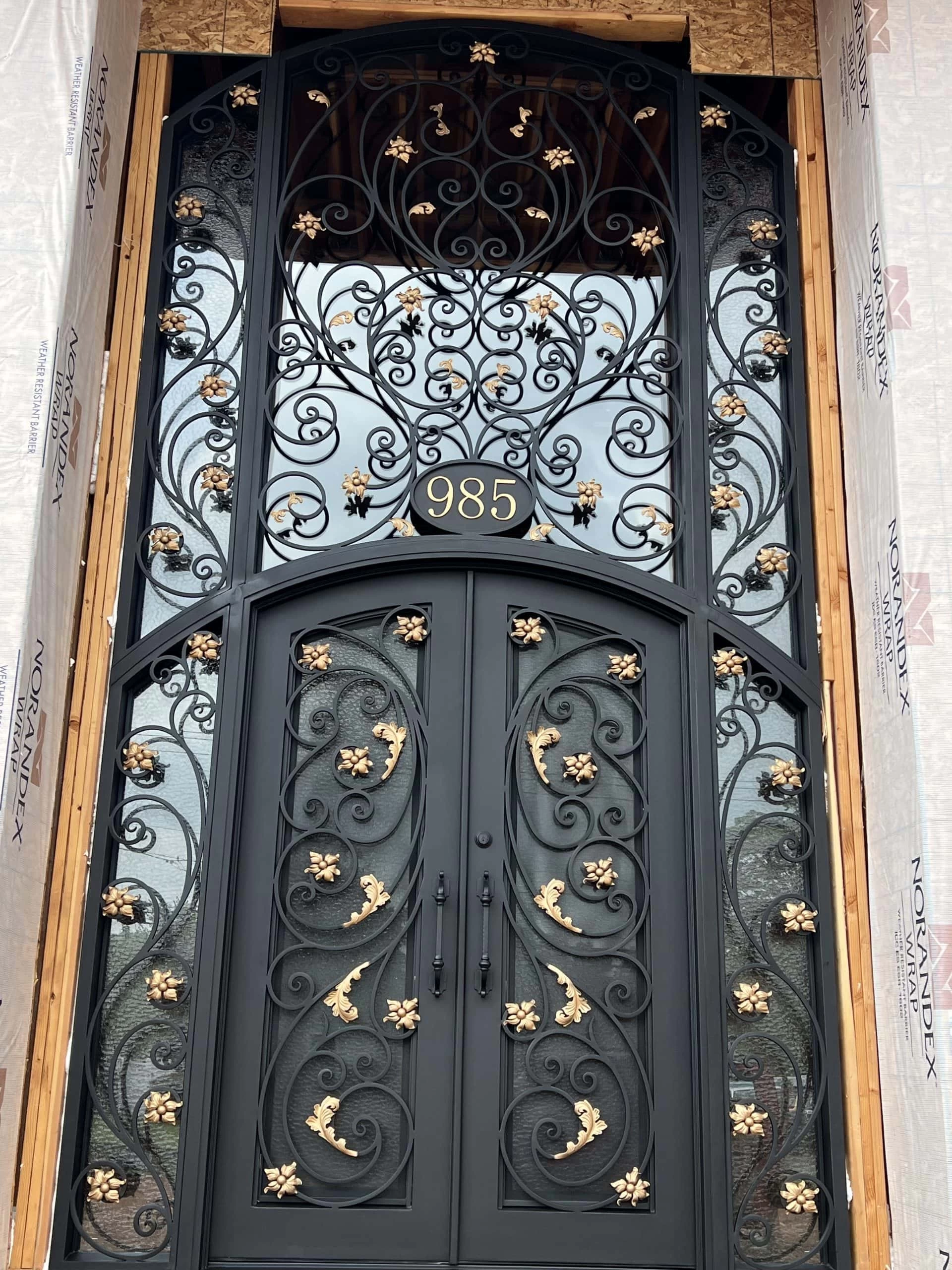
Summary:
You’ve seen the security doors at big box stores. Lightweight aluminum frames, basic locks, price tags that seem reasonable. Then you’ve seen wrought iron security screen doors on higher-end homes and wondered if the difference is just cosmetic.
It’s not.
The gap between a standard security door and a quality wrought iron option is the difference between a deterrent and actual protection. Between something that looks secure and something that is secure. This matters more in Essex County, NJ, where property crime happens every 41 minutes and your front door is the first line of defense. Here’s what you need to know before you decide.
The biggest difference comes down to material thickness and construction quality. Standard security doors typically use 16-gauge steel or aluminum frames. Wrought iron security screen doors use 12 to 14-gauge steel, which is 40-75% heavier and thicker. That extra material isn’t just for show.
When someone tries to force entry, thinner materials bend. They give way under pressure. A 12-gauge wrought iron door doesn’t. It’s built with reinforced frames, heavy-duty hinges anchored deep into the wall studs, and multi-point locking systems that distribute force across the entire door height instead of concentrating it at one weak point.
Standard options might stop an opportunistic intruder. Wrought iron stops determined ones. And in a county where burglary rates sit at 3.953 per 1,000 people, that distinction matters more than the price difference.
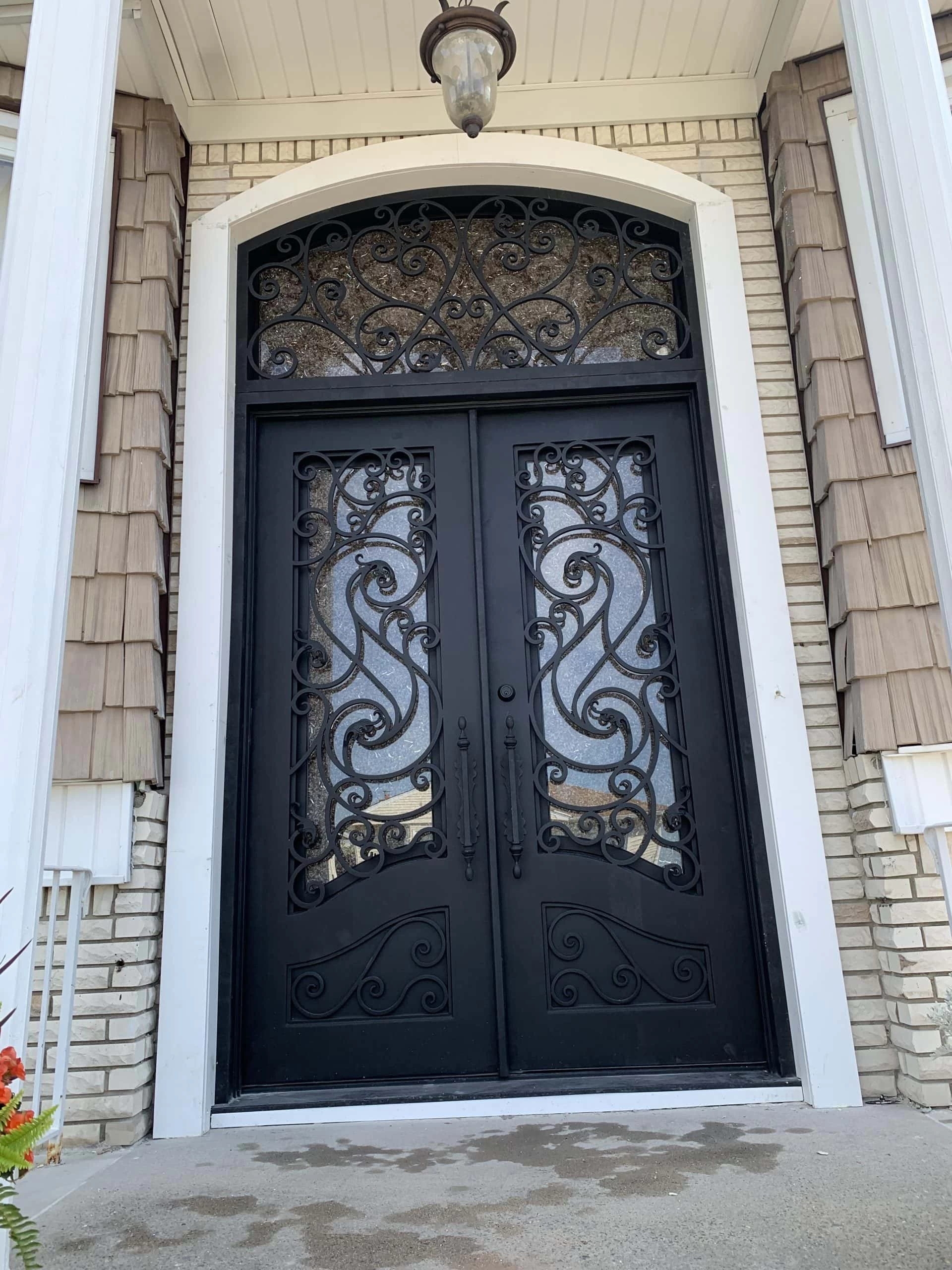
One of the biggest misconceptions about wrought iron is that it only fits traditional or old-world home styles. That might have been true decades ago, but custom wrought iron security doors in 2026 adapt to virtually any architectural design without compromising security.
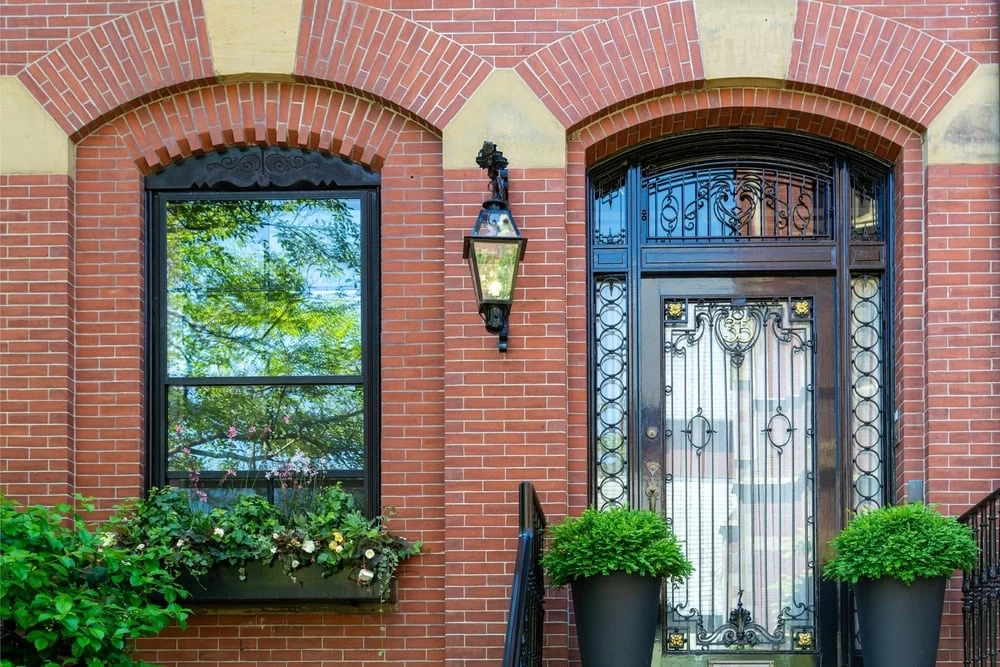
Modern wrought iron doors come in clean geometric patterns for contemporary homes, simple grid designs for farmhouse aesthetics, and classic scrollwork for Colonial or Mediterranean estates. You’re not limited to pre-fabricated designs that kind of fit your doorway. Custom options are built to your exact measurements and specifications, which matters in Essex County where older homes often have non-standard door frames.
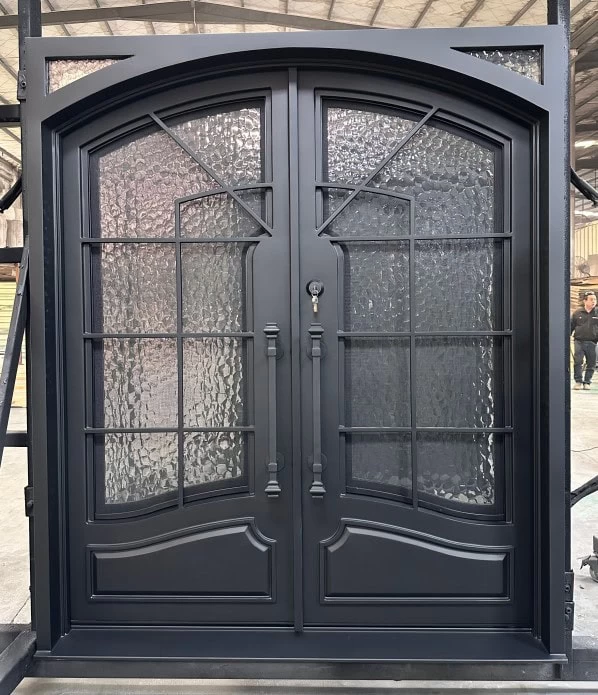
This customization extends beyond appearance. You can select from thousands of powder-coated color finishes to match your home’s exterior or meet HOA requirements. Glass options range from clear to textured, operable to fixed, tempered to impact-resistant. Hardware choices include everything from traditional lever handles to modern smart lock integration.
The ability to customize means you don’t have to choose between security and style. You can have a door that looks like it belongs on your home while providing the protection of 12-gauge steel construction. That’s something standard off-the-shelf security doors simply can’t offer. They come in limited sizes, generic designs, and basic finishes that rarely complement higher-end homes.
For homeowners in areas like Montclair, South Orange, or Newark, where architectural diversity ranges from historic Colonials to modern builds, custom wrought iron provides the flexibility to match your home’s character while delivering real security. Standard doors force you to compromise. Custom iron doors don’t.
New Jersey’s climate is brutal on exterior doors. You’re dealing with humid summers where temperatures hit 95 degrees, winters that drop to freezing, over 100 freeze-thaw cycles per year, and if you’re anywhere near the coast, constant salt air exposure. Standard security doors aren’t engineered for this environment.
Aluminum doors, common in standard options, are lightweight and resist some corrosion, but they lack the structural strength needed for real security. They also conduct heat and cold readily, which means energy loss and potential condensation issues. Wood-core security doors swell in humidity and crack during freeze-thaw cycles. Fiberglass options can chip under impact.
Wrought iron security screen doors built for New Jersey use specialized construction to handle these conditions. High-quality versions feature thermal break technology, which is a barrier within the door’s structure that disrupts heat and cold transfer between interior and exterior surfaces. This prevents condensation buildup that can lead to rust and improves energy efficiency year-round.
The finishing process matters just as much as the base material. Quality wrought iron doors go through multi-stage finishing that includes zinc galvanization for corrosion resistance, followed by powder-coated topcoats that protect against salt air, UV damage, and moisture. This isn’t a single coat of paint that chips off after a few seasons. It’s an automotive-grade finish designed to last decades.
Standard security doors often skip these steps. You might get a basic powder coat, but without proper galvanization underneath, rust eventually finds its way through. And once rust starts, it spreads. What looked fine for the first few years becomes a maintenance headache or requires full replacement.
For homes in Middlesex and Bergen Counties, where weather extremes are the norm, choosing a door specifically engineered for New Jersey climate conditions isn’t optional. It’s the difference between a door that performs reliably for 20-30 years and one that needs replacement or constant maintenance within a decade.
Want live answers?
Connect with a Iron Door Kings expert for fast, friendly support.
Security isn’t just about thick metal. It’s about how the entire door system works together to resist forced entry. Iron security doors for homes incorporate multiple layers of protection that standard options often lack.
The locking mechanism is where most standard doors fail. A basic deadbolt and handle set secure the door at one point, usually center height. Apply enough force to that single point and the door gives way. Multi-point locking systems, standard on quality iron security doors, engage at three or more points along the door’s height—top, center, and bottom.
This distributed locking approach dramatically changes how the door responds to force. Instead of concentrating stress at one vulnerable spot, the load spreads across the entire frame. Even if someone manages to compromise one locking point, the others hold firm. It’s the same principle used in commercial and high-security applications, now available for residential iron doors.
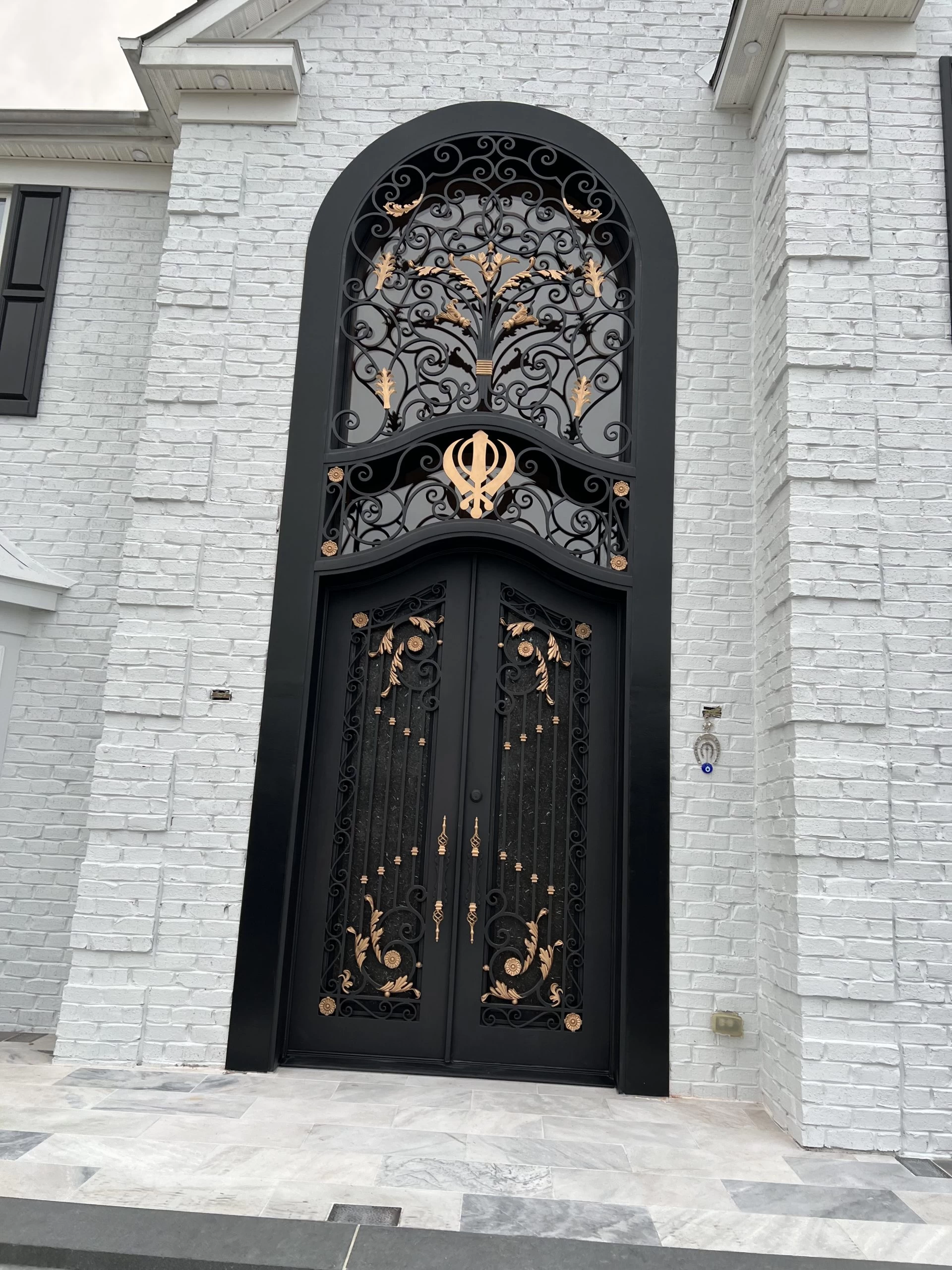
Multi-point locking systems work by engaging multiple bolts or hooks simultaneously when you turn the key or thumb turn. On a three-point system, the center deadbolt locks first, then automatic latchbolts at the top and bottom project into the frame. Some systems offer four-point locking with additional reinforcement.
The benefit goes beyond security. These systems also improve how the door seals against weather. By pulling the door tight against the frame at multiple points, you get better protection from drafts, rain, and temperature transfer. That matters in New Jersey where winter heating costs and summer cooling expenses add up quickly.
But the locking system is only as strong as what it’s attached to. Quality iron security doors use reinforced frames with steel-reinforced jambs that prevent frame splitting under pressure. The strike plates—the metal plates the bolts lock into—are upgraded from the thin stamped metal found on standard doors to heavy-duty versions anchored with 3-inch screws that reach into wall studs.
Hinges are another critical component. Standard security doors often use basic hinges that can be removed or forced. Iron security doors use barrel hinges or continuous hinges designed for frequent use and heavy loads. These are anchored deep into the frame and wall structure, making it nearly impossible to remove the door from the hinge side.
Impact-resistant glass is the final piece. If your door includes decorative glass panels, standard options typically use basic tempered glass. Quality iron doors offer laminated or impact-resistant glass that holds together even when shattered. This prevents intruders from breaking the glass and reaching through to unlock the door.
All these features work as a complete security system. Remove any one element and the overall protection degrades. That’s why comparing iron security doors to standard options based solely on price misses the point. You’re not buying a door. You’re buying a comprehensive security solution engineered to resist the most common entry methods burglars use.
Even the best-engineered iron security door fails if it’s installed incorrectly. This is where many homeowners run into problems with both standard and iron doors, but the stakes are higher with iron because of the weight and precision required.
A wrought iron security door can weigh 300-1,000+ pounds depending on size and design. That weight requires proper structural support. The door frame must be anchored securely to wall studs, not just drywall or brick facade. The threshold needs to be level and properly sealed to prevent water intrusion. The door itself must hang perfectly plumb so it swings smoothly and seals correctly when closed.
Professional installation for iron security doors in New Jersey addresses climate-specific concerns that DIY or inexperienced installers often miss. New Jersey’s freeze-thaw cycles mean the ground shifts seasonally. A door installed in summer might not align properly come winter if the installer didn’t account for this movement. Proper installation includes weatherstripping that maintains its seal across temperature extremes and door sweeps that prevent water from finding its way under the threshold during heavy rain.
The installation process also affects your warranty coverage. Most quality iron door manufacturers require professional installation to maintain warranty protection. If you attempt DIY installation or hire an unqualified contractor, you void that coverage. Given that these doors represent a significant investment—typically $1,500-$5,000 for custom designs plus $300-$800 for professional installation—protecting that warranty matters.
Beyond warranty concerns, improper installation creates ongoing problems. Doors that aren’t aligned correctly stress the hinges and locking mechanisms, leading to premature wear. Inadequate weatherproofing allows moisture infiltration that can cause rust even on properly finished iron. Poor threshold installation creates drafts that undermine the door’s energy efficiency benefits.
For homeowners in Essex County considering iron security doors, working with installers who understand both the product and local climate requirements ensures the door performs as designed. We focus our installation on ensuring doors hang perfectly, swing smoothly, and seal tightly—critical factors for both security and weather resistance in New Jersey conditions. That level of attention to installation detail is rarely found with standard security door options, where installation is often treated as an afterthought rather than an integral part of the security system.
The difference between wrought iron security screen doors and standard options comes down to engineering, materials, and long-term performance. Standard doors might cost less upfront, but they compromise on the features that actually matter: material thickness, locking system sophistication, weather resistance, and customization options.
For homes in Essex County, NJ, where crime statistics, climate extremes, and property values all factor into the decision, investing in quality iron security doors makes sense. You’re getting superior protection against forced entry, a door engineered specifically for New Jersey weather, and a solution that can increase your property value by up to 10% while potentially qualifying you for insurance premium reductions.
If you’re ready to explore how a custom iron security door can transform your home’s entrance while providing real protection, we offer the expertise and quality craftsmanship to make it happen. Your home deserves better than a standard solution.
Article details:
Share:
Continue learning: